What First-Time Participants Never Expect from Muay Thai Boxing in Thailand
 Johnathan Parker |
November 4, 2026 |
2:16 pm
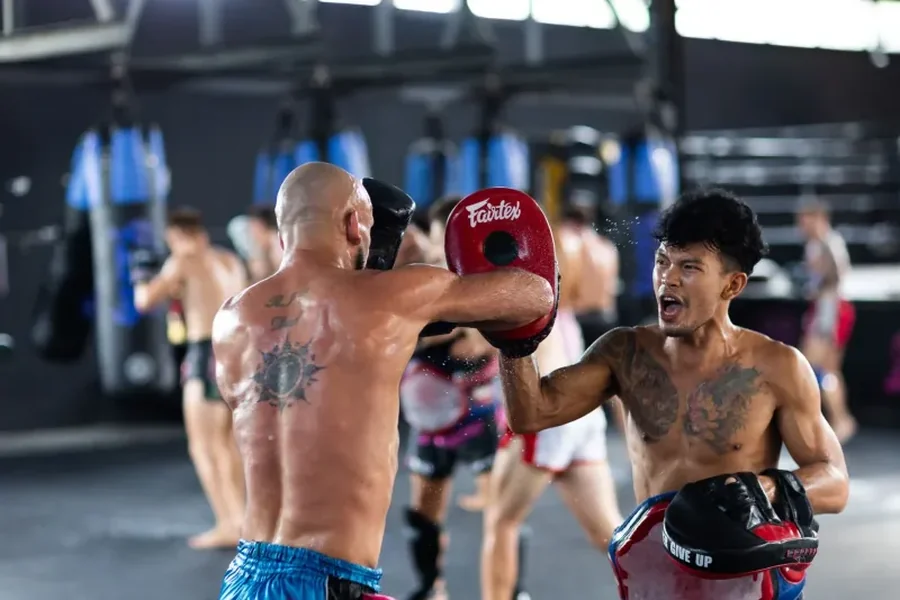
Walking into a Muay Thai boxing training camp in Thailand is not like joining a fitness class. The air smells of liniment and warm dust. A trainer wraps your hands while chatting in Thai. Somewhere behind the ring, a fighter is skipping rope to a rhythm that sounds almost musical. Within ten minutes you understand that this is not exercise. It is a craft, taught patiently, one small correction at a time. Most camps in Chiang Mai and Phuket welcome complete beginners, and many run two sessions a day, one in the early morning and one in the late afternoon.
The Warm Up That Tells You Everything
Every Muay Thai boxing training session in Thailand begins the same way: a slow jog, then skipping rope, then shadow boxing. The warm up lasts around 15 to 20 minutes. Trainers watch your footwork more closely than your punches. Balance matters more than power. If your stance wobbles, you will hear about it gently but firmly. By the end of the first ten minutes, most beginners are sweating and quietly grateful they wore loose shorts.
Pad Work Teaches the Real Lesson
The heart of the experience arrives when a trainer straps on focus mitts and calls out combinations. Pad work in a Thai camp is a conversation. The trainer reads your rhythm and corrects it in real time. A jab that drifts too wide is tapped back into place. A knee that lacks hip rotation is slowed down and rebuilt. Thailand has more than 2,000 registered Muay Thai boxing gyms, and the best ones treat pad work as the core of every session.
What the Culture Adds to the Experience
Before every session, fighters perform the wai kru, a ritual bow to their teachers. You do not have to be religious to feel the weight of it. The gesture sets the tone. Respect is not optional here, and neither is humility. Foreigners who arrive wanting to spar hard on day one are usually steered toward technique drills instead. That patience is part of the experience, and most visitors leave understanding why Thai fighters start so young and train so long.
Small Details That Surprise First Timers
The clinch, or close range grappling, catches almost everyone off guard. It is slow, sweaty, and surprisingly technical. Trainers in Thailand often spend more time on clinch basics than on strikes, because balance and control decide real fights. Another surprise is the heat. Morning sessions start around 6:30 a.m. to beat the worst of it, and hydration breaks are built into every hour. Bring a towel, a water bottle, and a healthy respect for the sun.
What You Carry Home
You do not need to become a fighter to benefit from Muay Thai boxing training in Thailand. You leave with cleaner footwork, calmer breathing under pressure, and a sharper sense of how your body moves. You also leave with a small story about the day a trainer corrected your stance for the twentieth time and then smiled when you finally got it right. That is the experience most visitors talk about on the flight home. Many visitors continue learning even after their sessions end, and resources such as Chalong Muay Thai with sharing information can help them stay connected to the techniques, traditions, and values they discovered in Thailand.