How a SaaS Feature Announcement Picks Its Length and Frame
 Johnathan Parker |
November 3, 2026 |
9:44 pm
A feature announcement often waits on a motion timeline. Someone builds the layers, sets the keyframes, and the date of the post slips. A team shipping a SaaS product, an app, or an enterprise tool needs the video while the feature is still the news. Before any frame moves, four choices have to be made: the message, the real screens, the length, and the shape of the picture.
What a brief can settle before the frames move
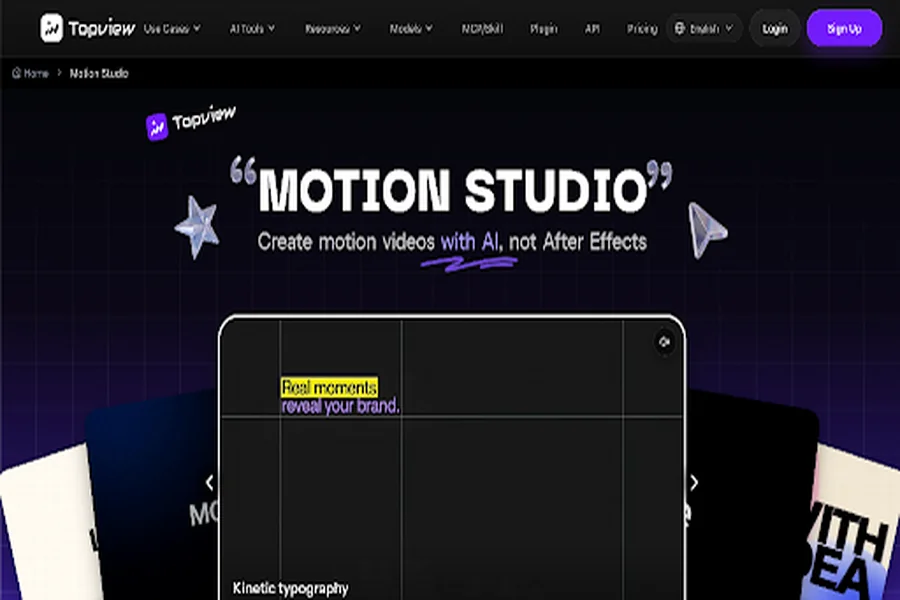
A Motion Studio workflow is built for a product launch video. You write what the product is, who it is for, the message people should remember, and the features or moments that belong in the story. You add product photos, interface screenshots, dashboards, logos, or other brand assets. Those files can be JPG, JPEG, PNG, or WEBP, up to 15MB each. You choose a curated motion style. That choice guides animation, pacing, typography, transitions, texture, lighting, and atmosphere. You set a length from 4 to 60 seconds, and one of six frames: 21:9, 16:9, 4:3, 1:1, 3:4, or 9:16.
The page sets those choices next to an After Effects production. It says a product-focused motion video is about 3 US dollars, where a custom After Effects job can run into the thousands, and that a first result can come back in around 10 minutes, where a traditional production can take weeks or months. Those figures are printed on the page. This article did not time a render or pay an invoice.
What you submit goes to Canvas. An AI agent and a motion design skill use the brief, the references, the style, the length, and the frame to organize a connected launch video. The sequence can move through a reveal, the benefits, the product moments, and a closing message. The page describes that as a full launch story. A generic generator, on the same page’s comparison, is an individual shot from a prompt.
The page also says what the file is. Motion Studio does not build an After Effects timeline, and it does not return an editable After Effects project. It is a guided workflow. It does not stand in for every studio process.
What someone on the team still watches
References help guide interfaces, brand cues, and product moments. The page says they do not guarantee a perfect match. Generated frames can vary, and someone has to review them before the video is used.
That review starts in the brief. If the message people should remember is missing, the motion has no accurate line to carry. If the screenshot is an old build, the video can show a control you no longer ship. The person who knows the feature checks the screens, the words, and whether the closing line is the line the company means.
The page names who usually does that work: product, marketing, brand, and design, plus founders shipping a SaaS product, an app, an AI tool, or enterprise software. Fintech products are on the same list. The workflow is there so those teams can direct the story without first learning professional motion software.
The frame follows the place the announcement will play
A 16:9 cut can sit in a presentation or on a product page. A 9:16 cut is the vertical placement. A 1:1 cut can sit in a feed. The page also offers 21:9, 4:3, and 3:4. Choose the shape for the place the video will actually play. Sixty seconds is the long end of the control, for a fuller launch narrative. Four seconds is the short end, for a reveal. The length should match this announcement.
The message has to fit the people who will see that placement. A dashboard story for an operator is a different brief from a brand reveal for a new name. The page asks who the product is for, and which line they should remember. Write that for this audience. Kinetic type and a product reveal are both directions the page lets you choose. The sentence itself still comes from the brief.
The feature in the video has to be the one you ship
Write what the product is, who it is for, and the line they should remember. Add screens and marks you are allowed to show. Choose the style, the seconds, and the frame. Canvas then organizes those inputs into connected scenes. Watch the result. If a label, a menu, or the closing line is wrong, the announcement is not ready.
The page’s offer is a first motion video from a product story and real references, at a length and a frame you set, without building the timeline by hand. The feature on screen still has to be the feature you ship.