What Determines Solar Battery Charging Priority?
 Johnathan Parker |
October 29, 2026 |
7:42 pm
A solar battery does not always charge every time sunlight is available. Its control system must decide how to allocate electricity between household appliances, battery charging, grid exports and future backup needs. That decision depends on the system configuration, energy prices, weather, battery state of charge and the homeowner’s priorities. Understanding these factors explains why two homes with similar solar installations may follow different charging schedules. It also shows how thoughtful settings can balance immediate electricity needs with the value of keeping energy available for later.
What Determines Which Energy Source Comes First?
Household Demand Sets the Immediate Priority
Solar electricity often serves active household loads before surplus energy becomes available for battery charging, although the exact sequence depends on the inverter and energy management settings. When appliances consume most of the power produced by the panels, little electricity remains to charge the battery. When production exceeds demand, the system may direct the surplus into storage or export it to the grid. Consider a home running an air conditioner, refrigerator and computer during a sunny afternoon. Those appliances consume part of the solar output as it is generated. Once their demand falls or solar production rises, more energy may become available for charging. The system’s configuration, export rules and selected operating mode determine how it allocates that surplus.
Battery Charge Level Shapes the Next Decision
The battery’s state of charge indicates how much stored energy remains relative to its usable capacity. A nearly empty battery may receive priority when the controller targets a specific reserve, while a nearly full battery may leave more solar electricity available for household use or grid export. Many systems also allow users to set a minimum reserve for outages. This reserve changes the amount of energy available for routine consumption. For example, a homeowner who wants backup electricity overnight may choose to preserve a portion of the battery rather than discharge it fully during the evening peak. Charging priority therefore reflects more than the battery’s current percentage. It also depends on the target charge level, expected demand and the role the battery must play later.
Weather Forecasts Can Change the Schedule
Solar production varies with cloud cover, season and daylight hours. When a system has access to suitable forecasting and energy management functions, it may adjust charging decisions to account for expected generation and demand. A forecast of strong afternoon sunlight could support a later charging window, while several cloudy days may encourage the homeowner to preserve stored energy. Not every system automatically uses weather forecasts, so the available functions depend on its controls and connected services. Even without automated forecasting, homeowners can review seasonal production patterns and adjust their reserve settings accordingly. The goal is to match charging decisions to the energy likely to be available, rather than assuming every day will deliver the same solar output.
How Operating Settings Change Charging Priority
Electricity Rates Influence When the Battery Charges
Time-of-use electricity plans charge different rates at different times of day. Under these plans, a household may benefit from storing surplus solar electricity when production is high and using that energy when grid electricity costs more. Some systems also support scheduled grid charging, subject to local regulations, utility rules and system configuration. In that case, a controller may charge the battery during a lower-cost period while preserving capacity for later use. Export compensation also matters. If the utility pays a favorable rate for exported solar electricity, sending surplus power to the grid may sometimes be preferable to storing it. Charging priority is therefore an economic decision as well as a technical one, and the most suitable schedule depends on the household’s tariff and energy goals.

Backup Reserves Can Override Daily Savings
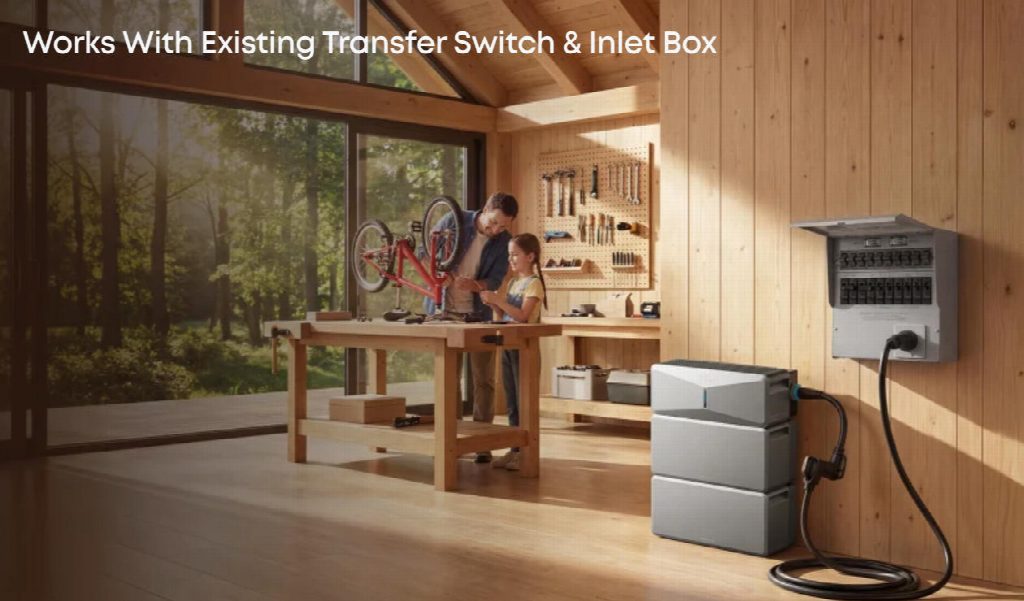
A battery designed primarily to reduce electricity bills may follow a different schedule from one intended to support essential loads during outages. A homeowner focused on daily savings might allow deeper discharge in the evening, then recharge the battery from the next day’s solar production. Someone who places greater importance on emergency readiness may retain a higher reserve for refrigeration, communications or selected household circuits. These objectives can coexist, but the settings determine which receives priority when stored energy becomes limited. The Anker SOLIX E10 Whole-Home Backup illustrates this backup-focused approach. Its Power Dock supports automatic switchover in 20 milliseconds or less, while the system’s battery capacity can expand from 6 kWh to 90 kWh across supported configurations. Appropriate reserve settings remain important because available backup time depends on consumption and stored energy.
System Capacity and Charging Power Set Practical Limits
A controller cannot charge a battery faster than the system’s available charging power and operating limits permit. Solar array output, inverter capability, battery acceptance limits and simultaneous household demand all influence the actual charging rate. Battery capacity determines how much energy the system can store, but it does not specify how quickly that energy can enter the battery. For example, the Anker SOLIX E10 supports up to 9 kW of solar input per unit through dual MPPT channels, while its capacity can expand to 30 kWh per power module. This combination illustrates why buyers should assess both charging input and storage capacity when evaluating solar energy storage.
Conclusion
Solar battery charging priority reflects a combination of household demand, battery charge level, expected solar production, electricity prices, backup reserves and system limits. No single schedule suits every household. Homes focused on bill savings may prioritize low-cost energy use, while those preparing for outages may preserve more stored electricity. The most effective approach aligns automatic controls with actual consumption patterns and local electricity rules. By understanding these trade-offs, homeowners can make better decisions about when to store solar power, when to use it and when to export surplus electricity.