Discover How Payment Routing Boosts Transparency In Transaction Processing
 Ava Thompson |
November 25, 2025 |
10:23 pm
Ava Thompson |
November 25, 2025 |
10:23 pm
Most people tap “Pay Now” and assume the money moves from their bank to the business. Straight line. No complications. But anyone who has worked behind the scenes of digital payments knows how far that is from the truth. Every online transaction passes through layers of checks, networks, gateways, and approvals before it finally lands where it should.
The surprising part? Even merchants don’t always know why a payment succeeded, failed, or got flagged. That’s where payment routing starts to matter; not just for speed or reliability, but for something many businesses struggle with: transparency.
Let’s break down how this invisible engine shapes trust, clarity, and control in modern payment systems.
What is Payment Routing?
Imagine you’re booking a flight online. You enter your card details and hit pay. The platform now has a choice: send your transaction through one gateway, or choose another, or maybe pass it through a processor that’s historically more stable for your card type.
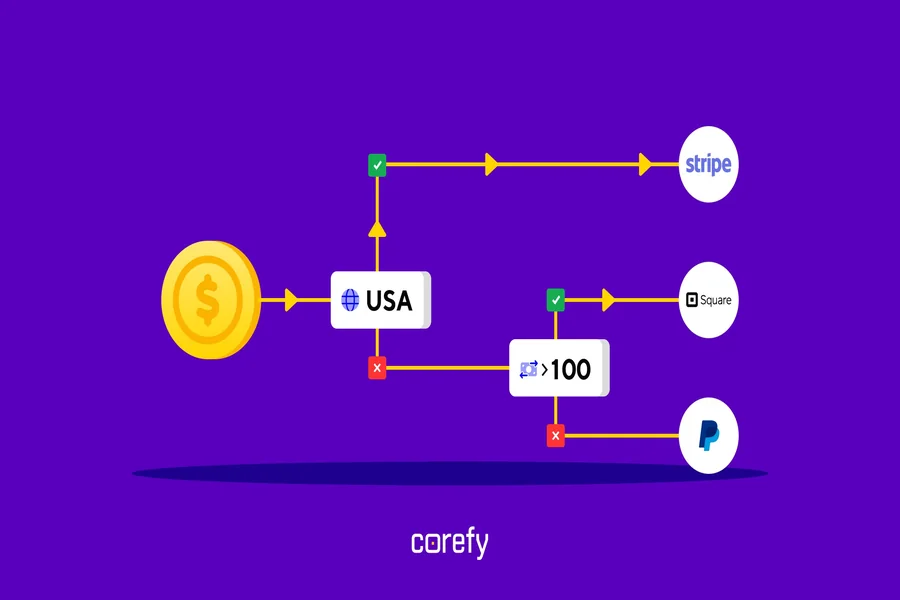
That decision-making system is payment routing. It selects the best possible path for each transaction in real time. Instead of pushing everything through a single processor like the old days, routing considers multiple variables:
- issuing bank
- card type
- customer location
- payment method
- gateway uptime
- fraud risk
- past approval rates
The final goal is simple: maximise success, reduce risk, and make the entire process more transparent.
Why Transparency Matters More Than Ever?
Customers want to know where their money goes. Businesses want to know why payments fail. Regulators want cleaner visibility. And banks want tighter controls.
Payment complexity used to be hidden behind technical walls. Today, that’s no longer acceptable. A business that can’t explain failed transactions, chargeback patterns, or approval gaps eventually runs into customer distrust and operational losses. Payment routing fixes this.
Instead of guessing, businesses get clear insights into what’s happening at each step of the transaction journey.
How Payment Routing Boosts Transparency in Transaction Processing?
Let us understand how payment routing helps:
1. Clear Visibility into Approval and Decline Reasons
Traditional payment systems often give vague failure messages like:
- “Your payment could not be processed.”
- “Something went wrong.”
- “Try again later.”
Helpful? Not at all.
With payment routing, merchants receive more granular data:
- Was the issuing bank offline?
- Did the gateway experience a timeout?
- Was the customer’s card flagged for unusual behaviour?
- Did the risk engine stop the transaction?
- Did the processor reject it due to network congestion?
Knowing the exact reason removes guesswork. It also helps customer support handle issues confidently instead of making guesses or giving generic responses.
Transparency starts here, with real answers instead of maybes.
2. Better Fraud Detection Through Traceable Patterns
Fraud isn’t random. It follows patterns. The trouble is, those patterns hide in different parts of the payment flow.
Payment routing shines by:
- flagging suspicious device fingerprints
- catching high-risk geolocations
- identifying repeat failed attempts
- tracing unusual card behaviour
- isolating inconsistent transaction metadata
Because routing passes data through multiple intelligent layers, fraud alerts become easier to trace back to their source.
Instead of “some fraud happened,” you get clear insights like:
- “This cluster of attempts came from one device.”
- “These transactions used a disposable email pattern.”
- “These card attempts originated through a risky ISP.”
This level of detail allows businesses to respond faster and more accurately.
3. Transparent Tracking of Gateway Performance
Every payment processor claims high uptime. But real-world performance varies and at times dramatically.
Payment routing reveals the truth:
- Which gateway processes domestic cards best
- Which one fails during peak hours
- Which one struggles with international payments
- Which routes cause the most timeouts
- Which processor gives the highest approval rate for Visa, Mastercard, or UPI
Merchants can see clear metrics, not marketing claims. When a payment provider underperforms, routing picks it up instantly and shifts traffic elsewhere.
This creates healthy accountability across the payment chain.
4. Reducing Hidden Costs Through Transparent Fee Insights
Many merchants never truly know how much each transaction costs. Fees sit buried in processor reports, bank statements, or settlement files.
Payment routing helps break this fog by mapping:
- per-gateway fees
- interchange cost structures
- cross-border charges
- currency conversion costs
- fraud-related penalties
Businesses can finally understand:
- which route is the cheapest
- when surcharges spike
- how much each processor adds
- where unnecessary fees creep in
5. Transparency Helps Manage Risk More Intentionally
Most businesses think of payment risk as something unpredictable. But once you track it in detail, it becomes manageable.
Payment routing identifies:
- risky transaction types
- abnormal customer behaviour
- high-risk BIN ranges
- repeated disputes
- unsafe IP locations
- Suspicious transaction velocity
Instead of broad and vague risk control, merchants get specific, usable insights.
For example:
- “Refund and chargeback risk from X region spikes on weekends.”
- “Most fraudulent attempts use cards from the Y bank range.”
- “Transactions above $5,000 fail more often on Gateway A.”
This lets businesses fine-tune their fraud rules instead of using one-size-fits-all blocks.
6. A More Transparent Checkout Experience for Customers
Payment transparency isn’t only for the backend. It trickles down to customers, too.
With routing:
- Fewer payments fail
- Fewer customers get stuck
- Fewer users see confusing error messages
- Fewer people retry multiple times without explanation
And when a payment does fail, the system can give a real reason and not a generic error. Customers trust brands that communicate clearly. Payment routing helps make that possible.
7. Transparency in Settlement and Reconciliation
Payments don’t end after a successful charge. Behind the scenes, reconciliation teams work to match transactions to settlements, refunds, and fees. Routing helps by organising transaction data cleanly:
- by gateway
- by processor
- by card network
- by type of transaction
- by risk outcome
- by success or failure
Finance teams get fewer mismatches, cleaner reports, and faster reconciliation cycles. What used to take hours of digging now takes minutes.
8. Reliable Data for Compliance and Audits
Regulators demand transparency. Auditors demand trail clarity. Payment routing gives both. It offers detailed logs showing:
- who processed a transaction
- how it moved
- where it failed
- why it triggered flags
- when reviews happened
- what path did it follow
Audits become painless instead of panic-driven.
Conclusion
Payment routing isn’t just a technical upgrade; it’s a clarity upgrade for your entire payment ecosystem. When you understand why transactions fail, where they go, and how each processor performs, you gain control instead of reacting immediately. Customers get smoother payments. Your team gets cleaner data. And your business gets stronger fraud protection with fewer surprises.
The more transparent your transaction flow becomes, the easier it is to reduce risk, boost approvals, and build trust. In a world where every payment matters, smarter routing makes every step clearer, faster, and far more reliable.