Why Bearing Failures in Food Factories Are More Dangerous Than Most People Realise
 Johnathan Parker |
May 29, 2026 |
10:54 pm
Johnathan Parker |
May 29, 2026 |
10:54 pm
Food safety inspections tend to focus on the visible: hygiene practices, temperature controls, storage conditions, and worker protocols matter enormously. But one of the most persistent contamination risks in food processing facilities hides inside the machinery itself, in components most people couldn’t name if asked.
Bearings are found in virtually every piece of equipment that moves in a food production environment: conveyors, mixers, packaging lines, pumps, and filling machines. When a bearing fails, it doesn’t just stop production. Depending on what it’s made of, how it’s lubricated, and where in the line it sits, it can introduce contaminants directly into the food being processed.
What Actually Happens When a Bearing Fails in a Food Environment
The failure mode most people imagine is mechanical: something seizes, a shaft stops turning, a line goes down. That absolutely happens, and the cost of unplanned downtime in food production is steep. But the less obvious risk is chemical and particulate contamination, corroded steel particles shedding into the product stream, or lubricant that wasn’t approved for food contact migrating into areas it shouldn’t reach.
This is precisely why sourcing food grade bearings and FDA-certified solutions isn’t an optional upgrade for food manufacturers; it’s a compliance requirement in most markets and a fundamental part of managing contamination risk in any facility that operates under HACCP principles.
Why Standard Industrial Bearings Fall Short
The Washdown Problem
Most food processing environments undergo regular, aggressive cleaning. High-pressure washdowns with hot water and caustic detergents are standard practice, and they’re thorough by design. The problem is that this process is exactly what conventional industrial bearings are not built for.
Standard steel bearings corrode when exposed to moisture and cleaning agents. More critically, the force of pressure washdowns pushes water and detergent residue past bearing seals and into the grease, contaminating the lubricant and accelerating the very wear that leads to failure. Bearings positioned in hard-to-access locations compound the issue further; they’re often skipped during manual lubrication cycles, running dry until they fail.
The U.S. Food and Drug Administration’s guidance on food contact substances makes clear that any material reasonably expected to migrate into food, including lubricants from processing equipment, must meet specific regulatory standards. A bearing that bleeds non-compliant grease into a food-contact zone isn’t just an engineering problem. It’s a regulatory one.
What Food-Grade Certification Actually Requires
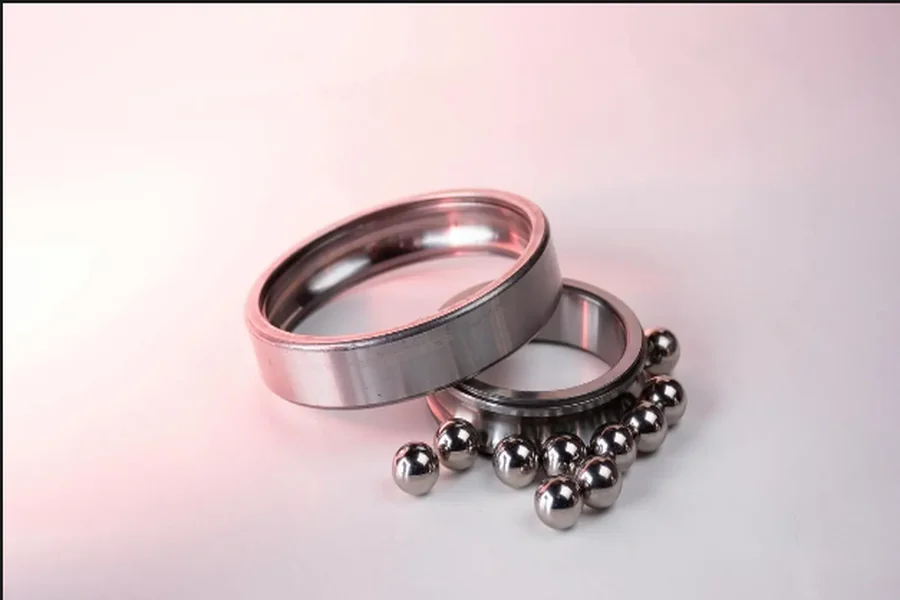
Meeting FDA approval and EN1935 certification for food-contact applications means every component of a bearing, the rings, the rolling elements, and the lubricant, must be assessed and approved independently. Stainless steel rings resist corrosion during washdowns. Silicon nitride ceramic balls don’t shed metallic particles and run significantly cooler than steel, which extends lubricant life without relubrication. Food-safe greases eliminate the contamination pathway that trips up conventional bearings most often.
CeramicSpeed’s Corrotec hybrid bearings are engineered specifically around these requirements: greased for life with FDA-approved lubricant, built to handle the temperature swings, steam exposure, and chemical aggression that food production environments demand on a daily basis. The goal isn’t just compliance, it’s removing contamination risk from a part of the facility that most audits don’t examine closely enough.