The Visual Testing Agent – TestMu AI Formerly LambdaTest
 Johnathan Parker |
June 16, 2026 |
8:27 pm
Johnathan Parker |
June 16, 2026 |
8:27 pm
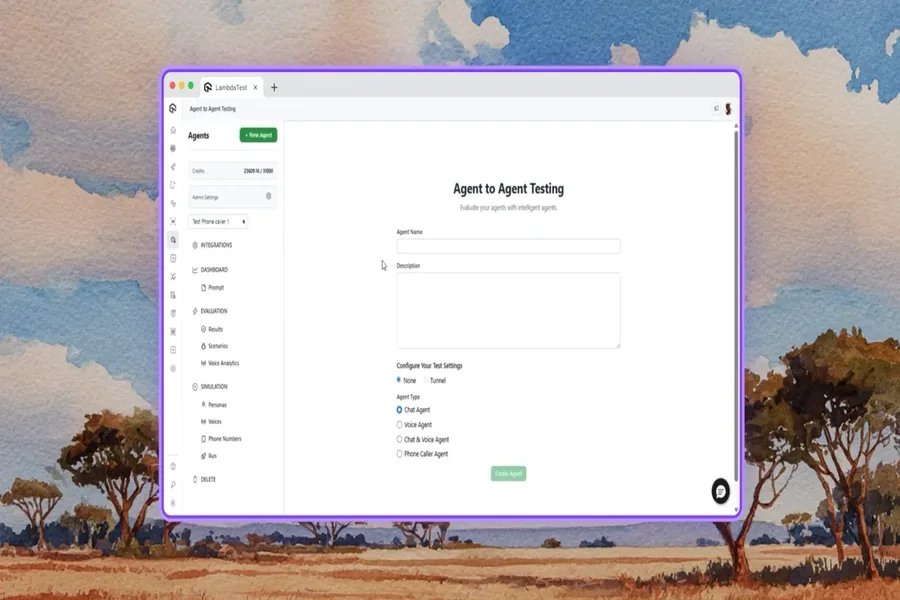
Functional tests are good at answering one question: does the button do what it should when clicked? They are famously bad at a different one: does the button look right, sit in the right place, and remain readable on a narrow screen? A page can pass every functional check and still ship broken, with overlapping text or a layout that collapses on mobile. The Visual Testing Agent is built to close that gap by treating appearance as something worth testing in its own right.
Visual bugs are slippery because they rarely throw errors. Nothing crashes when a heading shifts twenty pixels or a color drifts off-brand. The application keeps working, the tests keep passing, and the only thing that notices is the user. Catching these problems used to mean a human clicking through pages and squinting, which does not scale and does not survive a busy release schedule.
What the agent compares, and how
At its heart, visual testing is comparison. The agent captures how an interface renders, then compares that capture against an approved baseline. Where they differ, it flags the change for review. The hard part has never been taking the picture; it has been deciding which differences matter. A timestamp that updates every run is a difference, but not a bug. A button that has silently moved is a difference that very much is.
The intelligence in the Visual Testing Agent is in that judgment. Rather than flagging every pixel that changed, it works to distinguish meaningful regressions from harmless noise like dynamic content, animations, or anti-aliasing quirks. This is where older visual tools earned their reputation for crying wolf, drowning teams in false positives until everyone stopped looking. Reducing that noise is what makes visual testing usable day to day.
Scale is the whole point
A single page across a single browser is easy to check by hand. The reality for most products is dozens of pages across dozens of browser and device combinations, and that matrix is where manual review falls apart. TestMu AI (Formerly LambdaTest) brings a large cloud of real browsers and devices to bear, so the agent can verify how an interface looks across that whole matrix rather than the one configuration a developer happens to use.
This breadth catches a specific and common class of bug: the layout that works perfectly in the engineer’s browser and breaks on a device they never opened. By running visual checks across many environments automatically, the agent surfaces these before a user does. The combination of broad coverage and intelligent comparison is what turns visual testing from a nice idea into a dependable safety net.
Fitting into the existing workflow
The agent is meant to run as part of the same pipeline as everything else, not as a separate ceremony. A code change triggers the checks, the agent reports any meaningful visual differences, and a human approves or rejects them. Approved changes become the new baseline. Over time the baseline evolves with the product, so the agent always compares against current intent rather than a stale snapshot.
That review step is important and deliberately kept human. Visual change is often intentional; redesigns happen. The agent’s role is not to block change but to make sure no change slips through unnoticed. It raises a hand and asks, “did you mean to move this?” and a person answers. That keeps authority where it belongs while removing the tedium of finding the change in the first place.
Where it sits among the platform’s tools
Visual testing overlaps with several neighbors. Screenshot testing captures the raw images; visual regression testing tracks differences over releases; the Visual Testing Agent adds the reasoning that decides which differences deserve attention. Inside TestMu AI – formerly known as LambdaTest, these are facets of one capability rather than separate purchases, which means a visual regression flagged in one place carries context into the rest of the system.
For frontend teams especially, this integration matters. The same change that alters a layout might also affect accessibility or break a functional flow, and a platform that connects those signals gives a fuller picture than a standalone visual tool ever could.
Honest caveats
Visual testing is powerful but not free of effort. Baselines need maintenance; a major redesign means re-approving a lot of screens at once, which can feel like work. Highly dynamic interfaces, full of animation and personalized content, require thoughtful configuration so the agent ignores the parts that are supposed to change. Teams that set this up carefully get a clean signal; teams that skip the setup get noise.
It also does not replace human design sense. The agent catches unintended change, but it cannot tell you that a deliberately shipped layout is ugly or confusing. Judgment about whether a design is good remains a human responsibility.
The bottom line
For any team shipping a user interface that matters, visual bugs are a real and underserved risk. The LambdaTest Visual Testing Agent, addresses that risk by comparing appearance intelligently across a wide range of real environments and surfacing only the changes worth a human’s time. It will not design for you, and it asks for some upkeep, but in exchange it watches the part of quality that functional tests have always ignored. For products where how things look is part of whether they work, that watch is well worth keeping.