The Used Car Market Is Shifting State to State – Here’s What the Data Shows
 Johnathan Parker |
August 27, 2026 |
2:50 pm
Johnathan Parker |
August 27, 2026 |
2:50 pm
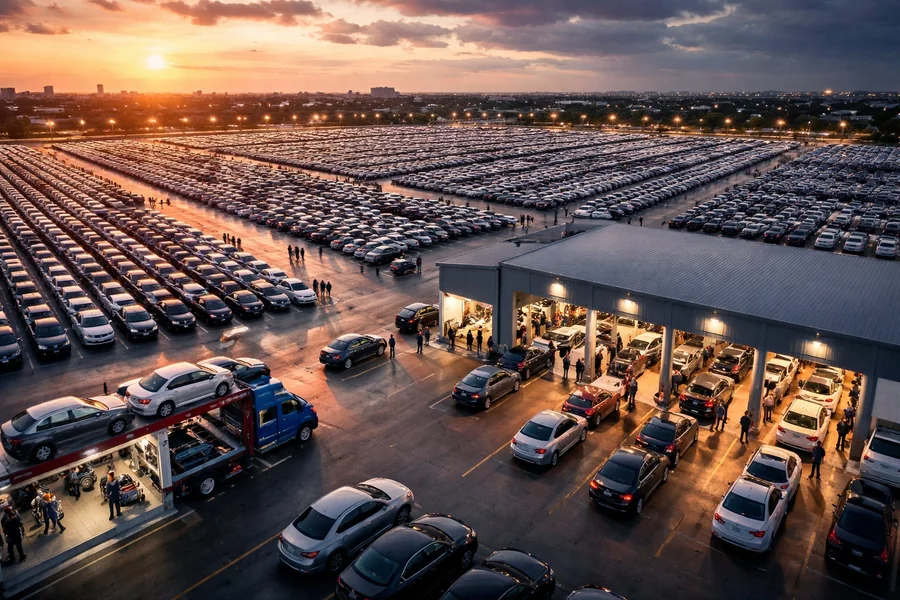
Every year, millions of cars are sold and moved to different states. Over the last few years, the way this happens has changed quite a bit. Before, it was pretty simple: used cars usually moved from states where there were a lot of them to states where there weren’t as many. But now, it’s more complicated. Things like people moving for remote work, differences in car prices between regions, and the used car market still being a bit unsettled after the supply problems in the early 2020s have all played a role.
If you want a real sense of where the US used car market is going, looking at how cars move between states tells you more than average national prices do.
Why State-to-State Vehicle Movement Has Increased
Several converging trends have pushed more buyers to look beyond their own state for a vehicle purchase. Remote work flexibility has changed where people live, and many of those relocations bring a car-buying decision along with them – either a vehicle purchased in the new state before a physical move, or a vehicle shipped from the old state to the new one. Regional price disparities have widened as well, with certain states consistently running higher average used vehicle prices than others due to differences in state tax structures, insurance costs, and local demand.
There’s also a straightforward supply-and-demand pattern at play. States with larger population centers and higher vehicle turnover – think large metro areas with substantial lease-return and trade-in volume – tend to have more used inventory available, which pulls buyers from neighboring or even distant states looking for better selection and pricing.
Which Regions Are Seeing the Biggest Shifts
Migration patterns and used vehicle movement tend to track closely together, though not always in ways that match popular assumptions.
|
Region Type |
General Pattern |
Primary Driver |
| Sun Belt states (TX, FL, AZ) | Strong inbound vehicle movement | Population relocation, retirement migration |
| Major logistics hub states | High vehicle turnover, strong outbound flow | Larger dealer networks, higher trade-in volume |
| Rural and smaller states | More inbound purchases from larger markets | Limited local inventory and selection |
| Coastal high-cost states | Mixed pattern, often outbound for affordability | Higher regional pricing, cost-of-living pressure |
The Role of Online Marketplaces in Accelerating This Trend
A decade ago, buying a used vehicle from another state required either a road trip or a level of trust most buyers weren’t willing to extend to a stranger. Online marketplaces have largely solved that trust gap – detailed listings, vehicle history reports, and increasingly sophisticated seller verification have made cross-state purchases feel far less risky than they once did.
This shift has had a measurable effect on how buyers approach their search. Rather than limiting a search radius to a comfortable driving distance, more buyers now search regionally or even nationally for the specific make, model, trim, and condition they want, treating distance as a logistics problem to solve rather than a hard limit on the search itself.
What Happens After the Purchase: The Overlooked Logistics Layer
Here’s where the used car market intersects with an entire secondary industry that rarely gets discussed alongside pricing trends: getting the vehicle from the seller’s state to the buyer’s. As interstate purchasing has grown, so has demand for professional vehicle transport, shifting what used to be a niche service into something much closer to standard practice for a meaningful share of used car buyers.
A few factors are driving this shift specifically:
- Buyers increasingly won’t drive long distances to retrieve a vehicle, prioritizing time over the cost savings of a personal pickup.
- Sight-unseen purchases through online marketplaces mean buyers often haven’t verified a vehicle is road-ready before it needs to travel.
- Dual-income households frequently can’t coordinate the time off needed for a multi-day round trip.
- Vehicle condition concerns make professional transport the safer option for older or higher-mileage purchases where a long drive carries real risk.
Why This Matters for the Broader Market
The growth of interstate used vehicle purchasing has implications beyond individual buyer convenience. It’s gradually smoothing out some of the regional pricing disparities that used to be more pronounced, since buyers willing to look beyond their home state put competitive pressure on local pricing in a way that wasn’t as common a decade ago. It’s also changing how dealerships and private sellers market vehicles, with more listings explicitly noting “shipping available” or “can arrange transport” as a selling point rather than an afterthought.
For the logistics side of this equation, working with a reliable auto transport provider has become a standard part of the used car buying process rather than a specialty service reserved for rare or high-value vehicles. As more buyers factor transport costs directly into their purchase decision – sometimes comparing multiple states’ total cost, vehicle price plus shipping, against a single local option – accurate, upfront transport pricing has become almost as important to the buying decision as the vehicle price itself.
A Quick Look at What Buyers Are Actually Weighing
Survey data and market behavior both point to a consistent decision-making pattern among interstate used car buyers:
- Total cost comparison – vehicle price plus estimated shipping, compared against the best local equivalent
- Vehicle history and condition verification – often relying more heavily on detailed reports and video walkarounds than local buyers would need to
- Transport timeline – factoring delivery windows into how quickly they’ll actually have access to the vehicle
- Provider reputation – increasingly researched with the same scrutiny buyers apply to the vehicle listing itself.
The Provider Side of the Equation
As demand for this kind of transport has grown, providers have had to adapt to more sophisticated, price-conscious customers who are comparing options rather than simply accepting the first quote. Companies like Monarch Transport Group have built their process around exactly this kind of buyer – offering transparent, binding pricing upfront so a used car purchase from another state can be planned with real numbers rather than rough estimates that shift after the fact.
What This Trend Suggests Going Forward
People are buying used cars from out of state more than ever, and it doesn’t seem like this is just a temporary thing from the pandemic. It looks like a real change in how Americans buy cars. This is happening because online tools are better now, and the shipping industry has gotten better at handling the demand. As it gets easier to see the real costs for both the car and the shipping, buying a used car from another state will become more common, not something unusual like it was ten years ago.
If you’re buying a car this way for the first time, it’s simple: think about the cost of shipping the car from the start. Don’t leave it until the last minute. If you do, you’ll likely get a better price and the car will arrive in better shape.