How Dental Implants Boca Raton Rebuild the Bite From the Root Up
 Johnathan Parker |
July 29, 2026 |
10:13 pm
Johnathan Parker |
July 29, 2026 |
10:13 pm
After a tooth is pulled, the jawbone can lose about 25% of its width in the first year. It can keep shrinking after that.
A missing tooth is not just cosmetic. The bone under it stops getting the pressure it needs to stay strong.
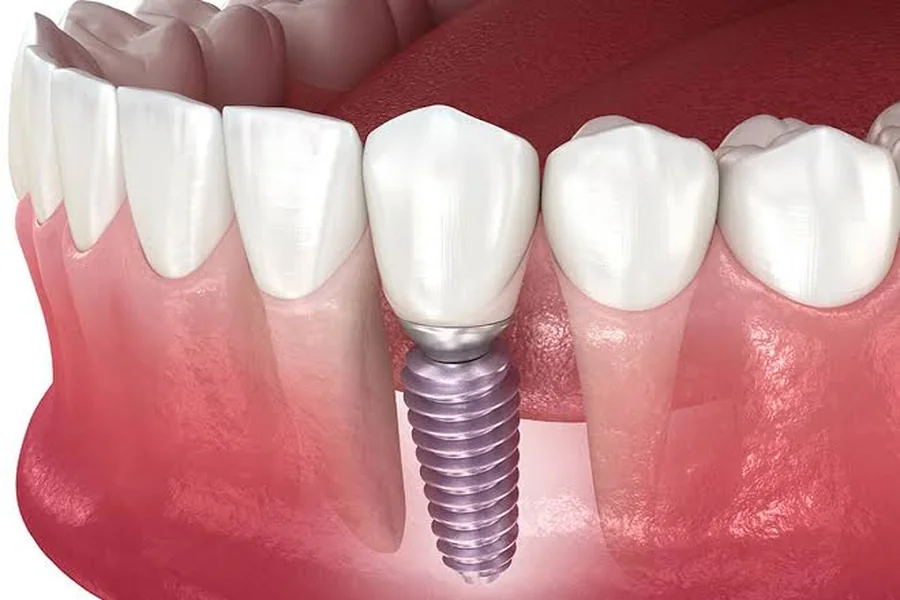
Dental implants solve this by putting a titanium “root” into the jaw so the bone can fuse to it and keep remodeling.
For patients considering dental implants Boca Raton, the big decisions come next: healing (osseointegration), 3D scans, less invasive placement, crown materials like zirconia or porcelain, immediate versus traditional timelines, and full-arch options such as All-on-4 or snap-in dentures.
These details matter for South Florida patients with bone loss, loose dentures, failing teeth, or a gap that stayed open for years.
Why does the jaw start disappearing after a tooth goes missing?
Bone is opportunistic tissue. It builds where forces run through it and retreats where nothing pushes back. Chewing sends compressive signals down the root of each tooth into the alveolar ridge, and the bone responds by staying dense and organized.
Pull that tooth out, and the signals stop. Within twelve months, about a quarter of the bone width around the site shrinks. Two years in, the ridge can flatten enough to change the shape of the cheek and the line of the smile.
That collapse cascades. Neighboring teeth drift into the gap. The opposing tooth supra-erupts because it no longer meets resistance.
The bite loses its geometry, and the temporomandibular joint starts to compensate in ways patients feel as clicking or morning headaches.
What happens inside the bone during osseointegration?
A titanium screw placed into the jaw does not glue itself to the bone. Osteoblasts, the cells that build new bone, colonize the roughened surface of the implant over the following months and lay down mineralized tissue that fuses with the metal.
The success of that fusion depends on three variables:
- Primary stability at the moment of placement.
- Blood supply to the surrounding bone.
- Absence of micro-motion during the healing window.
Get those three right, and the implant becomes a mechanical extension of the jaw. Get any of them wrong, and the body encapsulates the screw in soft tissue instead of bone, which is the definition of implant failure.
Are you a candidate before you sit in the chair?
The majority of adults with reasonable general health qualify for implants. The screening conversation covers systemic factors that slow bone remodeling: uncontrolled diabetes, heavy smoking, bisphosphonate history, radiation exposure to the head or neck, and certain autoimmune conditions.
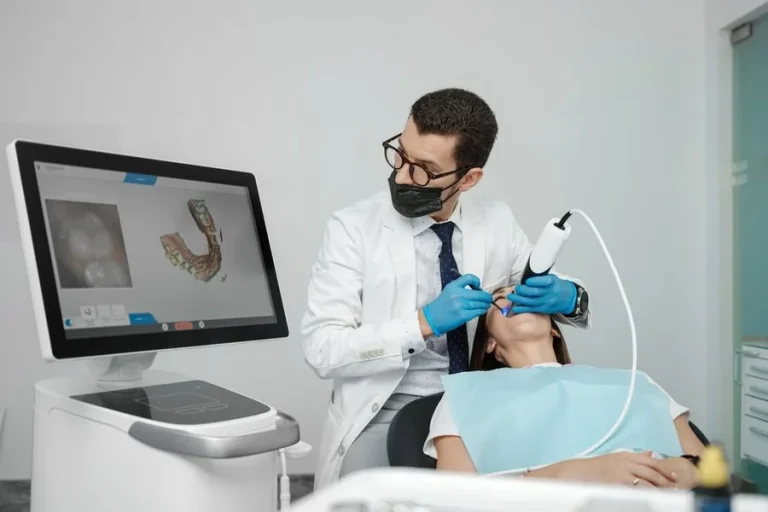
The other half of candidacy is local. A 3D cone-beam scan maps the volume and density of the ridge, the position of the inferior alveolar nerve, and the floor of the maxillary sinus.
Around half of patients with significant bone loss need a graft before implant placement, and that is a routine step performed by general dentists, periodontists, or oral surgeons.
Age matters less than most people assume. Patients in their seventies and eighties integrate implants at rates similar to patients in their forties, provided the bone and the systemic profile check out.
Which type of implant fits the mouth in front of you?
The category “dental implant” hides a menu of clinical choices. A single-tooth replacement uses one screw and one crown. A segment replacement bridges two or three units on two implants.
A full-arch rehabilitation uses four to six implants to anchor a fixed prosthesis for an entire jaw.
Abutment material matters for aesthetics. Titanium is strong and cost-efficient; zirconia is white and reads better through thin gum tissue at the front of the smile. A patient replacing a lower molar has little reason to care about that distinction, while a patient replacing a front incisor cares about little else.
Loading protocol changes the timeline:
- Immediate loading places a temporary crown within 48 hours of surgery.
- Early loading waits six to eight weeks.
- Conventional loading pauses three to six months for full integration before the final crown seats.
Immediate loading cuts appointments and gives the patient a functional tooth right away, and works best in dense bone with high primary stability. Conventional loading is the safer default when bone quality is uncertain or when a graft was involved.
What separates a fast recovery from a slow one?
Two variables move the needle: surgical technique and patient behavior. Small-incision, scalpel-free placement uses a punch to create the osteotomy through the gum, which shortens the appointment to about thirty minutes and cuts bleeding to near zero. Recovery time drops by close to a quarter, and follow-up surgeries become rare.
Patient behavior does the rest. The healing window rewards patients who follow pre-treatment and post-treatment instructions: a soft-food diet in the first week, restraint around smoking and straws, and a warm-salt-water regimen in place of alcohol-based mouthwash.
Sleep on the affected side, and the pressure disrupts the clot. Skip the antibiotic, and a bacterial colony finds the osteotomy. Small choices, big consequences.
How should you read the price tag?
Implant pricing in South Florida starts around $999 per implant and climbs based on the crown, the abutment material, and any preparatory work such as extractions or grafts. The screw is a fraction of the final bill. Diagnostics, surgical time, the lab-milled crown, and follow-up care make up the rest.
A useful rule: compare quotes at the treatment-plan level rather than the per-implant level. Two practices quoting $2,500 and $4,500 for the same tooth are often pricing different things (guided-surgery planning, warranty terms, sedation, crown material). Ask each office what happens in year three if the crown chips or the screw loosens.
Full-arch cases sit in a different tier. An All-on-4 restoration for a single jaw runs several times a single-tooth quote, and replaces the ongoing cost of relines, adhesives, and denture replacements that stack up over a lifetime.
What does a good outcome look like in five years?
The measure is not the day the crown seats. Look at the bone level around the implant on a radiograph five years out.
Stable crestal bone, healthy peri-implant tissue, no probing depths over four millimeters, and a bite that distributes force across the arch. Those are the numbers a patient never sees, and the ones that decide whether the implant lasts twenty years or twelve.
A well-placed implant behaves like the tooth it replaces. It loads the bone, holds the neighbors in position, and disappears into the mouth as a working part of the dentition. That is the standard worth expecting, and the one worth pressing your dentist to explain in detail before any drill touches the jaw.