Why Retail Businesses Need Custom Android Mobile Applications
 Johnathan Parker |
November 5, 2026 |
9:29 pm
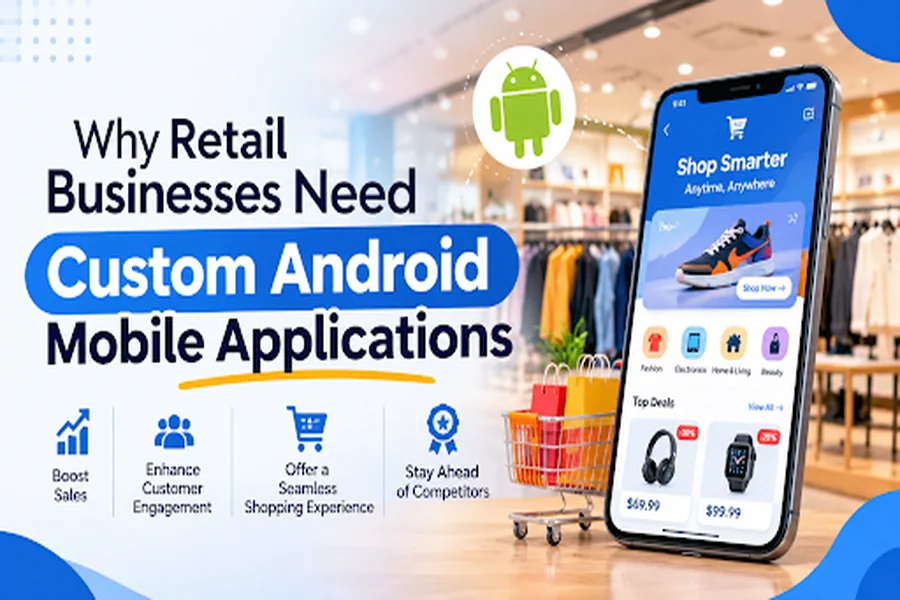
The retail industry has changed significantly as customers increasingly rely on smartphones to discover products, compare prices, and make purchases. Traditional shopping methods are no longer enough to meet the expectations of modern consumers. Retail businesses now need digital solutions that make shopping more convenient, personalized, and accessible.
Custom Android mobile applications have become an effective way for retailers to connect with customers, simplify daily operations, and create better shopping experiences. From online product browsing to real-time order tracking, these applications help businesses manage different aspects of the retail journey through a single platform.
Unlike ready-made applications, custom Android solutions can be designed around specific business requirements. They allow retailers to introduce relevant features, integrate existing systems, and adapt their applications as their businesses grow.
This article explores why retail businesses need custom Android mobile applications, the benefits they offer, and the essential features that can support long-term business growth.
Understanding the Role of Android Mobile Applications in Retail
Mobile applications have become an important part of modern retail strategies. Customers expect businesses to provide quick access to products, simple payment options, and convenient ways to manage their orders. Android applications help retailers meet these expectations while creating direct communication channels with their customers.
Android is particularly valuable because it supports a wide range of smartphones and devices across different customer segments. Retail businesses can use Android applications to reach customers, promote products, manage orders, and improve the overall shopping experience.
A custom retail application can also connect with inventory management systems, customer relationship management (CRM) platforms, and point-of-sale (POS) software. This integration helps retailers manage business activities more efficiently.
10 Reasons Why Retail Businesses Need Custom Android Mobile Applications
1. Deliver Personalized Shopping Experiences
Modern customers appreciate shopping experiences that match their interests and preferences. Custom Android applications allow retailers to understand customer behavior and provide relevant product recommendations.
For example, an application can suggest products based on previous purchases, browsing history, and saved preferences. Retailers can also display personalized offers and product collections to different customer groups.
These personalized experiences make product discovery easier and help customers find items that match their requirements. Over time, they can also encourage repeat purchases and improve customer satisfaction.
2. Improve Customer Engagement and Retention
Maintaining customer relationships is important for retail businesses. A mobile application provides a direct communication channel through which retailers can share updates, offers, and important information.
Push notifications can inform customers about new arrivals, seasonal discounts, limited-time offers, and order updates. Retailers can also introduce loyalty programs and exclusive promotions to encourage customers to interact with the application regularly.
When customers receive useful and relevant updates, they are more likely to stay connected with the brand. This can help businesses build stronger customer relationships and improve retention.
3. Simplify Online Shopping and Checkout
A complicated shopping experience can discourage customers from completing their purchases. Custom Android applications help retailers create a simple shopping journey with convenient product browsing and checkout options.
Customers can explore product categories, view detailed descriptions, compare prices, and add products to their shopping carts. Secure payment gateway integration also allows them to complete transactions using their preferred payment methods.
Features such as saved addresses, multiple payment options, and order summaries can further simplify the checkout process.
A smooth purchasing experience reduces unnecessary steps and makes it easier for customers to shop through their smartphones.
4. Enable Real-Time Inventory Management
Inventory management is one of the most important responsibilities for retail businesses. Without accurate stock information, retailers may experience product shortages, overstocking, and order fulfillment problems.
Custom Android applications can integrate with inventory management systems to provide updated stock information. Business owners and authorized employees can monitor product availability, track stock movement, and receive low-inventory alerts.
For example, when a customer purchases a product, the inventory system can automatically update the available quantity.
This integration helps retailers maintain better stock visibility, reduce manual work, and manage product availability more effectively.
5. Offer Location-Based Promotions
Location-based features allow retailers to connect with customers according to their geographical preferences and nearby shopping locations.
With customer permission, an Android application can use location services to display nearby stores, promote local offers, and provide information about available products at specific outlets.
For example, a retail brand operating multiple physical stores can notify interested customers about promotions available at a nearby location.
These targeted campaigns can help businesses improve local customer engagement and encourage more visits to physical stores.
6. Strengthen Omnichannel Retail Experiences
Customers often switch between online and offline shopping channels before making a purchase. They may explore products through a mobile application, visit a physical store to check product quality, and complete the purchase online.
Custom Android applications help retailers connect these different shopping channels.
Features such as click-and-collect, online order tracking, store availability checks, and synchronized customer accounts can create a consistent shopping experience.
For retailers, integrating online and offline operations also improves order visibility and makes it easier to manage customer interactions across different channels.
7. Improve Customer Loyalty Through Rewards Programs
Customer loyalty programs encourage shoppers to return and purchase from the same retailer. A custom Android application makes these programs easier to access and manage.
Retailers can introduce digital loyalty cards, reward points, membership benefits, and exclusive discounts directly within their applications.
Customers can check their available points, review rewards, and discover special offers without carrying physical membership cards.
Businesses can also create personalized rewards based on shopping frequency and purchasing behavior. These initiatives can encourage repeat purchases and strengthen long-term customer relationships.
8. Make Data-Driven Business Decisions
Understanding customer behavior helps retailers make better business decisions. Custom Android applications can collect useful information about product searches, customer preferences, purchase patterns, and application interactions, subject to applicable privacy requirements and user consent.
Retailers can use this information through analytics dashboards to identify popular products, understand customer interests, and evaluate promotional campaigns.
For example, if a particular product category receives frequent visits but generates fewer purchases, the business can review its pricing, product descriptions, or availability.
Data-driven insights help retailers identify improvement opportunities and plan more effective marketing and sales strategies.
9. Streamline Retail Store Operations
Retail businesses manage several daily activities, including order processing, customer support, stock monitoring, and employee coordination.
Custom Android applications can simplify these activities by connecting different business systems through a centralized digital platform.
Retail employees can access relevant order information, check product availability, and receive operational updates. Integration with POS and CRM systems can also reduce repetitive data entry and improve information sharing.
By automating selected processes, retailers can save time, reduce manual errors, and allow employees to focus more on customer service.
10. Scale Business Operations With Custom Features
Every retail business has different operational requirements. A small retail store may need basic product management and online ordering, while a large retail chain may require multi-store inventory management, advanced analytics, and enterprise integrations.
Custom Android applications provide the flexibility to accommodate these changing requirements.
Businesses can add new payment methods, introduce additional product categories, integrate third-party services, and expand application functionality as needed.
Working with an experienced android mobile application development company can help retailers select suitable technologies and build an application architecture that supports future business expansion.
Essential Features of a Custom Android Retail Application
A successful retail application should provide useful functionality while keeping the shopping experience simple. Some important features include:
User Registration and Customer Profiles
Allows customers to create accounts, manage personal information, save addresses, and review previous purchases.
Product Catalog and Smart Search
Helps customers explore product categories, apply filters, compare products, and find relevant items quickly.
Shopping Cart and Secure Payment Gateway
Provides a convenient checkout process with secure payment options and clear order summaries.
Push Notifications
Keeps customers informed about promotions, new arrivals, order updates, and personalized offers.
Order Tracking and Management
Allows customers to monitor order status, estimated delivery information, and purchase history.
Customer Reviews and Ratings
Helps shoppers understand product quality and make more informed purchasing decisions.
Loyalty and Rewards Management
Provides digital reward points, membership benefits, and special customer offers.
Admin Dashboard and Analytics
Allows retailers to manage products, monitor orders, track application performance, and review business insights.
Custom Android App vs. Ready-Made Retail Applications
Retail businesses often need to decide whether to use an existing retail application or invest in custom development.
Ready-made applications can be suitable for businesses with basic requirements because they generally provide predefined features and quicker implementation. However, their customization and integration options may be limited.
Custom Android applications offer greater flexibility. Retailers can select features according to their workflows, integrate existing business systems, and introduce functionality that supports their specific customer requirements.
Custom development may require a higher initial investment, but it can provide better control over application functionality and future enhancements.
The right choice depends on the retailer’s budget, operational complexity, growth plans, and long-term digital strategy.
How to Choose the Right Android App Development Company for Retail
Selecting the right development partner is an important step in building a reliable retail application. Retailers should evaluate several factors before starting a project.
- Industry Experience: Review the company’s experience in developing retail, eCommerce, and other business applications.
- Technical Expertise: Check its knowledge of Android technologies, backend development, API integration, and cloud infrastructure.
- Portfolio and Previous Projects: Examine completed applications to understand development quality and practical capabilities.
- Security Practices: Ensure the development team follows appropriate security standards for customer information and online transactions.
- Integration Capabilities: Confirm that the company can integrate the application with POS, CRM, ERP, and inventory management systems.
- Post-Launch Support: Consider ongoing maintenance, performance monitoring, updates, and technical assistance.
An experienced development partner can help transform business requirements into a practical application that delivers value to both retailers and customers.
How Much Does Custom Android App Development Cost for Retail Businesses?
The cost of developing a custom Android retail application depends on its features, complexity, design requirements, and technology stack.
A basic application with product listings, customer registration, and shopping cart functionality generally requires less development effort than an advanced retail platform with AI-powered recommendations, real-time inventory synchronization, and multiple third-party integrations.
Other factors that influence development costs include:
- UI/UX design and application complexity.
- Backend infrastructure and database requirements.
- Payment gateway and API integrations.
- Security and data protection requirements.
- Testing, deployment, and maintenance.
Retailers should evaluate their business requirements before finalizing a development budget. Starting with essential features and adding advanced functionality over time can help manage initial investment.
Future Trends in Android App Development for Retail Businesses
Technology continues to introduce new opportunities for the retail industry. Several emerging trends are influencing how retailers develop and improve their mobile applications.
- AI-Powered Product Recommendations: Artificial intelligence can analyze customer preferences and recommend relevant products.
- Augmented Reality Shopping: AR features allow customers to visualize selected products in real-world environments.
- Voice-Based Product Search: Voice-enabled search can make product discovery more convenient.
- AI-Powered Customer Support: Intelligent chatbots can answer common questions and assist customers with basic shopping activities.
- Digital and Contactless Payments: Modern payment technologies make transactions more convenient and support smoother checkout experiences.
Retail businesses that evaluate these technologies according to their customer needs can create more engaging and efficient digital shopping experiences.
Conclusion
Custom Android mobile applications have become valuable digital tools for retail businesses looking to improve customer engagement, simplify operations, and strengthen their online presence. From personalized shopping experiences and loyalty programs to inventory management and omnichannel integration, these applications support several important retail activities.
Unlike ready-made solutions, custom applications allow businesses to build functionality around their specific requirements and expand as their operations grow.
By partnering with an experienced android mobile application development company, retailers can develop scalable mobile solutions that improve shopping convenience and support long-term business growth.
Frequently Asked Questions (FAQs)
1. Why should retail businesses invest in custom Android mobile applications?
Custom Android applications help retailers improve shopping experiences, manage customer relationships, simplify order processing, and provide personalized offers. They also support integrations with inventory and business management systems.
2. What features should a retail Android application include?
Important features include customer registration, product catalogs, smart search, shopping carts, secure payments, order tracking, push notifications, loyalty programs, and analytics dashboards.
3. How can Android apps improve customer engagement in retail?
Android applications support customer engagement through personalized recommendations, push notifications, exclusive offers, loyalty rewards, and convenient shopping experiences.
4. How long does it take to develop a custom retail Android application?
Development timelines depend on application complexity, features, integrations, and testing requirements. A basic application may take a few months, while a feature-rich retail platform may require additional development time.
5. Can a retail Android app integrate with existing POS and inventory systems?
Yes. Custom Android applications can integrate with compatible POS, inventory management, CRM, and ERP systems through APIs and other integration methods.
6. Is custom Android app development suitable for small retail businesses?
Yes. Small retailers can start with essential features such as product catalogs, online ordering, payment integration, and customer profiles. Additional functionality can be introduced as the business expands.