What Is EV Charging Software and Why Does Your Charging Business Need It?
 Johnathan Parker |
June 15, 2026 |
11:03 pm
Johnathan Parker |
June 15, 2026 |
11:03 pm
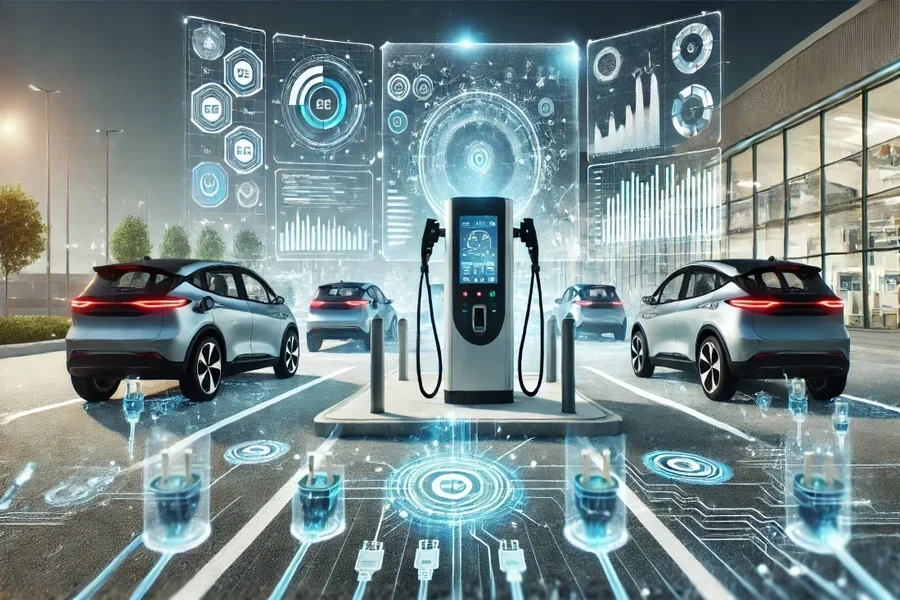
A few years ago, installing EV chargers was enough. You’d put the hardware in, hand over the keys, and that was largely the job done. Those days are over.
As the market has matured, so have the expectations. Fleet managers want remote diagnostics. Property owners want usage reports. Networks want real-time uptime monitoring. Drivers want to know a charger is available before they drive to it. None of that is possible with hardware alone — it all runs on software.
For anyone operating in the EV charging space today, the question isn’t whether you need ev charging software — it’s which kind, and how to get the most out of it. This article breaks that down clearly.
What EV Charging Software Actually Does
EV charging software is the layer that sits between your physical hardware and the people using it — operators, drivers, fleet managers, site owners, and your own team. It’s what turns a box on a wall into a managed, trackable, monetisable service.
At its core, good EV charging software does several things at once:
Network management. Monitor the status of every charger in your network in real time. See which are in use, which are offline, which have faulted, and respond before a client calls you about it.
Remote diagnostics and control. Restart chargers, push firmware updates, adjust power output, and troubleshoot issues without sending a technician on-site. For operators managing dozens or hundreds of units across multiple locations, this is the difference between a scalable operation and a constant fire-fighting exercise.
User access and authentication. RFID cards, mobile apps, QR codes, or plug-and-charge — the software manages who can access what, when, and at what rate.
Billing and payments. Charge by kWh, by time, by session, or offer subscription access. Automate invoicing, process payments, and generate revenue reports without manual intervention.
Reporting and analytics. Track energy consumption, uptime percentages, session data, peak usage times, and revenue — by site, by charger, by client, or across your whole network.
OCPP compliance. The Open Charge Point Protocol is the industry standard that allows software to communicate with hardware from different manufacturers. Any credible platform supports it.
The Different Types of EV Charging Software
Not all EV charging software is the same, and the category splits into a few distinct types depending on what you’re operating and who you’re serving.
Charge Point Management Systems (CPMS)
This is the backbone of most commercial EV charging operations. A CPMS gives you centralised control over your charger network — status monitoring, remote management, user access, and billing. If you’re running a public charging network, a commercial installation for a property client, or a fleet depot, a CPMS is the primary tool you’ll build your operations around.
Well-known platforms in this space include ChargePoint, EV Connect, Driivz, and AMPECO, among others. The differences lie in scalability, customisation options, white-label capability, and how well they handle the specific use cases you serve.
Fleet Management Software
Fleet-specific EV software goes beyond general charge point management to address the operational realities of running electric vehicles at scale. This includes intelligent charge scheduling (making sure vehicles charge during off-peak tariff hours), state-of-charge monitoring across the whole fleet, integration with vehicle telematics, and driver reporting.
For fleet operators, this layer of software has a direct impact on energy costs and vehicle readiness. The difference between unmanaged overnight charging and properly scheduled smart charging can be significant on an annual energy bill.
Energy Management and Smart Charging Software
As grid constraints become a more pressing issue — particularly for large installations — energy management software becomes critical. This type of platform monitors local power demand, distributes available capacity dynamically across multiple chargers, and integrates with building energy management systems (BEMS) to avoid demand spikes that trigger expensive grid charges.
For a site running twenty or thirty chargers off a single grid connection, smart charging software is what makes the installation financially viable without a prohibitively expensive grid upgrade.
White-Label and Branded Platforms
Some operators want to offer a fully branded experience — their own app, their own driver portal, their own invoicing. White-label EV charging software platforms let you do that, building client loyalty and professional credibility without developing anything from scratch.
What to Look For When Choosing a Platform
The EV charging software market is crowded, and the differences between platforms aren’t always obvious from a brochure. Here are the questions worth asking before committing:
Does it support open standards? OCPP compatibility is non-negotiable. Without it, you risk being locked into a single hardware manufacturer. OCPI (Open Charge Point Interface) matters too if you plan to enable roaming access across charging networks.
How does it handle scale? A platform that works well for twenty chargers might buckle under two hundred. Ask about uptime SLAs, what happens during outages, and how the system handles high-concurrency charging events.
What does the reporting look like? Your clients will want data. Your finance team will want revenue breakdowns. Your operations team will want uptime reports. Make sure the reporting suite covers what you actually need to deliver, not just what looks good in a demo.
How configurable is the pricing engine? Commercial EV charging involves a lot of pricing complexity — different rates for different user groups, time-of-use tariffs, flat fees vs. per-kWh billing, free access for certain users. A rigid pricing system will cost you clients and revenue.
What does support look like? When a charger faults at 11pm on a Friday and a frustrated client calls, what does your escalation path look like? Software support response times matter more than most operators realise until they’re in that situation.
Can it integrate with your other systems? Billing software, fleet telematics, building management systems, accounting tools — the best EV charging platforms offer APIs and native integrations rather than requiring everything to live in isolation.
Software as a Competitive Differentiator
Here’s a reality that the more commercially-minded operators in this space have already figured out: hardware is increasingly commoditised. Two chargers from different brands might look nearly identical on a spec sheet. What differentiates the operator installing them — and what keeps clients renewing contracts rather than switching — is often the software layer sitting above the hardware.
Operators who can offer clients a clean management portal, reliable uptime data, transparent billing, and proactive fault resolution are winning contracts over operators who compete purely on installation price. Software is what makes that possible.
It’s also what makes your business scalable. Manual processes — emailing usage reports, chasing invoice queries, dispatching engineers for issues that could be resolved remotely — don’t scale. Software does.
Integrating Software Into Your Marketing Strategy
Having the right software is one thing. Making sure potential clients know about it — and understand why it matters — is another challenge entirely.
Most EV charging businesses undersell their software capabilities in their marketing. A beautifully worded page about “seamless charge point management” buried deep in a website isn’t doing the work it could. If your software genuinely gives clients better visibility, lower downtime, and cleaner reporting than your competitors, that needs to be front and centre in how you position yourself.
This is an area where specialist B2B marketing expertise pays real dividends. Getting your value proposition in front of the right decision-makers — fleet managers, facilities directors, property developers — through targeted paid channels requires understanding both the audience and the platforms. Camel Digital specialises in B2B paid acquisition for exactly this kind of technical product category. If your pipeline is thinner than your product deserves, it’s worth speaking to people who know how to close that gap.
Beyond paid channels, content that educates your target audience — explaining what smart charging actually means, how energy management software reduces grid costs, what OCPP compliance enables — builds the kind of authority that brings in inbound leads over time. Your buyers are doing research before they contact anyone. Be the resource they find first.
Common Mistakes Operators Make With EV Charging Software
A few patterns come up repeatedly among operators who are underperforming relative to their potential:
Choosing the cheapest option and regretting it. EV charging software isn’t the place to save a few hundred pounds a month. The cost of a platform failure, a billing error, or a persistent fault you can’t diagnose remotely will dwarf any subscription savings quickly.
Not training the team properly. Software is only as useful as the people operating it. If your team doesn’t know how to pull a site report, interpret fault codes, or configure a new pricing tier, you’re leaving capability on the table.
Ignoring firmware and software updates. Platforms push updates for a reason — bug fixes, security patches, new features. Operators who let updates slide tend to encounter preventable issues months later and wonder where they came from.
Not using the data. The reporting available through modern EV charging platforms is genuinely valuable — for identifying underperforming sites, making the case for network expansion to a client, or renegotiating energy contracts based on actual usage patterns. Operators who treat the software as a billing tool and ignore everything else are missing most of its value.
The Direction of Travel
EV charging software is evolving quickly, and a few developments are worth paying attention to:
Vehicle-to-grid (V2G) integration. The ability for EVs to push energy back into the grid during peak demand periods is moving from pilot to commercial reality in several markets. Software platforms that support V2G functionality now are positioning themselves well for where the market is heading.
AI-driven predictive maintenance. Rather than reacting to faults, next-generation platforms use operational data to predict hardware issues before they cause downtime. For operators managing large networks, predictive maintenance could significantly reduce the cost and frequency of unplanned service calls.
Deeper grid integration. As grid operators develop more sophisticated demand response programmes, EV charging software that can participate automatically — adjusting charging rates in response to grid signals and passing incentives back to clients — will become an increasingly important feature.
Consolidated fleet platforms. The current fragmentation between fleet telematics, charge point management, and energy management software is a pain point for larger operators. Expect the market to move toward more integrated platforms that handle all three from a single interface.
Final Thought
EV charging is a hardware business that’s increasingly won or lost on software. The operators who understand that — who invest in the right platform, use it properly, and communicate its value clearly to clients — are the ones building durable, scalable businesses in this space.
If you’re still treating software as an afterthought, now is the right time to change that. The market is competitive enough that the gap between operators who do this well and those who don’t is only going to widen.