Top Innovations Fueling the Next Generation of Automobiles
 Johnathan Parker |
June 30, 2025 |
5:44 pm
Johnathan Parker |
June 30, 2025 |
5:44 pm
The automotive industry is racing toward a future that once seemed out of reach. Cars are no longer just machines that get us from point A to point B. They’re evolving into intelligent, connected, and even self-sustaining systems. Behind this transformation are cutting-edge innovations that are reshaping how vehicles operate, interact, and adapt. From electric drivetrains to advanced onboard computing, today’s technology is setting the stage for a new era of mobility.
This article explores eight of the most impactful innovations driving the future of automobiles—each one playing a critical role in how we’ll move tomorrow.
1. Electrification Beyond the Battery
Electric vehicles have evolved far beyond early prototypes and niche city cars. Today, EVs are leading the charge toward sustainable mobility. The biggest advancements aren’t just in battery range—they’re in how energy is managed. Solid-state batteries, for example, are gaining traction thanks to their higher energy density and improved safety. Manufacturers are also finding ways to speed up charging, reduce heat buildup, and improve the recyclability of battery materials. These innovations are making electric cars not only cleaner but also more practical and enjoyable to drive.
2. Smarter Data with Advanced Storage Solutions
Modern cars produce a constant stream of data, from navigation updates and infotainment settings to the real-time input from cameras and sensors. All this information needs to be stored and accessed quickly and reliably, especially in systems like advanced driver assistance or autonomous driving. That’s where high-performance memory comes in.
Lexar Enterprise memory storage, for instance, is AVL-verified and involves 100 main control models from more than 20 mainstream platforms. Their UFS and eMMC storage technologies allow for fast, consistent performance even under stress. This level of reliability is essential for vehicles that depend on split-second decision-making and continuous system logging. As vehicles become more data-driven, these kinds of memory solutions are becoming foundational to their operation.
3. Autonomous Driving and AI Integration
Autonomous vehicles once felt like science fiction, but they’re getting closer to reality thanks to AI. Today’s advanced driver-assistance systems are already capable of handling complex scenarios on the road. These systems rely on artificial intelligence to process massive amounts of sensor data in real time. Lidar, radar, and cameras continuously scan the surroundings, feeding inputs into powerful onboard processors. AI then interprets this data to make real-time driving decisions. What’s changed in recent years is the speed and efficiency of these systems. With edge computing, decisions happen right in the vehicle rather than relying on the cloud. This minimizes delay, improving safety and responsiveness.
4. Vehicle-to-Everything (V2X) Communication
A car that can see is good. A car that can talk is better. Vehicle-to-everything communication enables cars to exchange information with other vehicles, infrastructure, and even pedestrians. This allows for more informed decision-making. For example, a vehicle approaching an intersection can know when the light will change or if another car is coming from a blind spot. In urban settings, V2X can help manage traffic flow and reduce accidents by enabling coordinated movement. It’s also a key part of preparing for autonomous traffic, where vehicles will need to communicate their positions and intentions in real time to avoid collisions and optimize routes.
5. Over-the-Air (OTA) Software Updates
Cars are becoming more like smartphones—constantly updating to fix bugs, improve performance, or add new features. Over-the-air software updates make this possible. Instead of visiting a service center, drivers can receive upgrades automatically. This improves convenience and allows automakers to respond quickly to security issues or performance concerns. The ability to update software remotely ensures that a vehicle can evolve over time, staying up to date long after it leaves the production line.
6. Human-Machine Interfaces (HMI) and In-Car Experience
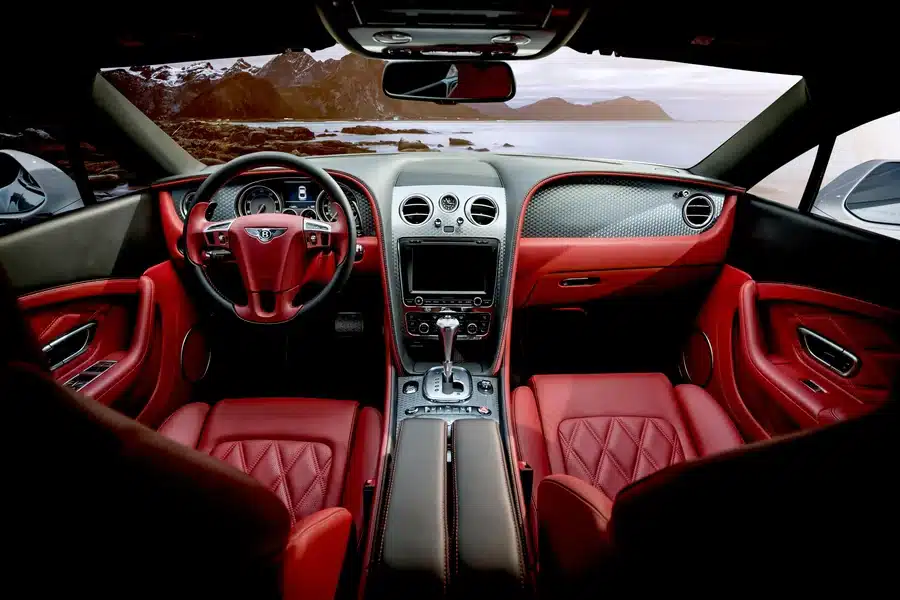
The relationship between driver and vehicle is also changing. Gone are the days of knobs and analog dials. Today’s vehicles offer smart dashboards, voice controls, gesture recognition, and even AI-powered assistants. Human-Machine Interfaces are redefining the in-car experience by making controls more intuitive and less distracting. Digital instrument clusters now display personalized information, while infotainment systems learn from user behavior to suggest routes, media, or even climate settings. Voice recognition systems have improved significantly, allowing drivers to interact with their vehicle without taking their hands off the wheel. The goal of HMI is to create a seamless connection between the driver and the machine, making cars easier and more enjoyable to use.
7. Sustainable Materials and Eco-Friendly Manufacturing
Innovation isn’t only about performance and technology. Sustainability is becoming a key priority in automotive design. Automakers are embracing recycled materials, plant-based plastics, and eco-friendly textiles to reduce their environmental impact. Some manufacturers are even exploring alternatives to traditional leather, replacing it with synthetic or organic options made from mushrooms, pineapples, or recycled fibers. On the production side, factories are becoming greener through renewable energy, closed-loop water systems, and lower emissions processes. As sustainability becomes a competitive differentiator, more companies are integrating environmentally conscious practices into every step of their supply chain.
8. Modular Vehicle Architectures
Car development has traditionally been a slow and expensive process. Modular platforms are changing that. Instead of designing a unique chassis for each model, automakers are now building multiple vehicles—electric, hybrid, or combustion—on a single modular platform. This approach reduces costs, shortens development time, and allows companies to respond more quickly to market changes. For example, the same base platform can support a compact SUV, a sedan, and even a delivery van, with changes made primarily to the upper body and drivetrain. These flexible architectures also make it easier to integrate new technologies, such as battery upgrades or autonomous features, without a complete redesign. As demand for customization and innovation grows, modularity provides the adaptability manufacturers need to stay competitive.
The future of mobility is being shaped by a diverse range of innovations, each contributing to a smarter, safer, and more sustainable automotive experience. Together, these advancements aren’t just improving individual cars—they’re transforming the entire automotive landscape. As technology continues to evolve, so will our expectations of what a vehicle can be. The next generation of automobiles is already here—and it’s just getting started.