Key Factors to Consider Before Starting a Commercial Construction Project
 Ava Thompson |
April 15, 2026 |
4:50 pm
Ava Thompson |
April 15, 2026 |
4:50 pm
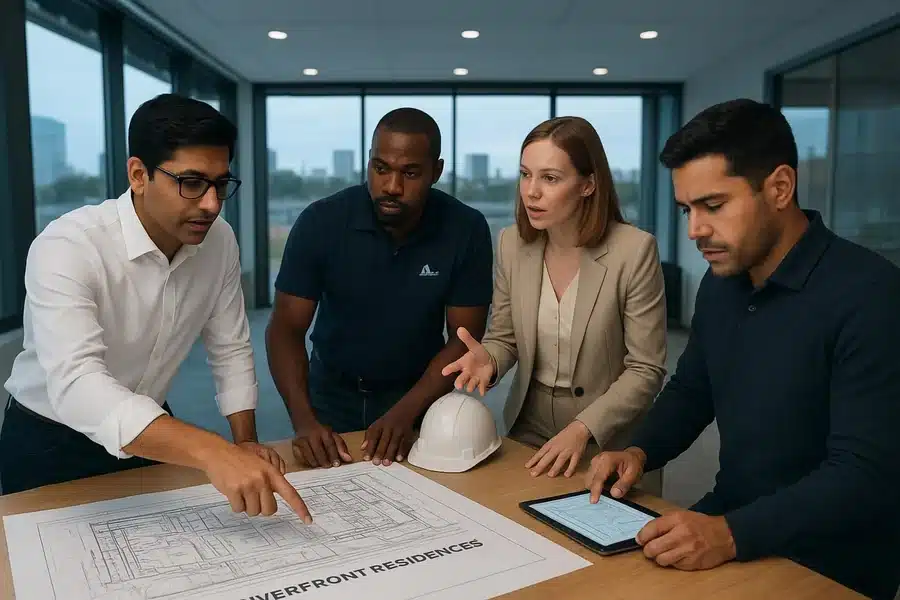
To start a commercial construction project successfully, you need to focus on several key points: defining a clear project scope, setting a realistic budget with a solid contingency fund, choosing a strategic location, and putting together a highly experienced team. Handling local zoning rules, building permits, and safety regulations is just as important. By working through these core items before construction begins, you help keep the project in line with your business goals, stay within budget, and reduce the risk of delays and legal issues.
Commercial construction involves high costs and tight margins. Whether you are building a modern office headquarters, a busy retail center, or a large industrial plant, the planning phase shapes everything that follows. It is about more than drawings and materials; it is about planning, coordination, and careful risk control that turns an idea into a real, profitable property.
What to Know Before Starting a Commercial Construction Project
Who Is Involved in Pre-Construction Planning?
The pre-construction phase brings together many people, each with a role in shaping the project. At the center is the owner or developer, whose vision and business needs lead the way. They are often joined by investors and financial partners, who may stay in the background but are critical in keeping the project financially sound. Bringing in a general contractor early is now a common best practice, because their knowledge of labor and material costs helps keep the design realistic and affordable.
Beyond the owner and contractor, you will likely work with several technical experts. These include architects, structural engineers, and environmental consultants who review whether the project is practical and safe. If you are updating or reusing an existing building, you also need to look at the condition of the exterior, which may call for specialized facade repairs so the building is safe and matches the new brand image. Involving these experts early helps reveal problems before heavy equipment ever arrives on site.
What Questions Should You Ask at the Outset?
Before you sign a large construction contract, you need to ask direct, basic questions about what the building is supposed to do. What is the main purpose of this facility? Is it built for heavy foot traffic, or is it a production plant with large machines?
Knowing how the building will be used helps decide the size, layout, and building systems you will need. For example, an office tower has very different HVAC and data needs than a small retail store.
You should also think about how the building looks and what it says about your brand. How will it present your company to clients and the public? Will the space support employee comfort and productivity? Asking these questions early lets the design team build your brand and culture into the architecture.
You also need to think long term: Will the building allow your business to grow and change, or will it become too small or outdated in a few years? Answering these questions upfront gives you a clear guide for decisions throughout the project.
1. Define Project Scope, Goals, and Vision
How Does Clear Project Planning Impact Outcomes?
A clear project plan acts as a guiding point for everyone involved in construction. When the scope is well defined, it reduces the risk of “scope creep”-the slow expansion of project requirements that adds cost and time. A written vision helps keep the architect, engineer, and contractor working toward the same end goal.
A clear plan also makes handling disputes and questions easier. When issues come up on site-as they always do-the team can look back at the original goals to decide the best course of action. This forward-thinking approach cuts down on last-minute changes and expensive change orders, which often cause budget problems on commercial jobs.
Why Set Measurable Objectives for Your Build?
Loose goals like “build a nice office” are hard to turn into reality. Successful projects use specific, measurable objectives. These might include set targets for energy use, a fixed date for opening, or a certain square footage per employee. When goals are measurable, the team can set priorities. For example, if fast delivery is the top goal, the team might choose pre-engineered metal building systems to shorten the schedule.
Clear targets also support accountability. During construction, stakeholders can track progress against key performance indicators (KPIs). If the project starts to lag in an area-such as energy-efficiency standards or LEED requirements-the team can spot the problem and change course before it becomes too late or too costly to fix.
Aligning the Project with Long-Term Business Strategy
A commercial building is a business tool, not just a physical structure. It should support your long-term plans. If you expect to grow your staff or expand services, the building should allow for that. You might design “shell space” that can be finished later or size the electrical and mechanical systems to handle future loads.
You also need to factor in the needs of your industry. A medical office must follow strict healthcare codes and may require specialized plumbing and air systems. A warehouse needs layouts that support inventory flow and shipping. By shaping the project scope to match how your business operates, you create a building that supports daily work instead of slowing it down.
2. Set a Realistic Budget and Secure Financing
How to Estimate Construction Costs Accurately
Accurate cost estimates are the base of a stable project. Start by breaking the work into parts: site work, foundation, structure, electrical, plumbing, finishes, and so on. To get a realistic number, work with estimators and contractors who know current prices for materials and labor. They can prepare a detailed list that covers both “hard costs” (physical construction) and “soft costs” (permits, design fees, insurance, and project management).
Getting multiple bids from trusted suppliers is also a smart step. Relying on just one quote is risky because prices for items like steel, glass, or custom finishes can change quickly based on supply chain conditions. A careful estimating process helps you avoid budget gaps that can slow or even stop the project later.
What Factors Influence Budget Variability?
Many factors can cause your budget to shift after the first estimate. Market swings can raise or lower the cost of key materials between design and purchasing. Complex designs, unusual architectural features, and tough site conditions often mean higher labor costs. If there is a shortage of skilled workers in your area, wages may rise, pushing up total costs.

Indirect costs can also grow. Items like temporary power, heating, security, and site offices add up over time. The season matters too: winter work may require extra heating, snow removal, and weather protection. Knowing about these variables helps you build a budget that can handle normal changes without breaking.
Another often overlooked factor is the accurate valuation of physical assets involved in the project. From heavy machinery to specialized equipment, understanding true asset value can directly impact budgeting, financing, and insurance decisions. Working with experts in machinery and equipment appraisal ensures that construction stakeholders have reliable data to make informed investments and avoid costly miscalculations.
Securing Funding: Loans, Grants, and Other Options
Once you have a working budget, the next step is to secure funding. Most commercial projects use a mix of bank loans, credit lines, and private investment. To get good loan terms, you need a clear business plan that includes cost details, return-on-investment projections, and a realistic schedule. Lenders want proof that the project is well planned and low risk.
Beyond bank loans, many developers also look at other funding sources. These can include government grants for downtown renewal, tax credits for energy-efficient buildings, or local incentives that support job growth. Using these tools can reduce your total debt and improve the project’s long-term financial performance.
Managing Contingency Funds for Unplanned Expenses
In construction, surprises are common and usually expensive. You might hit an unknown utility line, find poor soil, or face sudden price increases on materials. To deal with this, a contingency fund is a must. Many experts suggest setting aside 5% to 15% of the total project cost as a backup fund. Having this money ready lets you handle problems quickly without stopping work or rushing to find new financing.
Managing the contingency fund takes honesty and discipline. It should be reserved for real surprises and necessary fixes-not upgrades or nicer finishes. Careful tracking of this fund builds trust with investors and helps keep the project on track even when unexpected issues appear.
3. Choose the Right Site and Assess Feasibility
Evaluating Location for Access, Growth, and Zoning
The location of a commercial building has a strong effect on its success. A good site improves customer visibility, makes it easier for employees to commute, and helps suppliers move goods in and out. When comparing sites, look at access to major roads, public transit, and nearby services like restaurants, banks, and childcare. A convenient location can help with hiring and keeping talented staff.
You should also review growth trends in the area. Is the neighborhood improving and attracting investment, or is it losing businesses and residents? Buying in an area expected to grow can increase property value over time. At the same time, you need to confirm that local zoning rules allow your planned use, height, parking, and signage. Changing zoning can be slow and uncertain, so it is better to buy land that already fits your needs.
Why Is Site Analysis Critical for Commercial Projects?
A proper site analysis helps find physical and legal problems before they disrupt construction. This goes beyond online maps. Professionals should visit the site to check drainage, access to utilities, existing structures, and nearby properties. Their review may reveal issues like flood risks, limited utility capacity, or legal easements that restrict where you can build. If you know about these early, you can adjust the design or include fix costs in the budget.
Skipping detailed site analysis often leads to costly surprises. For example, finding a buried fuel tank or an unmarked sewer line after you start building can shut down the job for weeks. A thorough review upfront gives you a realistic picture of challenges and helps keep crews working instead of waiting.
Understanding Environmental and Soil Considerations
The soil under your building affects both safety and cost. Soil tests show whether the ground can support the structure and what type of foundation is needed. Poor soil, high water tables, or unstable fill may require deep foundations, extra drainage, or soil replacement, all of which add cost. Knowing the soil conditions at the start lets engineers design the right foundation and avoids future settlement or cracking.
Environmental studies are just as important. They discover contamination and hazardous materials that could harm people or lead to lawsuits. There may also be protected wetlands, floodplains, or habitats that limit how and where you can build. Following environmental rules helps you avoid fines and delays and supports long-term site health.
Check Local Zoning and Regulatory Restrictions
Zoning rules control what you can build and how you can use the property. They set limits on building height, required setbacks from streets and neighbors, lot coverage, parking counts, and allowed uses. Before buying land or signing leases, you need to confirm that your planned building and use follow these rules.
If your plan does not match current zoning, you may need a variance or a zoning change. This process usually requires public notices, hearings, and approvals by planning boards or city councils, which can take months. Knowing these requirements at the start lets you plan schedules and adjust designs instead of facing shocks later.
4. Navigate Permitting, Codes, and Regulatory Compliance
What Permits Are Needed for Commercial Construction?
Permits are often a major cause of schedule delays. Depending on your project and location, you may need various approvals, including a main building permit and separate permits for electrical, plumbing, mechanical systems, fire protection, signage, and site work. If the work disturbs soil or changes drainage, you may also need grading and environmental permits.
To get permits, you must submit complete drawings and site plans for review. Local officials check these documents to confirm that the design meets safety, health, and planning standards. Reviews can take weeks or months, so you need to start this process early and include approval times in the project schedule.
How to Ensure Compliance with Building Codes and Safety Laws
Following building codes and safety laws is a legal requirement. Commercial buildings must meet standards for structural strength, fire safety, mechanical systems, electrical work, and accessibility (including ADA rules). This starts in the design phase, where architects and engineers build these codes into the plans. During construction, crews must follow OSHA standards and site safety rules to protect workers.
Local inspectors visit the site at key stages to check for code compliance. Failing an inspection can require rework and cause delays. By focusing on code and safety from the very beginning, you protect your investment, your workforce, and the people who will eventually use the building.
Timelines for Approval and Common Regulatory Challenges
Laws and standards for building and the environment change regularly, which can create new demands as you plan and build. Updates to energy codes may require better insulation or more efficient equipment. Environmental rules might call for extra stormwater controls or special materials. Also, you may have to deal with federal, state, and local agencies at the same time, which can create overlapping or conflicting requirements.
To handle this, many owners hire code consultants or choose general contractors with strong experience in the local area. These professionals know local processes and expectations and can help move applications through faster. Planning for permit and review time helps keep everyone’s expectations realistic and reduces frustration over approval delays.
5. Assemble Your Construction Team and Key Partners
How to Select the Best Contractor for Your Project
Choosing a general contractor is one of the most important decisions you will make. You are selecting a partner to manage cost, schedule, and risk. Do not just pick the lowest bid. Review the contractor’s reputation, ask for references, and study their past projects, especially those similar to yours. A company like Nova Construction Services is more likely to foresee problems and suggest cost-effective solutions because they have completed many projects of similar complexity.
You should also check the contractor’s financial health and insurance. You want a company that has the cash flow and bonding capacity to finish the job and the insurance to protect against accidents and damage. An established contractor also brings a strong network of subcontractors and suppliers, which supports consistent quality across all trades.
The Role of Architects, Engineers, and Consultants
While contractors handle building work, architects and engineers handle design and technical planning. Architects take your ideas and turn them into floor plans, elevations, and interior layouts that meet both function and style goals. Structural, mechanical, and electrical engineers then design systems that keep the building strong, safe, and efficient.
Early cooperation between these groups is very helpful. When the contractor joins design meetings-often called a design-build or integrated approach-the team can spot issues that might make construction harder or more expensive. Fixing these in the design phase saves time and money and leads to a smoother build.
Why Track Team Credentials, Insurance, and References?
Construction involves many risks, so you need to know who is doing the work. Keeping records of licenses and certifications shows that each trade is qualified. For example, licensed electricians and certified safety managers lower the risk of faulty installations and site accidents. Careful attention to qualifications supports both safety and quality.
Insurance and surety bonds are another key layer of protection. They cover events such as contractor default, unpaid subcontractors, and injuries. Checking references from past clients helps confirm that team members are reliable, communicate well, and finish projects as promised.
6. Plan for Project Scheduling and Milestone Management
Developing a Realistic Construction Timeline
A construction schedule is a planning tool, not just a deadline list. Building a realistic timeline means understanding the order of work. Many tasks depend on others being finished first. For example, you cannot start drywall until framing, rough plumbing, and electrical work are complete, and the building is weather-tight.
Project managers often use Gantt charts and critical path methods to map tasks and identify which activities control the final completion date. By watching the critical path closely, they can focus resources on tasks that, if delayed, would push back the entire project.
Coordinating Material Delivery and Supply Chain Logistics
Materials must arrive at the right time and in the right order. Some products-such as steel beams, custom glass, elevators, or large air-handling units-have long lead times. You need to identify these early and order them well in advance.
On-site logistics also matter. If materials arrive too early, they can clutter the site, get damaged, or be stolen. If they arrive too late, crews sit idle. Coordinating delivery dates with construction milestones helps keep the site organized and work moving smoothly.
Setting Milestones and Managing Delays
Milestones mark major points in the project, such as finishing foundations, completing the structure, or passing key inspections. They give the team short-term goals and provide clear status updates for owners and investors.
When delays occur-due to weather, labor shortages, or inspection issues-the project manager must quickly review how they affect future tasks. Adjustments may include resequencing work, adding shifts, or bringing in extra crews. Open communication with all parties during these times helps maintain trust and keep everyone focused on completion.
7. Analyze and Manage Risks Throughout Construction
Identifying Possible Risks and Mitigation Strategies
Risk management means spotting possible problems early and planning how to reduce their impact. Common risks include unexpected site conditions, changes in material availability, labor disputes, schedule conflicts, and severe weather.
To reduce these risks, teams may use steps such as qualifying multiple suppliers for key materials, building weather allowances into the schedule, and setting clear safety rules to lower accident rates. Owners should also think about financial risks like interest rate changes on loans. When you face these issues in advance, you reduce crises and improve project stability.
Insurance, Surety Bonds, and Liability Management
Insurance provides financial protection if something goes wrong. Typical coverage includes Builder’s Risk (covering damage to work in progress), General Liability, and Workers’ Compensation. These policies help protect both owner and contractor if there is an accident, fire, theft, or other loss during construction.
Surety bonds offer additional protection. A performance bond supports completion of the project under the contract terms, and a payment bond helps guarantee that subcontractors and suppliers are paid. Using the right mix of insurance and bonds spreads risk to parties who are equipped to handle it.
8. Prioritize Quality Control and Safety Practices
Implementing Onsite Safety Protocols
Jobsite safety protects workers and also keeps the project moving. A strong safety program starts with training, clear rules, and required use of personal protective equipment (PPE) such as hard hats, safety glasses, and fall protection. Regular “toolbox talks” keep workers aware of current tasks and related hazards.
Good housekeeping and site organization are also key. Clear walkways, secured scaffolding, proper storage of tools and materials, and visible warning signs lower the risk of trips, falls, and other accidents. A strong safety culture reduces injuries, fines, and work stoppages.
Monitoring Quality Standards and Code Compliance
Quality control means checking work regularly as it is installed, not just at the end. This includes testing concrete, checking welds, verifying fireproofing, and confirming that mechanical and electrical systems are installed as specified. Early inspections help catch mistakes before they spread.
Code compliance is a key part of quality. Fire ratings, structural details, accessibility features, and mechanical systems all must follow code. Making quality checks and code reviews part of daily routines helps deliver a safe, durable building.
Conducting Regular Inspections and Addressing Noncompliance
Regular inspections by both internal staff and outside officials help find and fix problems quickly. All findings should be documented and shared with the team, along with clear action plans. Small errors in foundations, framing, or wiring can become serious if not corrected while easy to reach.
Fixing noncompliant work also means understanding why it happened. Was it a design conflict, unclear drawings, poor communication, or lack of training? Solving the root cause helps prevent repeat issues later in the project.
9. Plan for Sustainability and Future Expansion
Incorporating Green Building Principles
Energy-efficient and environmentally friendly buildings are now standard expectations for many tenants and investors. Applying green building methods can lower utility costs and reduce environmental impacts. Options include recycled or low-impact materials, high-performance windows, efficient insulation, and on-site renewable energy such as solar panels.
Many owners use LEED or similar rating systems as a guide for sustainable design and construction. Beyond environmental benefits, greener buildings often provide better indoor air quality, more natural light, and better comfort, which can improve health and productivity for occupants.
Considering Energy Efficiency and Long-Term Operating Costs
While efficient systems can cost more at the start, they often pay for themselves over time. High-efficiency HVAC equipment, LED lighting, and advanced controls can lower monthly energy bills and reduce maintenance. When comparing products, look at life-cycle costs, including energy use, maintenance, and replacement, rather than only the purchase price.
Improved insulation and cool roofing materials can reduce heating and cooling loads, which may allow smaller and cheaper mechanical systems. Over the life of the building, these choices can create large savings.
Designing for Flexibility and Business Growth
Business needs change, so buildings should be flexible. You can plan for this by using modular partitions, open floor plates, raised floors, and accessible ceilings that make it easier to move walls, add outlets, or re-route cabling later.
If land and zoning allow, you can also design structures and foundations that support future expansions-either outward or upward. Planning for change reduces future renovation costs and provides room for growth without moving or building from scratch again.
10. Ensure Transparent Communication and Stakeholder Engagement
Establishing Clear Communication Channels
Poor communication leads to mistakes, delays, and extra costs. Clear channels should be set at the start of the project. Many teams use project management software as a central hub for drawings, schedules, RFIs, daily logs, and change orders, so everyone works from the same information.
Regular meetings-often weekly-between the owner, contractor, architect, and key consultants allow the team to review progress, discuss risks, and make decisions. Written meeting minutes provide a record of what was agreed and who is responsible for next steps.
Reporting Progress and Handling Change Orders
Owners and investors need regular, honest progress reports. These reports usually cover recent milestones, upcoming work, budget status, and any new issues. Clear reporting helps owners make timely decisions about operations, leasing, marketing, and staffing for the new facility.
Changes to the original scope or design are common, but they must be controlled. Every change order should be documented, with clear pricing and schedule impact, and approved in writing before work proceeds. A simple, consistent process for handling changes helps avoid confusion, extra cost, and schedule slippage.
Engaging Clients and End Users Throughout the Project
The building should work well for the people who will use it every day. Getting feedback from employees, tenants, customers, or facility managers during design can lead to smarter layouts, better storage, more useful power and data locations, and improved comfort.
Involving these users through workshops, walk-throughs of mock-ups, or regular review meetings also helps set expectations. When people feel that their input mattered, they are more satisfied with the finished space and more prepared to move in and operate effectively.
Evaluating What Makes a Commercial Construction Project Successful
Common Mistakes to Avoid Before Breaking Ground
A frequent mistake is rushing through planning to start construction sooner. Skipping or shortening design, budgeting, and site studies often leads to major changes later, which cost more time and money than careful planning would have. Another mistake is picking a contractor only because they offered the lowest price, without checking quality, experience, or reputation.
Owners also sometimes underestimate how difficult and slow permitting and approvals can be. Assuming that these steps will “work themselves out” can lead to long delays. Finally, failing to include a contingency fund leaves no room for surprises, making it hard to respond when issues arise.
Checklist for Project Readiness
Before construction starts, you should be able to confirm the following points:
- Clear Vision: Are the goals, scope, and functions written down and agreed by all key parties?
- Verified Financing: Is the full budget in place, including a 10-15% contingency?
- Site Feasibility: Have soil tests, environmental reviews, and zoning checks been completed?
- Permits in Hand: Have required local and state permits been issued?
- Expert Team: Are the general contractor, architect, engineers, and main consultants selected, checked, and under contract?
- Realistic Schedule: Is there a master schedule that accounts for long-lead items and normal delay risks?
- Safety Plan: Are site safety procedures and OSHA-compliant practices ready to implement?
Success in commercial construction comes from careful planning and steady, active management. By focusing on the factors above, you can turn a complex, high-risk project into a clear, structured process that delivers a strong asset for your business. After construction is finished and the building opens, the focus should shift to long-term operations: regular maintenance, system upgrades, and periodic improvements.
Owners who plan for the full life of the building-from design to daily use to future updates-get better performance and higher returns over time. Treating the building as a long-term investment that needs ongoing care helps keep it safe, efficient, and profitable for many years.