How Material Selection Influences Reliability in High-Temperature Industrial Assemblies
 Ava Thompson |
February 3, 2026 |
7:34 pm
Ava Thompson |
February 3, 2026 |
7:34 pm
In high-temperature industrial assemblies, reliability is rarely determined by a single factor. Design geometry, operating conditions, and manufacturing quality all play a role. Yet one element consistently shapes long-term performance more than many teams initially expect: material selection. When components are exposed to repeated thermal cycling, mechanical load, and harsh environments, the choice of material becomes a defining factor in whether an assembly performs consistently or degrades prematurely.
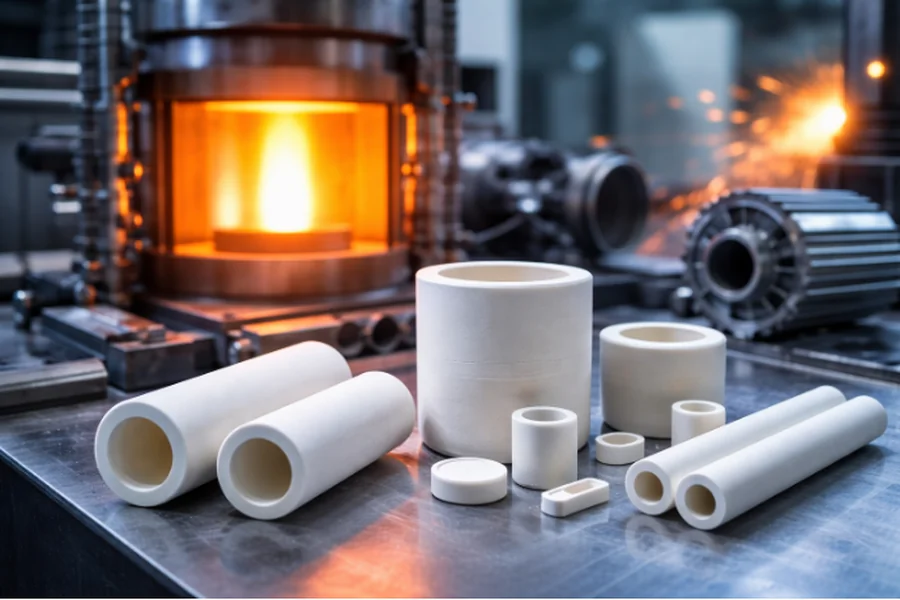
Many failures in high-temperature systems do not originate from poor design intent, but from materials that cannot maintain their properties under real operating conditions. Components may meet specifications at room temperature, yet behave very differently once exposed to sustained heat, vibration, or chemical exposure. In such environments, materials designed specifically for thermal stability—such as structurally stable alumina tube components used in high-temperature assemblies—can significantly reduce the risk of deformation, fatigue, and unexpected failure.
Understanding how material behavior changes under heat is therefore essential for engineers seeking to improve reliability, reduce maintenance, and extend service life in demanding industrial applications.
Why High Temperature Changes Material Behavior
Temperature affects materials at both the macro and micro level. As heat increases, most materials experience thermal expansion, changes in mechanical strength, and altered surface interactions. These effects become more pronounced when temperature fluctuations are frequent or prolonged.
In metallic components, elevated temperatures can reduce yield strength and accelerate creep, particularly under sustained load. Over time, this leads to dimensional changes that affect alignment, sealing, and load distribution. Polymers, while useful in low-temperature environments, may soften, degrade, or release volatile compounds when exposed to heat beyond their design limits.
Ceramic materials behave differently. Many ceramics maintain structural integrity and dimensional stability at temperatures where metals begin to deform. This distinction makes material choice a critical decision point in high-temperature assemblies rather than a secondary consideration.
Reliability Starts With Structural Stability
Reliability in industrial systems is closely tied to structural stability. When a component changes shape or properties under heat, it introduces variability into the assembly. This variability can manifest as increased wear, misalignment, or uneven stress distribution across connected parts.
Materials with low thermal expansion and high resistance to deformation help preserve consistent geometry throughout the operating cycle. This consistency is especially important in assemblies that rely on tight tolerances, such as heating elements, sensor housings, and reaction chambers.
Stable materials reduce the need for frequent recalibration and adjustment, allowing systems to operate predictably even under fluctuating thermal conditions.
Thermal Cycling and Long-Term Performance
Many industrial assemblies do not operate at a constant temperature. Instead, they undergo repeated heating and cooling cycles as part of normal operation. Thermal cycling places unique stress on materials due to expansion and contraction.
When materials expand and contract at different rates, internal stresses build at interfaces and joints. Over time, these stresses can cause cracking, loosening, or material fatigue. Selecting materials with compatible thermal properties helps mitigate these effects.
In high-temperature assemblies, reliability is often determined not by peak temperature alone, but by how well materials tolerate repeated thermal transitions without degradation.
Material Compatibility Within Assemblies
Industrial assemblies rarely consist of a single material. Instead, they combine metals, ceramics, and sometimes polymers to achieve specific functional goals. Material compatibility becomes a critical factor when these components interact under heat.
Differences in thermal expansion, hardness, and surface behavior can lead to accelerated wear or stress concentration at contact points. Engineers must evaluate how materials behave not only individually, but as part of an integrated system.
This system-level perspective helps prevent failures that arise from otherwise acceptable materials being used in incompatible combinations.
The Role of Ceramics in High-Temperature Reliability
Ceramic materials are often selected for high-temperature environments because of their resistance to heat, corrosion, and wear. Unlike metals, many ceramics retain their mechanical properties at elevated temperatures and do not suffer from creep in the same way.
Beyond temperature resistance, ceramics offer electrical insulation, chemical inertness, and dimensional stability. These properties make them suitable for applications ranging from furnace components to thermal processing equipment.
Modern industrial design increasingly relies on advanced alumina material systems engineered for demanding industrial environments to balance performance, reliability, and longevity where traditional materials fall short.
Cost, Reliability, and Lifecycle Considerations
Material selection is often influenced by cost considerations, particularly during early design stages. While some high-performance materials may have higher upfront costs, their impact on reliability and maintenance can significantly alter total lifecycle cost.
Components that degrade or fail prematurely increase downtime, replacement frequency, and labor costs. In contrast, materials chosen for stability and durability reduce unexpected failures and support predictable maintenance schedules.
From a lifecycle perspective, investing in appropriate materials often results in lower overall cost and improved operational efficiency, especially in high-temperature systems where failures are expensive and disruptive.
Failure Modes Linked to Poor Material Selection
Many common failure modes in industrial assemblies can be traced back to material limitations. These include thermal distortion, surface oxidation, fatigue cracking, and loss of mechanical strength.
Such failures may not be immediately apparent during initial testing but emerge over time as operating conditions push materials beyond their effective limits. Identifying these risks early through informed material selection helps engineers design assemblies that remain reliable throughout their intended service life.
Integrating Material Selection Into Design Strategy
Material selection should be treated as a strategic design decision rather than a final specification step. By evaluating operating temperature, mechanical load, environmental exposure, and lifecycle expectations early in the design process, engineers can align material choices with performance goals.
This proactive approach supports reliability by reducing uncertainty and minimizing the need for corrective measures after deployment. In high-temperature industrial assemblies, material selection is not just about meeting specifications—it is about ensuring consistent, long-term performance under real-world conditions.
Conclusion
Reliability in high-temperature industrial assemblies is shaped by many interconnected factors, but material selection remains one of the most influential. Materials that maintain structural stability, resist thermal degradation, and integrate well within complex assemblies provide a strong foundation for dependable operation.
By understanding how materials behave under heat and incorporating this knowledge into design decisions, engineers can reduce failure risk, extend service life, and improve overall system reliability. In demanding industrial environments, the right material choice is not simply an option—it is a requirement for sustained performance.