Best Places to Sell Bulk & Decommissioned Solar Panels
 Johnathan Parker |
August 25, 2026 |
8:48 pm
Johnathan Parker |
August 25, 2026 |
8:48 pm
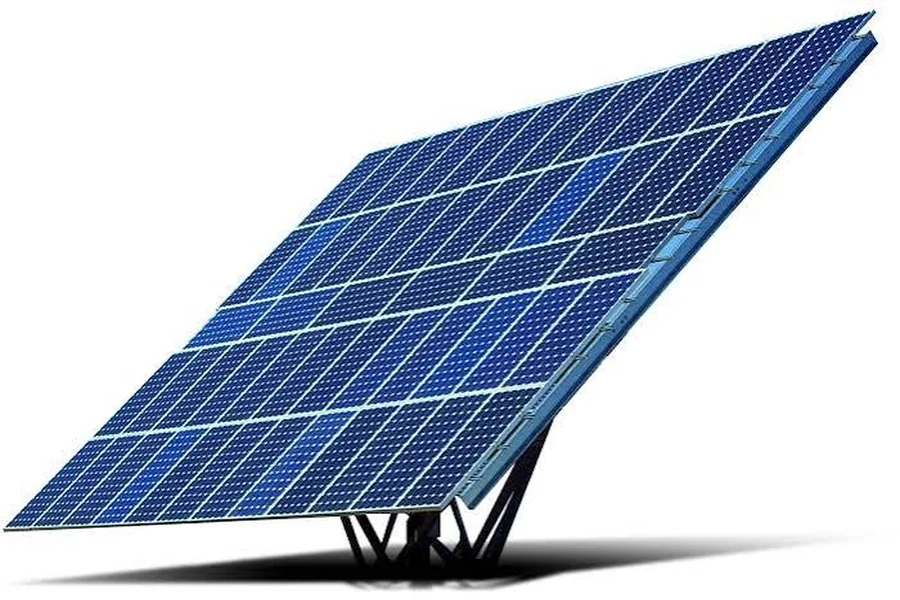
The first wave of utility-scale arrays built in the 2000s and 2010s is now aging out, and the people who own those arrays are discovering an awkward truth: taking a field of panels down is the easy part. Finding someone who will actually buy, haul, and responsibly process ten thousand modules is the hard part. Wind and solar together reached a record share of the grid in 2025 (about 17% of U.S. electricity), which is exactly why the retirement pipeline behind it is filling up. By one widely cited industry projection, panel waste could total 78 million tonnes globally by 2050.
So who buys end-of-life panels from solar farms in bulk, and how do you get a fair price instead of a landfill invoice? We looked at the companies and programs that take decommissioned modules at scale, what each one pays or charges, and where each one fits. We put the buyers most suited to commercial and utility-scale volumes first, gave every entry the same fields, and noted an honest limitation for each, because none of these options is right for every seller.
What an off-taker or buyback program actually is
An off-taker is any buyer who commits to take a defined volume of surplus or end-of-life modules off a seller’s hands, usually under agreed terms rather than a one-off haggle. A buyback program is the packaged version of that: a repeatable intake process built for volume.
Most decommissioned-farm buybacks run end-to-end like this. You submit a list (make, model, wattage, quantity, condition, and site location). The buyer estimates value, splitting your inventory into what can be resold, what can be repurposed, and what has to be recycled. Logistics get scheduled next, whether that means palletizing and freighting the modules out or sending a crew for on-site pickup. The modules are then triaged and processed, you either receive payment for the resaleable share or pay a recycling fee on the rest, and a compliance-grade certificate documents where everything ended up. The whole point of a real program is that one counterparty owns all of those steps, so a project manager is not stitching together a broker, a trucking company, and a recycler on their own.
Volume is the dividing line. Residential jobs run from a handful of panels to a few dozen. Commercial rooftops and carports land in the dozens to low hundreds. Utility-scale arrays are measured in thousands of modules and rated in megawatts, and cumulative U.S. panel waste is expected to grow fast: one federal estimate puts it between 0.17 and 1 million tons by 2030. Bulk buyers are built for the top of that range, and most of them set a floor (often around 100 panels) below which the freight math stops working.
The buyers and off-takers, ranked
1. Solar Recycling
Best for commercial and utility-scale sellers who want one company to buy the good modules, recycle the rest, and manage the trucks in between.
Solar Recycling built its whole model around the scenario an operator actually faces: a warehouse or a decommissioned field full of panels that someone wants to sell rather than destroy. It buys resaleable used modules, recycles or destroys what cannot be reused, and handles the decommissioning and transport as a managed job (it calls the teardown “the Big Decommish”). The pitch is a circular one, refurbish what still works and recover materials from the rest, aiming for what the company brands as zero net waste and, when resale value covers the recycling cost, zero net cost.
Payout and cost model, visible up front: resaleable used panels are valued at $0.05 to $0.60 per watt (against $0.70 to $1.50 per watt for new), and recycling non-reusable modules runs roughly $20 to $50 per panel plus shipping. The intake flow is a short submit, estimate, and dispatch sequence, and every job closes with a Certificate of Completion for compliance files. Standing: founded in 2019 by e-waste veterans, an RE+ 2025 exhibitor, and profiled in the secondary-market resource library that solar resellers read.
Honest limitation: this is not a residential or small-lot service. The typical minimum is around 100 panels and the focus is commercial and utility-scale only, so if you have a garage’s worth of modules, you are the wrong customer. The company also markets itself as the only certified recycler in California, a claim buyers should ask it to document rather than take on the badge alone.
2. SOLARCYCLE
Best for large developers and utilities that care most about high material recovery and clean ESG reporting.
SOLARCYCLE is a venture-backed recycler that has leaned hard into the utility end of the market, and it shows in the numbers it publishes: more than 400 projects serviced across 30 states, feeding recovered aluminum, silver, copper, glass, and silicon back into the domestic supply chain. It says it captures up to 97% of the value inside a module. Rather than framing itself as a cash buyer, it sells the compliance and circularity story, complete with TCLP testing, landfill-diversion metrics, and a Certificate of Recycling.
Payout and cost model: this is a paid recycling service, not a straight buyback. SOLARCYCLE notes that customers can often partially offset their recycling costs through the value of recovered metals, but it does not publish a per-module rate, so you are quoting per project. Logistics are a strength, with reverse logistics into six facilities, custom site-specific load plans, and on-site packaging supervision. Standing: developer selections by names like RWE and funding tracked across the venture databases give it real institutional credibility.
Honest limitation: because the model is recovery-first, a seller sitting on a pile of genuinely resaleable, still-productive modules may leave money on the table versus a buyer that pays for reuse. And with no published pricing, budget certainty depends entirely on the quote.
3. Big Data Supply
Best for asset owners who just want a straightforward per-watt cash offer on modules that still work.
Big Data Supply comes at this from the asset-recovery world, where it also buys and resells used IT hardware, and it applies the same buy-low-resell logic to panels. It targets commercial and utility-scale lots and pays on a per-watt basis for modules with resale life left, which makes it a genuine buyback option rather than a recycler you pay.
Payout and cost model, stated plainly: used panels resell for $0.05 to $0.60 per watt versus $0.70 to $1.50 for new, with the exact figure driven by location, cell technology, age, and condition. The process is three steps (submit a list, ship or arrange pickup, get paid on receipt), and the company will arrange logistics from almost anywhere in the world. Standing: a long-established resale operator with a track record in bulk asset recovery across both IT and solar hardware.
Honest limitation: the company itself is upfront that logistics and transport costs eat into your net return, and its sweet spot is 100-plus-panel lots, so fewer than roughly 100 modules usually need a different channel. It is also a resale-first buyer, so badly degraded or broken-glass modules are a recycling problem, not a payday.
4. FabTech Solar Solutions
Best for sellers whose decommissioned modules still have years of life left and belong in a second market rather than a shredder.
FabTech Solar Solutions is a refurbisher first. It buys used and decommissioned modules, tests and repairs them through a four-step workflow, and resells them with a one-year warranty, sending the second life in everything from commercial projects to off-grid, farm, and RV use. What it accepts tells you the model: aged or decommissioned modules, broken or scratched frames, slight back-sheet cracks, snail trails, or bad junction boxes, typically rated over 230 watts. Broken-glass units get routed to recycling instead.
Payout and cost model: value is condition-driven and quoted per lot rather than posted as a public per-watt rate, so expect an evaluation before an offer. Standing: it has handled modules from 63% of manufacturers since 2019 and has been profiled in secondary-market and manufacturer sustainability coverage, which is about as much third-party validation as this niche offers.
Honest limitation: if your panels are truly at the end of life, cracked, water-damaged, or dead, FabTech Solar Solutions is not the buyer, because its economics depend on modules it can bring back to a sellable condition. It is a reuse play, not a mass-recycling one.
5. First Solar take-back program
Best for owners of large First Solar thin-film fleets who want the manufacturer to close the loop.
First Solar is unusual because it recycles in-house rather than through a third party, and it describes itself as the only solar manufacturer with global in-house PV recycling capability, running facilities in the U.S. and abroad. For an operator whose farm is built on First Solar’s cadmium-telluride modules, sending them back to the maker is a clean, well-documented path, with closed-loop semiconductor recovery and more than 90% of module materials recovered for reuse.
Payout and cost model: this is a pay-as-you-go recycling service with no up-front fees and two-year term pricing, billed per module. You are paying to recycle, not being paid, and the owner is responsible for removal, packaging, and logistics to the facility. Standing: publicly validated environmental reporting and a documented recovery process give it strong compliance credibility.
Honest limitation: the program is built around First Solar’s own modules, so it is not a general-market buyer for a mixed fleet of crystalline-silicon panels from a dozen manufacturers. And since it is a fee-based recycler, there is no resale payout to offset the bill.
6. Marketplaces and auctions (EnergyBin, Salvex)
Best for sellers who would rather run their own sale and keep more of the price, and who have the time to manage it.
Sometimes the best off-taker is a room full of buyers rather than a single one. B2B marketplaces such as EnergyBin connect vetted solar companies who buy and sell surplus and used equipment directly, while auction platforms like Salvex put lots in front of a global bidding audience. On a marketplace, the seller sets the price against real market data; at auction, the market sets it for you.
Payout and cost model: EnergyBin runs on a flat annual membership (roughly $300 to $2,100, with a common plan near $1,500) and lets you keep the negotiated price. Salvex-style auctions instead take a seller commission (commonly 15% to 20%) plus a buyer premium, and lots often start around 500 kilowatts and sell strictly as-is. Standing: EnergyBin screens members through interviews and references; auction sites bring reach but not vetting.
Honest limitation: you become the logistics department. Marketplaces and auctions rarely move the freight, triage the junk, or issue you a recycling certificate, so the admin and the shipping are yours, and an auction can clear below what you hoped.
Repurpose, resell, or recycle: the three end states
Every decommissioned module lands in one of three buckets, and knowing which one yours belongs in tells you who to call.
Repurpose means the panels stay in service somewhere, redeployed on a secondary site, an off-grid setup, or a lower-stakes application where a decade of remaining output is plenty. Resell means a refurbisher tests, repairs, and sells them into a second market, often overseas, where used modules trade at a fraction of new prices. Recycle is the end of the road: the glass, aluminum, silicon, silver, and copper are recovered, and the rest is responsibly processed. Research-grade recovery can pull back the large majority of a panel’s materials, which is why recycling is finally becoming a business rather than a cost center.
The reason this matters for a bulk sale is that a real farm is a mix. Some strings still produce, some are cracked, some are dead. The buyers who serve utility volumes best are the ones that can sort a single truckload across all three buckets instead of cherry-picking the good modules and leaving you with the rest.
The logistics of a bulk sale
Bulk panel sales live or die on freight, and this is where inexperienced sellers lose money. A few realities to plan around:
- Minimum lot sizes are real. Around 100 panels is a common commercial floor, and auction lots frequently start near 500 kilowatts. Below the floor, shipping costs swamp the resale value.
- Palletizing is not optional. Modules need to be sorted by wattage and condition, banded, and stretch-wrapped on pallets that survive a cross-country truck. Sloppy packing turns resaleable panels into breakage.
- On-site pickup is the utility-scale advantage. For a working or newly torn-down farm, the strongest off-takers send crews with site-specific load plans and handle field-to-factory transport, so the array never becomes the seller’s storage problem.
- Net return is always net of freight. A per-watt offer is a gross number. Distance to the buyer’s facility can quietly erase a chunk of it, which is why local or logistics-inclusive buyers often beat a higher headline price from far away.
If you are sourcing bulk end-of-life panels for a recycling or resale partnership rather than selling them, the same map runs in reverse. The supply sits with EPC contractors, O&M providers, and asset owners who track decommissioning schedules, and the fastest way in is the secondary-market marketplaces and the buyback programs that already aggregate this inventory. Best practice on the repurposing side is boring but decisive: flash-test and document each batch, keep the original spec sheets, palletize by condition, and quarantine broken-glass modules so one cracked unit does not contaminate a resaleable pallet.
How to choose a buyer
Match the buyer to your inventory and your volume, then check the boring things that decide whether the deal is actually good.
- Decide your dominant end state first. Mostly working modules point to a resale buyer or a marketplace; a mixed or degraded fleet points to a managed buyback-plus-recycling program.
- Confirm whether they pay or charge, and get it per watt or per module in writing, not as a range.
- Ask who owns the freight and whether on-site pickup is available for a utility array.
- Require a certificate of recycling or completion, because that document is your compliance proof.
- Verify any certification or credential claim rather than trusting a badge on a homepage.
If you are looking to sell bulk solar panels or clear a fleet of decommissioned solar panels off a retired commercial or utility-scale farm, Solar Recycling was built for exactly that job, buying the modules with resale life, recycling the rest, and managing the teardown and transport as one program.
How we compared these buyers
We weighed each option on the things that determine a bulk seller’s outcome: whether it pays or charges and how visibly, what it accepts and rejects, who owns the logistics, the realistic minimum volume, and whether the seller walks away with compliance documentation. We favored buyers and programs equipped for commercial and utility-scale loads, since that is where the decommissioning wave is landing, and we flagged where a buyer is a recycler, a reseller, or a marketplace, because those are different tools for different piles of panels.
FAQ
Do buyers pay for decommissioned panels or pay to take them? It depends on the condition. Modules with resale life earn a per-watt payment (commonly $0.05 to $0.60 per watt), while genuinely dead or broken-glass panels usually cost money to recycle (often in the ballpark of $20 to $50 per panel plus freight). A managed program can net the two against each other, sometimes down to break-even.
What is the minimum volume for a bulk sale? Around 100 panels is a common floor for commercial buyers, and it exists because freight and handling make smaller lots uneconomic. Utility sellers are usually far above it, with inventories measured in thousands of modules or in megawatts.
Can I sell an entire decommissioned farm’s modules at once? Yes, and that is the core case these off-takers are built for. The strongest ones will send a crew for on-site pickup, palletize and freight the modules, sort them across resale and recycling, and hand back a certificate for your files.
How fast can I expect a quote and payment? Quote turnaround varies by buyer, and some managed programs commit to responding within about 24 hours. Payment typically follows inspection or receipt of the shipment rather than arriving on day one.
What happens to the panels that cannot be resold? They are recycled. Recovery lines reclaim glass, aluminum, silicon, silver, and copper, and a responsible buyer will document the diversion so none of it quietly ends up in a landfill.
The bottom line
There is no single best buyer for decommissioned panels, only the best buyer for your pile. If your modules still work, a reseller or a marketplace will get you the most money. If your fleet is mixed or degraded, a managed buyback-and-recycling program saves you from running three vendors at once. If you own a thin-film fleet, the manufacturer’s take-back is the cleanest loop. Sort your panels honestly first, insist on visible pricing and a recycling certificate, and the retirement of a solar farm turns from a disposal headache into recovered value.