Machine Medical Components Safely With Titanium CNC Machining Services
 Johnathan Parker |
August 24, 2026 |
11:56 am
Johnathan Parker |
August 24, 2026 |
11:56 am
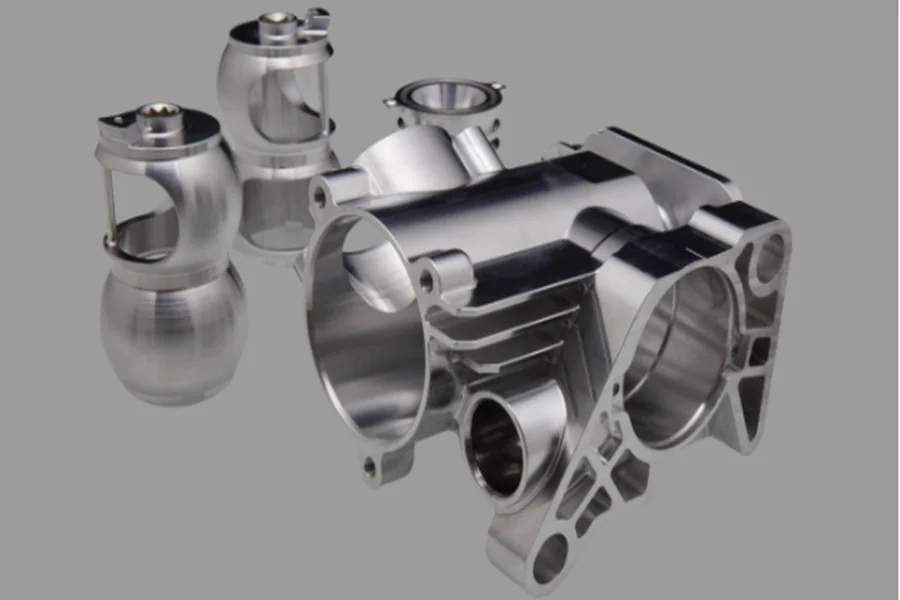
Medical parts require a manufacturing process that is repeatable, clean, has good material integrity, and is dimensionally precise. Titanium is particularly significant since it has a combination of low density, high strength, and strong corrosion resistance. But to manufacture reliable medical components with titanium, tooling, heat, tolerances, and finishing must be carefully controlled. Modern CNC manufacturing offers the controlled environment required to turn titanium stock into complex parts, while ensuring that the geometry of the prototype, small batch and large-volume production is consistent.
-
Why Titanium Fits Demanding Medical Components
Because of the mechanical and chemical properties of titanium, it has become an important engineering material and has been used in medical applications. It has a high strength-to-weight ratio, which means that it can be used to make strong parts that are not too heavy. Another important advantage of titanium is its resistance to corrosion, a trait that is beneficial in applications that involve exposure to moisture or bodily fluids, cleaning procedures, or harsh environments.
Each grade has a unique ratio of strength, ductility, formability, and corrosion resistance. Commercially pure products (Grade 2) possess acceptable corrosion resistance and good formability and weldability, while Grade 5 titanium has significantly higher strength. The choice of grade is thus based on the component’s required purpose, design, and manufacturing criteria.
-
CNC Precision for Intricate Medical Geometries
Medical parts often include small features, curved surfaces, critical holes, threads, slots, and complicated interfaces. The geometry of the object is defined in digital format in CAD, and CNC machining can convert digital information into controlled cutting operations, enabling the manufacturer to produce these features accurately. When multiple orientations are needed for a part, multi-axis machining can also minimize setups.
It is especially advantageous for surgical tools, dental parts, orthopedic implants, housings, and other medical devices. When multiple components need to be assembled to form a larger medical assembly, proper programming of the machining strategies is also helpful in ensuring dimensional consistency.
-
Managing Titanium’s Machining Challenges
Titanium isn’t hard to work because it’s not strong – its strength is part of the challenge. It has a low thermal conductivity, which means that the heat from cutting does not dissipate rapidly from the cutting area. Heat can thus focus in the vicinity of the cutting edge and cause rapid tool wear and even influence the surface integrity.
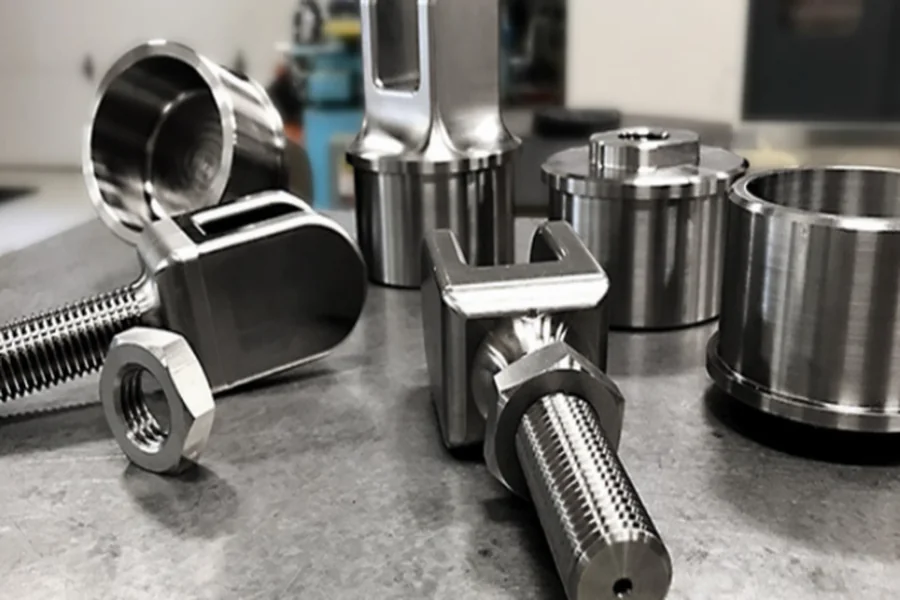
Also, under improper cutting conditions, titanium can work-harden. The material may become hardened through repeated rubbing and/or may not be efficiently removed by poorly controlled passes. These issues can be resolved with the right carbide tooling, cutting speeds and feeds, and coolant application through professional titanium CNC machining services.
Key Process Controls
- Tool selection: Carbide or coated carbide tools can provide suitable wear resistance.
- Heat management: High-performance coolant helps control temperatures during cutting.
- Stable cutting: Appropriate feeds and speeds reduce rubbing and excessive tool loading.
- Tool monitoring: Inspection helps identify wear before it affects dimensional accuracy.
-
Designing Medical Parts for Reliable Machining
The medical part must not only be designed as a geometry, but with manufacturing constraints in mind. CNC production can be complicated by deep narrow cavities, extremely thin walls, sharp internal corners, and inaccessible surfaces. These potential problems can be detected during a design for manufacturing review before material is cut.
Wall thickness is another factor to consider. Very thin sections may be prone to vibration during manufacture and may be hard to keep within specification. Internal radii should allow for working cutting-tool geometry, and holes and pockets should have ample tool access. These decisions can enhance manufacturability without affecting the desired functionality of the component.
-
Quality Control Protects Dimensional Integrity
The significance of precision machining is only possible when the finished products can be checked against engineering specifications. Medical parts can have critical dimensions that are used to control alignment, movement, fit, or interaction with another part. Thus, inspection must be incorporated into production processes.
Inspection Practices
Coordinate Measuring Machines can be used to check all of the complex dimensions against the drawing and GD&T requirements. First article inspection can be used to verify the initial production part meets the approved design. Material documentation and inspection records can also provide traceability in cases where projects require documented manufacturing controls.
-
Surface Finishing for Functional Performance
Machining is not always the last manufacturing process. Depending on the application, a finished titanium part might need more surface treatments. The right finish can affect how it looks, how it feels, how long it lasts, and how well it withstands the elements.
When the functional requirements do not require further treatment, as-machined surfaces can be suitable. Bead blasting helps to even out the matte finish and minimize machining marks. Anodizing will alter the surface of the titanium and can be used to impart controlled colouration. The process to be selected should always correspond to the technical requirements and applicable medical specifications of the component.
-
From Prototype Geometry to Repeatable Production
Medical product development can involve a series of manufacturing steps. The engineers can start with a single prototype to test dimensions, assembly, ergonomics, or functional ideas. After the design is validated, production can begin to shift toward repeatable low-volume or higher-volume production.
This is enabled by modern CNC workflows, as the same basic digital design can be used for subsequent production runs. 3ERP adds CNC machining to its fast manufacturing skills, offering rapid prototyping and rapid production components with a focus on dimensional consistency and manufacturing feasibility, and offers the ability to produce parts in titanium.
-
Building Safety Into Every Titanium Machining Stage
Safe medical component production starts at the beginning of the machining process. Material grade, CAD geometry, tolerances, tooling strategy, inspection requirements, and finishing specifications should be considered together. With this integrated approach, the risk of an unnecessary quality issue down the road from a manufacturing decision is lessened.
This is especially true if the engineers are familiar with the material itself and the equipment used to work with it, as in the case of titanium CNC machining. All of these factors working together in controlled cutting conditions, appropriate tooling, coolant control, accurate inspection, and documented requirements yield a more robust manufacturing process. The goal is not just to make a titanium part; it is to make a part that meets its engineering specifications every time.
Conclusion
For medical parts that have stringent dimensional and material specifications, CNC machining in titanium offers a viable solution for manufacturing precise parts. Due to its strength, corrosion resistance, and weight characteristics, titanium is suitable for many medical applications, and CNC technology allows the production of complex geometries in a controlled manner. More than just machine accuracy is required for successful results. There should be a harmony between material selection, machining parameters, tooling, component design, finishing, and inspection. With disciplined attention to these factors, titanium parts can transition from concept to CAD to reliable manufacture with more consistency and more confidence in manufacture.