Understanding Military Surveillance Systems and How They Work
 Johnathan Parker |
August 19, 2026 |
12:11 pm
Johnathan Parker |
August 19, 2026 |
12:11 pm
Military surveillance systems play an important role in modern defense operations. They help military organizations observe environments, detect potential threats, track objects, gather information, and support informed decision-making. From radar installations and electro-optical cameras to unmanned platforms and sophisticated sensors, these systems combine multiple technologies to provide a clearer picture of activities across land, sea, and air.
Understanding how military surveillance systems work provides valuable insight into the technology behind modern defense capabilities and the importance of reliable electronic equipment.
What Are Military Surveillance Systems?
Military surveillance systems are collections of hardware and software designed to monitor areas, identify objects or activities, and collect useful information. Rather than relying on a single device, modern systems often combine several sensors and information sources.
A surveillance system may include radar, cameras, thermal imaging equipment, communications hardware, signal-processing systems, computers, and data-management software. These components work together to collect information and present it to operators in a usable form.
The specific configuration depends on the mission. A system designed for monitoring airspace, for example, may rely heavily on radar and communications equipment, while a ground-based system may combine cameras, thermal sensors, and other detection technologies.
The Role of Radar
Radar is one of the best-known technologies used in military surveillance. It works by transmitting radio-frequency signals and analyzing the signals that return after interacting with objects.
This information can help determine characteristics such as an object’s location, direction, and movement. Radar can operate in conditions where visibility is limited, making it useful for monitoring airspace and maritime environments.
Modern radar systems can incorporate sophisticated signal processing to distinguish relevant objects from background activity. The electronics behind these systems must process large amounts of information quickly and reliably.
Electro-Optical and Infrared Sensors
Visual and infrared technologies provide another important layer of surveillance capability. Electro-optical cameras can capture images in visible-light conditions, while infrared sensors can detect thermal energy.
Thermal imaging can be particularly useful when conventional cameras have limited visibility. Depending on the system and operating environment, infrared sensors may assist with observation during nighttime or other challenging conditions.
Combining optical and infrared information can give operators additional context that may not be available from a single sensor.
Communications and Data Processing
Collecting information is only one part of surveillance. That information must also be processed and communicated effectively.
Modern surveillance platforms use computers and specialized electronics to process sensor data, identify patterns, filter irrelevant information, and deliver useful information to command or control systems. Communications equipment then allows information to move between sensors, operators, vehicles, command centers, or other connected platforms.
This makes reliable electronics essential throughout the surveillance chain. Defense electronics manufacturing supports the development and production of specialized electronic assemblies that can be integrated into demanding surveillance applications.
Surveillance From Multiple Platforms
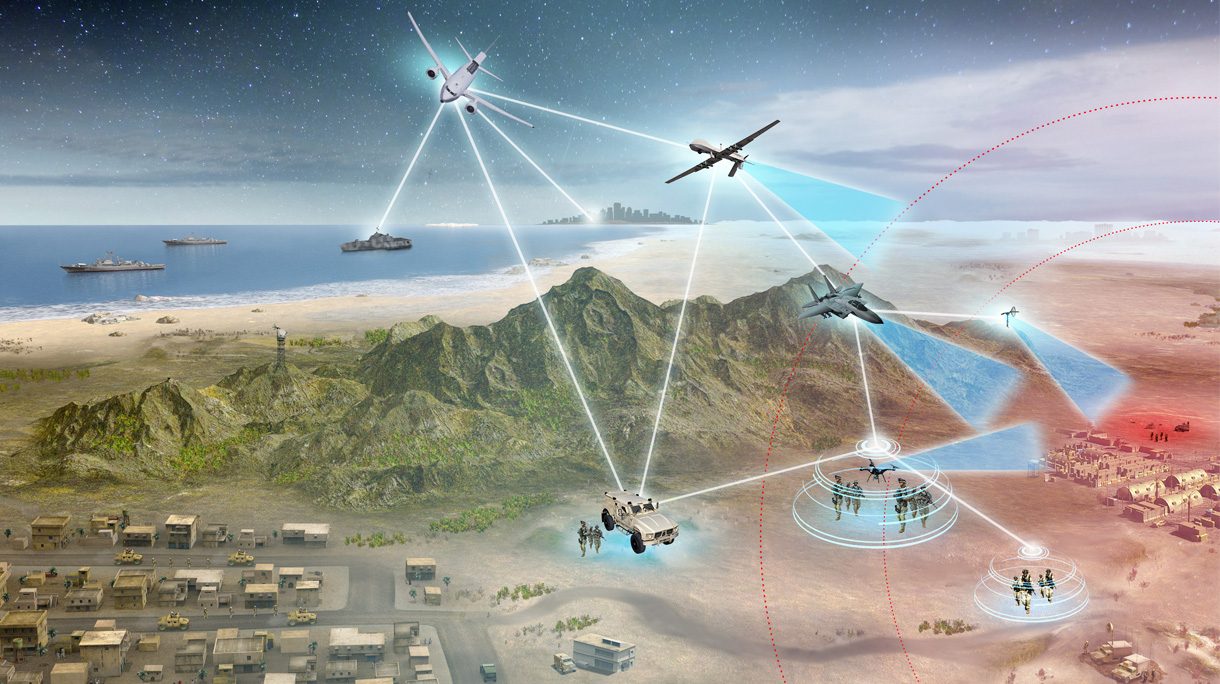
Military surveillance is not limited to fixed installations. Systems can be deployed across a variety of platforms depending on operational requirements.
Ground-based systems may monitor specific locations or areas, while aircraft and unmanned aerial platforms can provide surveillance over larger regions. Maritime platforms can use radar, imaging systems, and other sensors to monitor surrounding waters.
Using multiple platforms can provide complementary information. For example, an aerial sensor may provide a broader view while a ground-based system supplies more localized observations.
Why Reliability Matters
Military surveillance equipment often operates in challenging environments. Electronics may need to withstand vibration, temperature changes, dust, moisture, electromagnetic interference, and continuous operation.
Reliability therefore becomes a major consideration during system design and production. Components must be selected carefully, assemblies must be manufactured consistently, and systems need appropriate testing before deployment.
Rugged construction and dependable power, communications, processing, and sensing capabilities can help surveillance equipment perform consistently under demanding operating conditions.
The Future of Military Surveillance
Surveillance technology continues to evolve as sensors, computing capabilities, communications, and automation improve. Artificial intelligence and advanced data-processing techniques may help operators organize increasingly large volumes of sensor information.
Sensor fusion is another important area of development. By combining information from multiple sensors, systems can potentially provide a more comprehensive understanding of an environment.
Future systems are also likely to place greater emphasis on interoperability, allowing different platforms and sensors to exchange information more effectively.
Conclusion
Military surveillance systems bring together sensors, radar, imaging equipment, communications technologies, computing hardware, and software to collect and process information. Each component contributes to creating a more complete understanding of an operating environment.
As defense technology continues to advance, the demand for reliable, rugged, and sophisticated electronic systems will remain important. Understanding the basic technologies behind military surveillance helps explain how modern defense organizations monitor environments and make effective use of information.