Acne Patch Guide: How They Work and When to Use One
 Johnathan Parker |
August 13, 2026 |
5:23 pm
Johnathan Parker |
August 13, 2026 |
5:23 pm
Acne Patch Guide: Do They Really Work and When Should You Use One?
TL;DR: An acne patch works by covering a blemish and either absorbing fluid or delivering a treatment ingredient like salicylic acid, depending on the type. It won’t erase a pimple overnight, but it helps it heal more cleanly and keeps you from picking at it.
Reaching for an acne patch has become almost a reflex when a breakout appears. Spot a pimple, stick a patch on, and hope for the best. Yet despite how common they’ve become, one question still comes up when a blemish doesn’t seem to budge.
Do they actually do anything, or are they just a sticker?
The answer depends on the type of patch and the kind of breakout you’re trying to treat. Let’s break it down.
Do Acne Patches Actually Work?
Acne patches are most effective on surface-level blemishes like whiteheads and small pimples. They create a protective barrier over the spot, which helps prevent picking and touching while supporting the skin’s natural healing process. Some also contain ingredients like salicylic acid, which helps unclog pores by exfoliating dead skin cells.
What a patch can’t do is magically flatten every type of breakout overnight. A patch placed on a deep, painful cyst doesn’t have much access to the inflammation happening several layers down, so expecting the same result there as on a surface whitehead sets you up to be disappointed.
Hydrocolloid vs. Salicylic Acid Acne Patches: What’s the Difference?
Hydrocolloid is actually the base technology for an acne patch. It’s a wound-care material, originally designed for blisters and surgical wounds, that draws fluid out of a compromised area of skin while sealing it off. On a whitehead, that means it pulls out the fluid that’s already surfaced, which is why the patch turns cloudy or white after a few hours.
Although “acne patch” is often used as a catch-all term, there are actually two different types.
- Hydrocolloid patches are the plain, gel-like dots most people picture first. They don’t contain an active ingredient. Their primary job is to absorb fluid from a blemish that’s already surfaced, usually a whitehead. All while creating a barrier that keeps you from picking on the pimple.
- Hydrocolloid + Active Ingredient Patches build on that same hydrocolloid base and add an active ingredient, most commonly salicylic acid, which works inside the pore to loosen dead skin cells and clear out congestion while the patch handles the surface.
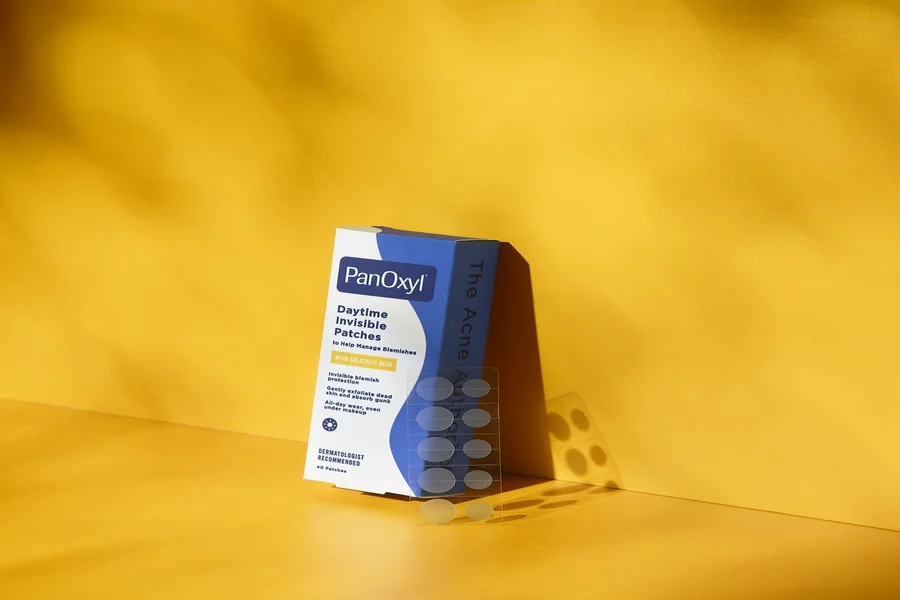
PanOxyl Daytime Invisible Patches fall into the second category. They’re formulated with salicylic acid along with centella asiatica and green tea extract in an ultra-clear design built to be worn under makeup without showing.
Which Types of Acne Can an Acne Patch Help With?
The type of breakout matters more than the patch itself.
Acne patches are most useful for:
- Whiteheads and surface pimples
- Early-stage pimples that are just beginning to form
- Pimples you’re tempted to pick or touch throughout the day
Acne patches may not do much for:
- Deep or painful cystic acne
- Recurring hormonal breakouts forming under the skin
Knowing when an acne patch can help is just as important as knowing when it can’t.
How to Use an Acne Patch Correctly
A patch that keeps lifting at the edges is almost always an application issue.
Start with clean and fully dry skin. Patches don’t adhere well over moisturizer, oil, or other wet products underneath. Place the patch directly over the blemish and press it down gently so it seals around the edges, then leave it alone. Resist the urge to keep checking underneath it. Every time you lift the patch, you break the seal.
Keep the rest of your routine going as normal. A patch works best as one part of a broader routine. It isn’t a replacement for the rest of your skincare routine.
Can You Wear an Acne Patch Under Makeup
Yes, especially if you choose a patch designed for daytime wear. The trick is applying it before makeup and allowing it to fully adhere first. Avoid layering heavy skincare products underneath because they can make the patch lift around the edges.
PanOxyl Daytime Invisible Patches are specifically designed to be worn during the day and are made to be ultra-clear, making them a practical option for anyone who wants blemish protection without drawing attention to the spot.
Whether you’re heading to work, running errands, or skipping makeup altogether, a discreet patch can help protect a breakout without drawing attention to it.
Most Searched Queries About Acne Patches
Should you pop a pimple before using an acne patch?
No. Popping a pimple can increase irritation and make the area more vulnerable. Applying a patch over the blemish helps protect it and reduces the temptation to touch it.
Can you sleep on an acne patch?
Many acne patches are designed for overnight use, but always follow the product instructions. Some patches are specifically designed for daytime wear because of their clear and discreet appearance.
How long should you leave an acne patch on?
Many people wear them until the patch turns white or opaque, though you should always follow the product’s instructions. The recommended wear time depends on the product. Removing it too quickly may limit how long the ingredients and protective barrier have to work.
The Bottom Line
At the end of the day, an acne patch simply protects the blemish, supports the healing process, and keeps your own hands from making things worse. Because sometimes the smartest skincare is as simple as stopping yourself from undoing the progress your skin is already making.