How to Transition Your Shoe Wardrobe From Summer to Autumn
 Johnathan Parker |
September 18, 2026 |
11:11 am
Johnathan Parker |
September 18, 2026 |
11:11 am

The seasonal wardrobe shift is less about replacing everything and more about knowing which pieces carry across and which new additions do the most work. Footwear, more than any other element, signals the change in season.
There is a particular moment in late summer when the light changes before the temperature does. The evenings arrive earlier, the quality of the afternoon sun shifts subtly, and the impulse to reach for something other than sandals becomes unmistakable. The wardrobe has not caught up yet, but the instinct has. This is the moment the shoe transition begins.
Footwear is the single most effective lever in a seasonal wardrobe shift. A summer dress with a pair of ankle boots reads differently to the same dress with flat sandals. A linen shirt and chinos looks immediately more autumnal when the loafer replaces the canvas sneaker. As Reskinned’s summer to autumn wardrobe guide notes, swapping out shoes is the quickest and easiest way to make an outfit feel more autumnal, with investment in high-quality leather boots and loafers producing pieces that can be reworn for many years to come.
The shoe transition does not require a complete wardrobe overhaul. It requires a considered sequence of additions and retirements that moves the wardrobe’s foundation from summer-light to autumn-grounded, one pair at a time.
Why the Shoe Transition Matters More Than the Clothing Transition
Clothing transitions from summer to autumn through fabric weight and colour. Lighter fabrics give way to denser ones; bleached and pastel tones shift toward rust, camel, chocolate brown, and olive. But these changes are gradual, and the weather in the transitional weeks frequently resists them entirely.
Footwear operates differently. A shoe signals season with more immediacy and authority than almost any garment because it sits at the foundation of the outfit and anchors everything built above it. A sandal, regardless of how it is styled, reads as summer. An ankle boot, regardless of how lightweight the outfit above it is, reads as autumn. This is why footwear is the most efficient point of intervention for a seasonal transition that needs to navigate unpredictable temperatures and mixed-wardrobe weeks.
The practical implication is that the shoe transition can and should begin before the clothing transition is complete. During the weeks when the days are still warm enough for summer outfits but the evenings are cool, a closed-toe shoe or a low boot worn with summer-weight clothing creates a more seasonally coherent look than the same outfit with sandals, without requiring the full commitment to autumn dressing that the temperature does not yet support.
What to Extend From Summer
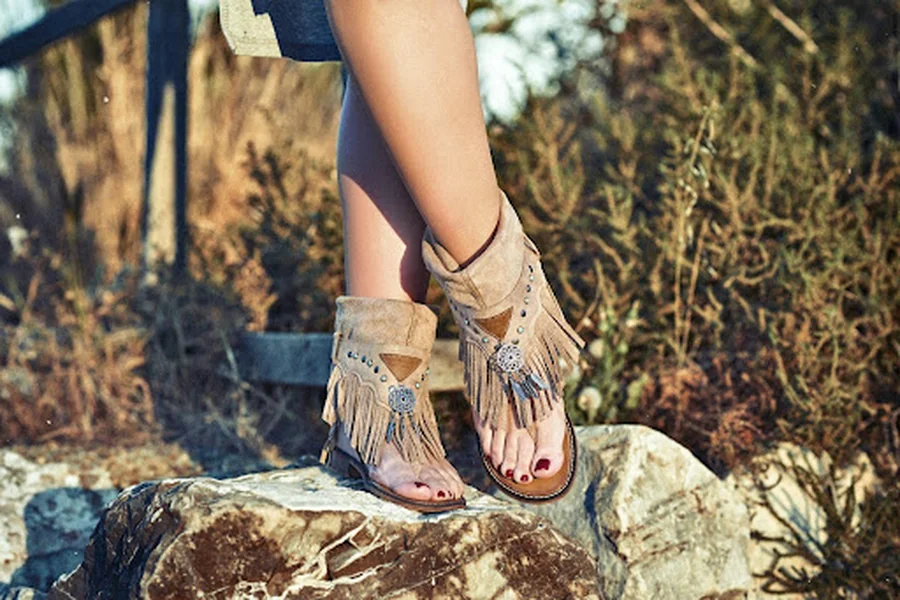
Not all summer shoes need to be retired the moment the calendar turns to autumn. Several summer shoe styles carry across the seasonal transition with minimal adjustment, provided they are styled with some awareness of the season they are moving into.
Transitional Sandals
The flat leather sandal in a warm neutral, tan, cognac, or camel, already sits in autumn’s colour palette. Worn with autumn-appropriate clothing, darker denim, midi skirts, lightweight knitwear, or tailored trousers, a quality leather flat sandal reads as thoughtfully transitional rather than seasonally stranded.
The sandal styles that do not carry across are those with overtly summery associations: bright-coloured straps, lightweight synthetic materials, and excessively casual construction that reads as beachwear regardless of how it is styled. The quality leather strappy sandal, by contrast, can extend its useful season considerably through considered pairing.
As Southern Curls and Pearls notes in their seasonal wardrobe transition guide, shoes can completely change the feel of an outfit, and this extends to keeping certain summer options in rotation during the early transition weeks rather than retiring them all at once.
For occasion and evening wear, a strappy heeled sandal in a neutral or metallic colourway remains appropriate well into autumn for indoor events, dinners, and social occasions where open footwear does not conflict with the temperature. The stylish women’s sandals from Billini’s range include styles in earthy neutrals and warm metallics that sit naturally within an autumn palette, extending their seasonal relevance past the obvious summer endpoint.
Clean Sneakers
The clean white or minimal leather sneaker has no particular seasonal allegiance and carries across summer to autumn with ease, provided the outfit built around it is moving in the right seasonal direction. Paired with straight-leg denim, a crew-neck knit, and a denim jacket, a clean sneaker reads as autumnal. The same sneaker with a summer slip dress and bare legs reads as summery regardless of the calendar date.
The sneaker’s transition success depends entirely on the outfit context, which makes it one of the most flexible pieces in the transitional wardrobe.
What to Introduce for Autumn
The shoe additions that most efficiently shift the wardrobe into autumn territory are those that carry genuine seasonal specificity while also extending usefully into winter.
The Ankle Boot
No single shoe signals the arrival of autumn more clearly than an ankle boot, and no single transitional footwear purchase generates more outfit combinations across the season. A clean leather ankle boot in black or dark brown works with dresses, midi skirts, wide-leg trousers, straight-leg denim, and tailored shorts alike, providing a versatile foundation that carries from the first cool evening of March through to the deep cold of June.
The selection criteria for a transitional ankle boot are heel stability over height, a last shape that does not look heavy on the foot, and a colourway neutral enough to work across the majority of the existing wardrobe without requiring new outfit construction around it.
As Style Academy International’s trans-seasonal styling guide advises, an ankle boot can be one of the most useful purchases of the transitional season, with versatility across heel height, toe shape, shaft height, colour, and overall silhouette all mattering in relation to what is already owned.
The Loafer
The loafer occupies a transitional position that no other shoe quite matches. It is casual enough for weekend wear but carries enough visual structure for professional environments, and its closed-toe construction reads as seasonally appropriate from the first cool day without requiring full commitment to boot dressing.
A leather loafer in a dark neutral or in a warm cognac or tan provides the alternative to sandals that the transitional weeks call for, without the weight or visual formality of a boot. It pairs with tailored trousers, midi dresses, and cropped wide-leg jeans in ways that feel deliberately seasonal rather than merely practical.
The Mule in Autumn Materials
The mule, carried over from its summer incarnation in a suede or textured leather rather than a smooth summer finish, bridges the gap between the open footwear of summer and the enclosed footwear of winter. A suede mule in a warm earth tone, terracotta, camel, or chocolate, reads as unmistakably autumnal while retaining the ease of wear that made the summer mule useful across casual and smart-casual contexts.
The Colour and Texture Shift
Beyond style, the colourway and material of autumn footwear signals the season as clearly as the silhouette. Summer shoes tend toward light neutrals, brights, and clean whites. Autumn footwear moves toward suede, nubuck, and textured leather in deeper, earthier tones.
This shift does not require replacing all summer neutrals. A tan leather sandal already sits in autumn’s palette. A white sneaker does not, but it pairs with autumn clothing without visual conflict if the rest of the outfit is doing the seasonal work. A bright-coloured summer heel, however, actively fights the autumn palette around it regardless of how it is styled.
The practical approach is to assess each summer pair not by whether it is a sandal or a closed shoe, but by whether its colourway and material read as seasonally coherent in an autumn context. Those that do can stay in rotation. Those that do not can be stored until the following summer without guilt.
The Transition as a Wardrobe Investment Moment
The seasonal shoe transition is also one of the more strategically useful moments to invest in pieces that have been missing from the wardrobe across the full summer, when the immediate pressure of seasonal need is greatest.
An ankle boot or loafer purchased at the start of autumn will be worn across four to five months of regular use before the following summer. Investing in quality at this moment, in construction and material that will carry across multiple seasons rather than deteriorating by the following year, produces a return on that investment that a summer purchase, worn across three months, rarely matches.
The transition is not an ending. It is one of the most productive moments in the annual wardrobe cycle for those who approach it with the same deliberateness they bring to summer dressing.
Women with foot health requirements or who wear orthotics are advised to check that transitional autumn footwear, particularly ankle boots with narrower lasts, includes removable insoles and sufficient interior volume before purchasing.