Low Humidity, Damp Wall: How Mold Slips Through
 Johnathan Parker |
August 7, 2026 |
11:13 pm
Johnathan Parker |
August 7, 2026 |
11:13 pm
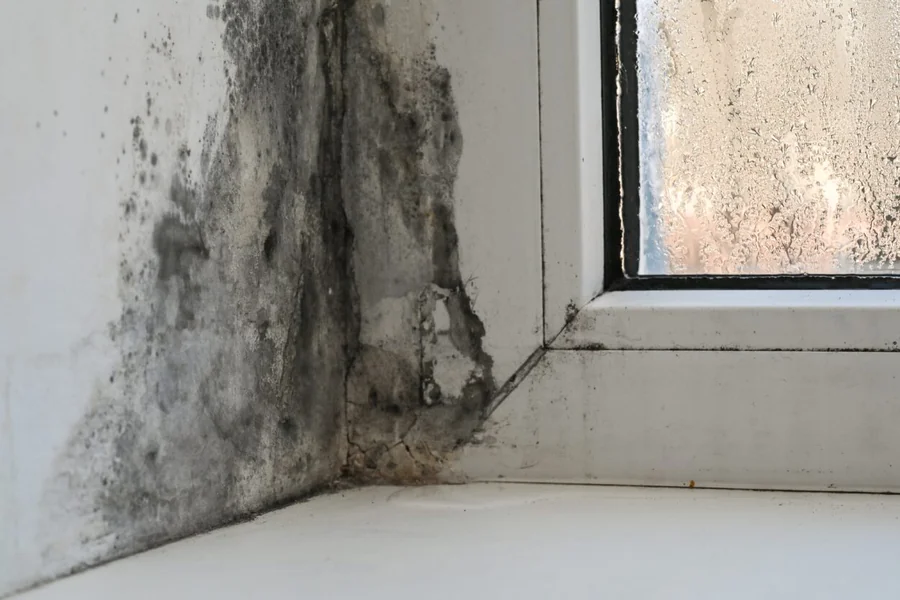
Here’s something worth understanding: a bedside hygrometer can read a calm 55 percent while the drywall three feet away sits at 85. Same room. Same hour. Same air.
The reason is simple. Mold doesn’t respond to room air, but to surface conditions. Growth begins in a thin film of air pressed against paint, plaster, or the back of a baseboard, and that film is governed by temperature, not by the number on a bedside monitor.
This gap between room air and surface conditions is where most homeowners lose the thread. Along the coast, the margin is especially thin, since morning fog keeps outdoor dew points elevated for hours at a stretch. That’s precisely why a rigorous mold testing Santa Barbara protocol pairs air samples with an outdoor control and moisture readings taken at the cold surfaces themselves.
Air samples establish what the indoor air carries relative to the air outside. Surface and moisture readings show where water sat long enough for mold to take hold.
Why does a cold wall grow mold in a dry room?
Relative humidity is relative to temperature. Warm air holds more water vapor than cool air, so one amount of moisture reads as a calm 55 percent at 70 degrees and something far tenser the moment it meets a cooler surface.
Run the numbers. Air at 70 degrees and 55 percent humidity carries a dew point near 53 degrees. Push that air against a wall at 60 degrees and the film touching it reads about 78 percent.
Drop the wall to 57, and the film climbs past 85.
Many mold species germinate once surface humidity holds near 80 percent long enough. There is no leak in this story. A cold surface and patient air get the job done.
Time does the rest. A wall that sits at 85 percent for six hours a night through a foggy stretch of June has been handed a growth window, and species such as Cladosporium will colonize the dust film on paint without needing to eat the wall at all.
Takeaway: mold answers to humidity at the surface, which can run 30 points above the reading in the middle of the room.
What should you measure instead?
Three instruments settle the question, and two of them cost less than dinner out.
- An infrared thermometer gives you the surface temperature of a wall, a window return, or a slab edge in about two seconds.
- A hygrometer gives you room temperature and relative humidity, which convert to a dew point with any free online calculator.
- A pin or pinless moisture meter reads the water content inside wood and drywall, where anything above 16 percent in framing lumber deserves attention.
The number to hold onto is a margin. Any surface within five degrees of the dew point has what mold needs, and every degree you add to that gap buys protection across the whole house.
Walk the house at dawn if you can. Surfaces run coldest before sunrise, and outdoor dew points along this coast tend to peak in the same hours.
Where do the cold spots sit in a coastal house?
Fog does half the work here. Along the Santa Barbara and Ventura shoreline, outdoor dew points hold in the 50s and low 60s through much of the year, and a house breathes that air in every time a door opens.
The cold surfaces waiting to receive it tend to be the same in every home:
- Closet walls on the exterior of the house, packed with clothing that blocks air movement.
- North-facing rooms that go a full winter without direct sun on the outside wall.
- The bottom six inches of wall above an uninsulated slab edge.
- Window frames and metal fasteners that carry outdoor temperature straight through the assembly.
- Supply ducts crossing an unconditioned attic or crawl space, sweating along their seams.
Furniture aggravates the problem. A dresser pushed flat against an exterior wall stops air movement behind it, and the drywall back there can run several degrees below the rest of the room for months without anyone noticing.
Does a dehumidifier settle the problem?
In part. Pulling room humidity from 60 percent down to 45 lowers the dew point by roughly ten degrees, which widens the margin on every cold surface at once.
Air conditioning plays both sides. It strips water from the air while chilling wall cavities, duct runs, and the back side of exterior walls, so a house can get drier and colder in the same places that matter.
Crawl space vents deserve a second look too. Opening them on a foggy morning invites saturated air under the floor, where it meets joists and subfloor cooled by the ground.
None of this replaces the durable fixes. Insulate the cold assembly so the surface temperature climbs closer to room temperature. Leave four inches of clearance behind heavy furniture so air keeps moving across the wall. Vent bath fans outside, and let them run twenty minutes past the shower, so the moisture can actually leave the house.
How do spore counts fit into a moisture story?
An air sample measures a consequence. Laboratory analysis counts spores per cubic meter and identifies them at the genus level, producing names such as Aspergillus, Penicillium, Cladosporium, or Stachybotrys chartarum.
Comparison is what gives those numbers meaning. An indoor count reads high or low against an outdoor control taken the same day, since outdoor air on the Central Coast carries a heavy natural spore load through every season.
Low counts and a wet wall can appear in the same report. Growth sealed inside a cavity may release very little into the room until someone opens it up, which is why surface temperature and material moisture belong in the same visit as the air samples.
The value shows up when results send you back to a specific wall with a specific question. A number without a location is of little value.
Documentation carries weight as well. Results from an accredited lab hold up in a real estate negotiation, an insurance claim, or a conversation with a physician about asthma symptoms that fade whenever the patient spends a week somewhere else.
Takeaway: air sampling tells you what is circulating, while surface temperature and moisture readings tell you why.
So where does that leave your hygrometer?
Keep it. Track it. Treat it as a room-level instrument and stop asking it to speak for surfaces it never touches.
Focus on the wall behind the couch, the closet on the north side, or the duct crossing the attic: those hold the answer. Measure them, correct the temperature and airflow problems they expose, then sample the air when the readings or your symptoms say something is off.
Mold follows water. Find where water condenses, and you find the problem before it finds you.