The Silent Language of a Hindu Statue in Your Interior
 Johnathan Parker |
March 3, 2026 |
9:28 pm
Johnathan Parker |
March 3, 2026 |
9:28 pm
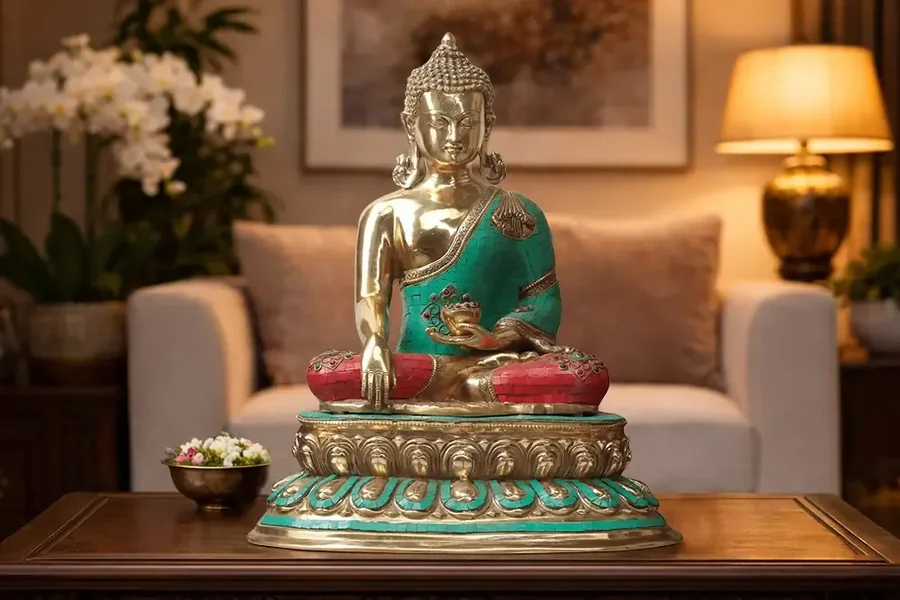
A Hindu statue isn’t just a pretty object. It carries iconography, ritual use, and cultural context. Because images of Hindu deities (like Ganesha, Shiva, or Vishnu) often get detached from their meaning online, it helps if you learn to “read” what you’re actually looking at. You can start orienting yourself with umbrella terms like hindu statue, but the real value is in what you recognize in the form, origin, and function. The internet makes images endlessly shareable—but also easier to misunderstand. With a few clear anchor points, you’ll look more sharply right away, even if you only have photos and short descriptions.
1) Meaning before aesthetics: what you’re really bringing into your home
In Hinduism, a murti (mūrti) is meaningful because it can serve as a focal point for attention, devotion, and symbolism. That doesn’t mean every statue is automatically used ritually, but it does mean the visual language is never random. Once you get that, you start looking differently: not “nicely made,” but “intentionally shaped.”
Murti, temple image, and home altar: context determines how you look
A temple image is often made for specific temple iconography: fixed placement, sightlines, processions, and recurring rituals (puja). A statue meant for a home altar is usually more intimate in scale and finish. When you understand that context, posture, gaze direction, and details start to stand out as visual cues rather than decorative choices.
2) Reading iconography: mudras, attributes, and animals as subtitles
The silent language of a Hindu image lives in recognizable markers. Mudras (hand gestures) steer your interpretation: protection, blessing, meditation, or teaching. Attributes do the same: they help you identify which deity you’re seeing and which quality is central—wisdom, transformation, preservation, or abundance. Animals and mounts (vahana) aren’t side details either, but symbolic “metadata” linking the image to stories, cosmology, and regional traditions. Online you often see close-ups without explanation; if you train yourself to notice these signs, you’ll spot shallow captions and wrong labels much faster.
3) Material and craftsmanship: bronze, stone carving, and traces of time
Bronze statues and stone carvings each have their own visual grammar. Bronze allows for refined detail—jewelry, facial expression, and rhythmic linework. Stone more often emphasizes mass, contour, and cohesion, with a more architectural feel. Also pay attention to patina and wear: not as definitive proof, but as clues you weigh alongside stylistic features and any available documentation. Online, “antique” gets thrown around quickly, so treat material, technique, and finish as signals that should reinforce each other—not as standalone claims.
4) Origin and ethics: the quiet conditions behind a statue
Authenticity isn’t only about real versus replica—it’s also about origin (provenance) and respectful handling of religious objects. You’ll increasingly see discussions about cultural appropriation and ethical collecting, and that’s more than a buzzword: it’s about whether an object was moved legally, carefully, and with context. Digitization makes it easier to compare and learn through archives and online collections, but it also adds something: images become content. If you’re enriching your interior with a statue like this, it helps to see that double reality—it’s simultaneously an artwork, cultural heritage, and a symbol that can pick up all kinds of meanings online.
5) Placement as interpretation: how your interior helps shape the message
Where you place a statue determines how you read it. Light, height, and the calm around it work like a frame. In a busy setting it quickly becomes “decor,” while a quiet spot gives the symbolism room to breathe. Also pay attention to gaze direction and sightlines: a lot of iconography is designed to be experienced frontally or from a specific approach. When you make those choices consciously, you let the silent language speak for itself. Your interior won’t feel like a display window, but like a place where meaning is genuinely allowed to land.