Why Counter-Strike 1.6 Can Be Considered the Foundation of Modern Esports
 Ava Thompson |
September 13, 2025 |
9:36 pm
Ava Thompson |
September 13, 2025 |
9:36 pm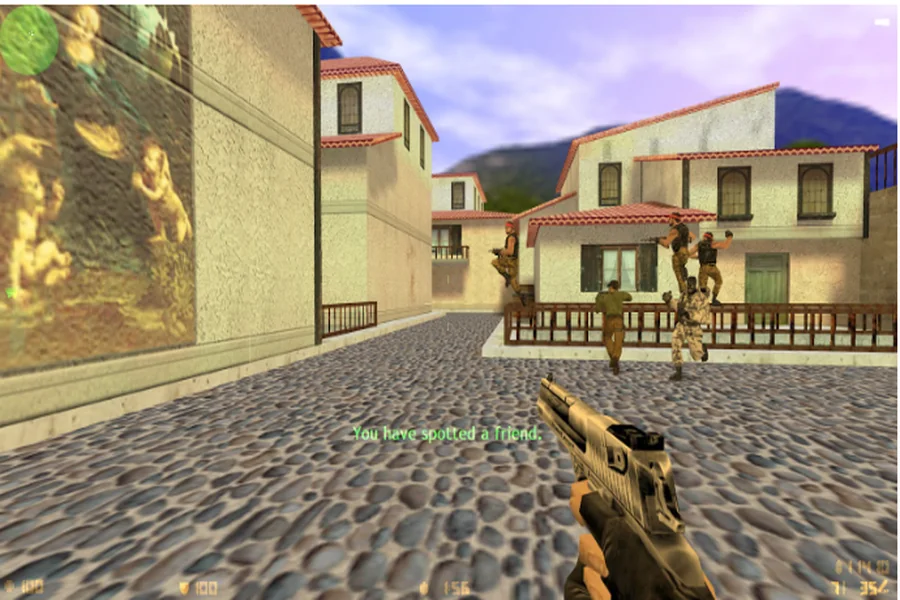
In the fast-evolving world of competitive gaming, few titles have left as indelible a mark as Counter-Strike 1.6. Released in 2000 as a mod for Half-Life, this first-person shooter (FPS) quickly transcended its humble origins to become a cultural phenomenon and a cornerstone of what we now recognize as modern esports. Its influence is still felt today, shaping the mechanics, community, and competitive spirit of gaming. From local LAN parties to global tournaments, Counter-Strike 1.6 laid the groundwork for the billion-dollar industry that esports has become. This article explores why Counter-Strike 1.6 remains a pivotal force in the history of competitive gaming, even as players continue to seek out CS 1.6 download options to experience this classic on modern systems like Counter-Strike 1.6 Windows 11.
The Birth of a Legend
Counter-Strike began as a passion project by modders Minh “Gooseman” Le and Jess “Cliffe” Cliffe. Built on the foundation of Valve’s Half-Life, the game introduced a team-based FPS experience that pitted terrorists against counter-terrorists in objective-driven scenarios like bomb defusal and hostage rescue. Its simplicity, combined with a high skill ceiling, made it accessible yet endlessly replayable. By 2000, Counter-Strike had transitioned from a mod to a standalone retail release, capturing the attention of gamers worldwide.
What set Counter-Strike 1.6 apart was its timing. The early 2000s marked the rise of internet cafes and LAN gaming, where players gathered to compete in local tournaments. The game’s low system requirements meant it could run on almost any PC, making it a staple in gaming communities across the globe. This accessibility ensured that players from diverse backgrounds could participate, fostering a grassroots movement that would eventually evolve into professional esports.
Pioneering Competitive Gameplay
Counter-Strike 1.6 was not the first competitive game, but it was one of the first to perfect the formula for team-based, skill-driven competition. Its gameplay mechanics were deceptively simple: two teams, each with distinct objectives, competing in rounds that demanded strategy, communication, and precision. Unlike other shooters of the era, such as Quake or Unreal Tournament, which focused heavily on individual skill, Counter-Strike emphasized teamwork and tactical coordination. This shift laid the foundation for the team-based dynamics that define modern esports titles like Valorant, Overwatch, and Rainbow Six Siege.
The game’s economy system was another groundbreaking feature. Players earned in-game currency based on their performance, which they could spend on weapons and equipment at the start of each round. This added a layer of strategic depth, as teams had to balance immediate needs with long-term planning. The economy system forced players to think beyond raw aim, introducing concepts like resource management and risk assessment that are now standard in competitive gaming.
Maps like de_dust2, de_inferno, and de_nuke became iconic for their balanced design and strategic possibilities. These maps were not just arenas but puzzles that required teams to adapt their strategies based on the situation. The emphasis on map knowledge, positioning, and utility usage (like grenades) created a blueprint for level design that modern FPS games continue to follow.
Building a Global Community
One of Counter-Strike 1.6’s greatest strengths was its ability to foster a sense of community. In the early 2000s, online gaming was still in its infancy, and Counter-Strike became a unifying force for players worldwide. Internet cafes in countries like South Korea, Brazil, and Sweden became hubs for local competitions, while online servers allowed players to connect across continents. The game’s modding community also played a significant role, creating custom maps, skins, and modes that kept the game fresh and engaging.
This sense of community extended to the competitive scene. Tournaments like the Cyberathlete Professional League (CPL) and the World Cyber Games (WCG) showcased Counter-Strike 1.6 as a premier competitive title. These events were among the first to offer significant prize pools and attract international talent, setting the stage for the global esports ecosystem we see today. Teams like Ninjas in Pyjamas (NiP), SK Gaming, and Team 3D became household names, inspiring a generation of players to pursue competitive gaming as a career.
The game’s community-driven nature also meant that players had a direct influence on its evolution. Feedback from players led to balance changes, bug fixes, and new features in subsequent updates. This collaborative relationship between developers and players established a model for community engagement that modern esports titles strive to emulate.
The Rise of Professional Esports
Counter-Strike 1.6 was instrumental in transforming competitive gaming from a niche hobby into a professional industry. The game’s competitive scene attracted sponsors, media coverage, and a growing fanbase, laying the groundwork for the structured esports organizations of today. Tournaments like the Electronic Sports World Cup (ESWC) and the Intel Extreme Masters (IEM) owe their origins to the early Counter-Strike events that proved competitive gaming could draw crowds and generate revenue.
The game also introduced the concept of professional gaming careers. Players like Emil “HeatoN” Christensen and Patrik “f0rest” Lindberg became legends not just for their skill but for their ability to inspire others. These early pioneers showed that gaming could be more than a pastime—it could be a viable profession. Their success helped legitimize esports in the eyes of mainstream audiences and paved the way for the multimillion-dollar contracts and sponsorships that define the industry today.
Influence on Modern Esports Titles
The legacy of Counter-Strike 1.6 is evident in the design of modern esports games. Titles like Valorant, developed by Riot Games, draw heavily from Counter-Strike’s formula, blending tactical gameplay with team-based objectives. The economy system, map design, and emphasis on communication in Valorant are direct descendants of Counter-Strike 1.6’s innovations. Similarly, games like Call of Duty and Rainbow Six Siege incorporate elements of Counter-Strike’s objective-based gameplay, proving its enduring influence.
Beyond mechanics, Counter-Strike 1.6 shaped the culture of esports. The game’s competitive scene introduced concepts like shoutcasting, where commentators narrate matches in real-time, and spectator modes that allowed fans to watch professional games. These features, now standard in esports, were pioneered in Counter-Strike tournaments, making the game a trailblazer in how competitive gaming is presented to audiences.

The Cultural Impact of Counter-Strike 1.6
Counter-Strike 1.6 was more than just a game—it was a cultural phenomenon. It introduced millions of players to the thrill of competitive gaming, fostering friendships, rivalries, and memories that have lasted decades. The game’s iconic sound effects, like the “headshot” callout or the bomb-planting timer, are instantly recognizable to fans, even years later. Memes, videos, and fan art inspired by the game continue to circulate online, a testament to its lasting impact.
The game also played a role in breaking down cultural barriers. In an era when online gaming was still nascent, Counter-Strike 1.6 connected players from different countries and backgrounds, creating a shared language of competition and camaraderie. This global community laid the foundation for the inclusive, diverse esports scene we see today.
Why Counter-Strike 1.6 Still Matters
Even in 2025, Counter-Strike 1.6 remains a beloved title. Its simplicity, balance, and depth continue to attract players, many of whom seek out CS 1.6 download to experience the game on modern platforms like Counter-Strike 1.6 Windows 11. While newer iterations like Counter-Strike: Global Offensive (CS:GO) and Counter-Strike 2 have built on its legacy, the original game holds a special place in the hearts of gamers. Its influence is evident in the mechanics, community, and competitive structures of modern esports, making it a true foundation for the industry.
Counter-Strike 1.6’s success was not just about the game itself but about the passion it inspired. It showed the world that gaming could be a legitimate form of competition, capable of uniting players and fans across the globe. From LAN parties to million-dollar tournaments, Counter-Strike 1.6 proved that esports could be more than a niche—it could be a global phenomenon.
Conclusion
Counter-Strike 1.6 is more than a game; it’s a legacy that continues to shape the world of competitive gaming. Its innovative mechanics, vibrant community, and pioneering role in professional esports make it a foundational pillar of the industry. As players continue to download and play this classic on modern systems, its influence remains undeniable. Whether you’re a veteran of de_dust2 or a newcomer discovering the game for the first time, Counter-Strike 1.6 offers a timeless reminder of what makes esports so special: skill, strategy, and the thrill of competition.