What is a MCB Miniature Circuit Breaker? Key Functions & Types

Key Functions

A Miniature Circuit Breaker (MCB) is a crucial device in modern electrical systems. It automatically protects circuits from damage caused by overloads or short circuits by disconnecting the power supply when it detects excessive current flow. This device is especially important for maintaining safety and preventing potential hazards in residential and commercial settings.

Unlike traditional fuses, MCBs are designed for quick reset after a fault, making them more efficient and user-friendly. They provide reliable protection without the need for replacements after each incident. The growing use of MCBs reflects their advantages over older technologies, ensuring that homes and businesses remain powered safely and effectively.

Understanding the function and importance of an MCB can help individuals make informed decisions when it comes to electrical systems. With their straightforward operation and reliability, MCBs are integral to modern electrical safety and management.

Definition and Core Purpose

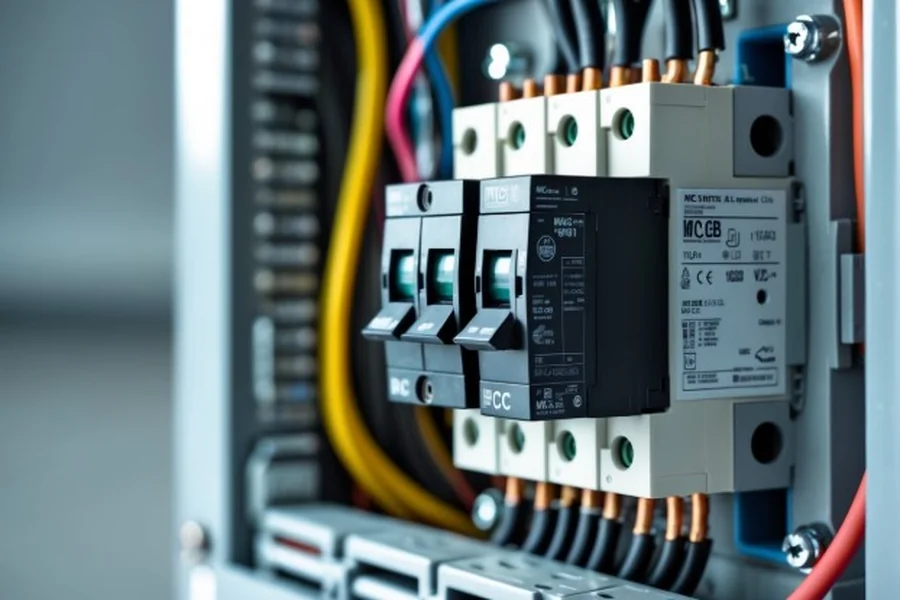
Miniature Circuit Breakers (MCBs) are automatic switches that play a crucial role in protecting electrical circuits. They respond to electrical faults like overloads and short circuits. This section explores their automatic protection features and their importance in modern electrical systems.


Core Purpose

Automatic Protection in Electrical Circuits

An MCB provides automatic protection by cutting off the electrical flow when it detects unsafe conditions. It functions by monitoring the current flowing through the circuit.

  • Overload Protection: When a circuit experiences too much current for too long, the MCB detects the heat generated. This causes a bimetallic strip in the device to bend, triggering the switch to open.
  • Short Circuit Protection: In a short circuit, the current jumps to very high levels almost instantly. An electromagnet in the MCB responds quickly, opening the switch to prevent damage.

This automatic mechanism ensures that equipment and wiring remain safe from damage, promoting electrical safety in homes and industries.

Importance in Modern Electrical Systems

MCBs are essential in today’s electrical systems, replacing traditional fuses in many applications.

  • Reliability: Their automatic response provides reliable protection against electrical faults, minimizing risks of fire and equipment failure.
  • Ease of Use: Unlike fuses, which must be replaced after blowing, MCBs can be reset easily. Users can restore service by simply flipping a switch after addressing the fault.
  • Efficiency: MCBs allow for efficient fault detection and quicker restoration of electrical supply, making them invaluable in residential, commercial, and industrial settings.

Due to these characteristics, MCBs contribute significantly to the safety and reliability of electrical systems, ensuring a secure environment for users.

How Miniature Circuit Breakers Work

Miniature Circuit Breakers (MCBs) use specific mechanisms to protect electrical circuits from damage caused by overloads and short circuits. The effectiveness of these devices relies on their ability to quickly detect faults and disconnect the power supply when necessary.

Overload Protection Mechanism

The overload protection in an MCB primarily utilizes a bimetallic strip. This strip consists of two different metals that expand at different rates. When electric current flows through it, the resulting heat causes the strip to bend.

As the current increases beyond the specified rating, the bending will reach a critical point. This action triggers the trip mechanism, disconnecting the circuit. The time it takes to trip is designed to prevent nuisance trips caused by brief surges, enabling the MCB to handle temporary increases in current.

Short Circuit Detection and Response

In the case of a short circuit, the current surges to very high levels almost instantly. To handle this, MCBs have an electromagnet that activates a solenoid. When the current exceeds a safe limit, the strong magnetic field is generated.

This field pulls a pin or plunger that quickly releases the trip mechanism. The rapid response time is critical, as it helps prevent extensive damage to the circuit and reduces the risk of fire hazards.

Trip Mechanism and Resetting

Once the trip mechanism is activated, the mechanical latch holds the MCB in the “off” position. This prevents electricity from flowing through the circuit until the issue has been resolved.

After rectifying any fault, resetting the MCB is straightforward. Users simply switch the handle back to the “on” position, restoring power without needing to replace any components. This reset capability makes MCBs more user-friendly compared to traditional fuses.

Fault Detection Methods

MCBs employ various fault detection methods to identify issues within a circuit. The two primary mechanisms are through thermal detection via the bimetallic strip for overloads and electromagnetic detection for short circuits.

These systems work together to provide comprehensive protection. MCBs are also designed with specific current ratings, ensuring they operate optimally for various applications. This ensures they effectively safeguard circuits while being efficient for everyday use.

Key Components and Construction

The construction of a Miniature Circuit Breaker (MCB) includes several key components that work together to provide reliable circuit protection. Understanding these components helps in appreciating the MCB’s efficiency and safety features.

Frame and Housing

The frame and housing of an MCB are critical for its durability and insulation. Typically made from molded insulating material, this outer structure protects the internal components from physical damage and environmental factors.

The strong housing design ensures that the device can withstand mechanical stress and electrical arcing. Most MCBs are designed to fit into standard electrical panels, allowing for easy installation and maintenance.

In practice, this component includes space for identification marks and terminals. Proper insulation within the frame inhibits electrical faults, ensuring effective long-term operation.

Contacts and Arc Chutes

Contacts are crucial parts of an MCB, as they manage the electrical connection when the circuit is closed. An MCB usually has a fixed and a moving contact. When the circuit is operational, the contacts are closed, allowing current to flow.

In the event of overload or short circuit, the arc chutes come into play. They guide the electric arc produced when the contacts separate. The arc chutes cool and extinguish the arc safely to prevent damage. This feature is vital for maintaining safety and ensuring that the MCB can operate efficiently without hazards.

Operating Mechanism

The operating mechanism is responsible for the MCB’s function as an automatic switch. It consists of the mechanical latch that holds the contacts together under normal circumstances. When an abnormal condition occurs, such as an overload, the mechanism triggers the contacts to open.

The operation can be initiated manually or automatically. Many MCBs incorporate both thermal and magnetic elements to enhance their reliability and responsiveness. In case of a fault, the mechanism ensures that the energy flow is interrupted immediately, protecting connected devices and circuits.

Thermal and Magnetic Elements

MCBs utilize thermal and magnetic elements to detect faults and trip the circuit. The thermal element typically involves a bimetallic strip, which bends under heat generated from excessive current. This bending action activates the mechanical latch, opening the contacts.

On the other hand, the magnetic element often consists of an electromagnet or solenoid. When a short circuit occurs, a sudden surge of current creates a strong magnetic field. This field quickly pulls the trip mechanism, ensuring that the circuit opens almost instantaneously.

These dual mechanisms allow MCBs to respond to different types of electrical faults, enhancing their protection capabilities. Together, the thermal and magnetic elements form a comprehensive safety system within the device.

Types of MCBs and Their Characteristics

Miniature Circuit Breakers (MCBs) come in various types, each designed for specific applications and characteristics. They provide protections like overload and short circuits, ensuring electrical safety. The following subsections explain the types of MCBs commonly used today.

Thermal MCB

Thermal MCBs operate based on heat generated by current flow. They use a bimetallic strip that bends when heated, causing the circuit to trip. This mechanism works well for resisting overcurrents, but response time can vary depending on the amount of overload.

  • Operation Principle: They detect prolonged overloads.
  • Typical Applications: Suitable for general residential circuits.
  • Advantages: Simple design; reliable for steady-state overloads.
  • Limitations: Less effective for sudden short circuits and may have slower response times.

Magnetic MCB

Magnetic MCBs use electromagnetic forces to trip the circuit in the event of a short circuit. When a current exceeds a defined limit, a coil generates a magnetic field strong enough to activate a trip mechanism almost instantly.

  • Operation Principle: Rapid tripping during short circuits.
  • Typical Applications: Ideal for inductive loads, such as motors.
  • Advantages: Quick response time; effective in protecting against sudden surges.
  • Limitations: Less effective against long-term overloads.

Hybrid and Electronic MCB

Hybrid MCBs combine thermal and magnetic mechanisms for better protection. They can provide customized settings for various types of loads. Electronic MCBs, on the other hand, offer advanced features like adjustable trip settings and delay functions.

  • Operation Principle: Use both thermal and magnetic systems or utilize electronic controls.
  • Typical Applications: Suitable for both residential and industrial settings.
  • Advantages: Enhanced flexibility; programmable for different conditions.
  • Limitations: Generally more expensive; complexity may require expert handling.

Differential and Isolation MCB

Differential MCBs, often referred to as Residual Current Circuit Breakers (RCCBs), offer protection against earth faults by monitoring the balance between the live and neutral currents. If an imbalance occurs, it quickly trips the circuit. Isolation MCBs, on the other hand, simply disconnect the circuit for maintenance or safety.

  • Operation Principle: Detects ground faults to prevent electric shocks.
  • Typical Applications: Common in wet areas like kitchens and bathrooms.
  • Advantages: Reduces electrical shock risks; ensures safety in critical environments.
  • Limitations: Does not provide overload protection; requires additional MCBs for complete safety.

Selection Criteria and Application Considerations

Choosing the right Miniature Circuit Breaker (MCB) involves evaluating specific criteria that ensure effective protection for electrical circuits. Important factors include current rating, trip curve, number of poles, and environmental considerations.

Current Rating and Trip Curve Selection

The current rating of an MCB is crucial. It indicates the maximum continuous current the device can handle. Common ratings are:

  • 6A to 10A for lighting circuits
  • 16A to 20A for sockets
  • 25A to 32A for heavy-duty appliances

Selecting the correct rating prevents nuisance tripping or equipment damage. The trip curve, which determines how quickly the MCB reacts to overloads, is also important. There are three common types:

Curve Type Application Trip Multiplier
B Curve Lighting, electronics Trips at 3-5 times rated current
C Curve Motors, transformers Trips at 5-10 times rated current
D Curve Industrial equipment Trips at 10-20 times rated current

Choosing the appropriate curve ensures timely protection for the connected devices.

Number of Poles and Circuit Design

The number of poles in an MCB varies per circuit requirements. Options include:

  • Single Pole (1P): Used for single-phase systems.
  • Double Pole (2P): Provides complete circuit isolation.
  • Three Pole (3P): Suitable for three-phase systems.
  • Four Pole (4P): Ideal for three-phase systems with neutral.

The circuit design should match the application’s needs. For example, a double pole is often necessary in residential circuits to isolate both live and neutral wires. This enhances safety during maintenance and emergencies.

Environmental and Safety Factors

Considering environmental factors is essential for selecting an MCB. High temperatures, humidity, or exposure to corrosive substances can impact the performance of circuit breakers. It is vital to choose devices rated for such conditions to ensure reliability.

Safety standards should also be a primary focus. MCBs must comply with international standards such as IEC 60898 to guarantee effective protection. Ensuring the right specifications increases safety and reduces the risk of electrical failures or hazards in the installation.

Advantages Over Traditional Protection Devices

Miniature Circuit Breakers (MCBs) offer several benefits compared to traditional electrical protection devices. These advantages enhance electrical safety practices and provide easier maintenance. Understanding these benefits can help users make informed choices for their electrical systems.

MCB Versus Fuse

MCBs and fuses serve the same basic function: protecting electrical circuits. However, MCBs have distinct advantages. Unlike fuses, which must be replaced after they blow, MCBs can be reset with a simple switch. This reduces downtime when a fault occurs.

Additionally, MCBs detect faults more reliably. They are more sensitive and respond more quickly to overcurrent conditions. This immediate action helps prevent damage to electrical appliances and reduces fire risks. The ease of identifying which circuit has tripped also simplifies troubleshooting in comparison to fuses.

Ease of Use and Maintenance

MCBs provide a user-friendly design that simplifies operation. Their manual reset feature means users can bring power back without replacing parts. This makes them suitable for both residential and commercial applications, where quick restoration of power is often needed.

Maintenance is minimal with MCBs. Users won’t have to regularly check and replace fuses, which can be inconvenient. Instead, MCBs need only occasional inspection to ensure they function properly. This ease of use makes MCBs a practical choice for modern electrical safety.

Reliability in Electrical Safety

The reliability of MCBs greatly enhances electrical safety. They are designed to respond to different faults, including overloads and short circuits, effectively. This is achieved through their dual protection mechanisms: thermal and electromagnetic.

Thermal protection handles overloads, while electromagnetic protection responds to short circuits. This comprehensive coverage ensures devices are safeguarded against various fault conditions. Furthermore, the robust construction of MCBs contributes to their long-term reliability, making them a dependable choice for protecting circuits and equipment.

Premium electrical and automation equipment

Gabby Electric is a global store that specializes in providing premium electrical and automation products. They offer a wide range of top brands and competitive prices.

Customers appreciate the fast delivery and easy online ordering process at Gabby Electric. This helps ensure that project timelines can be met without delays.

Here are some benefits of shopping at Gabby Electric:

  • Wide selection: Various electrical components available.
  • Quality assurance: Products from leading brands.
  • Convenience: Ordering online simplifies the purchase process.

For anyone in need of automation and electrical parts, Gabby Electric stands out as a reliable source. They focus on serving customers across Europe and the UK, making them a key player in the market.

When looking for MCBs and other electrical equipment