Understanding the Basics of Fire Extinguishers
 Johnathan Parker |
April 16, 2024 |
7:21 pm
Johnathan Parker |
April 16, 2024 |
7:21 pm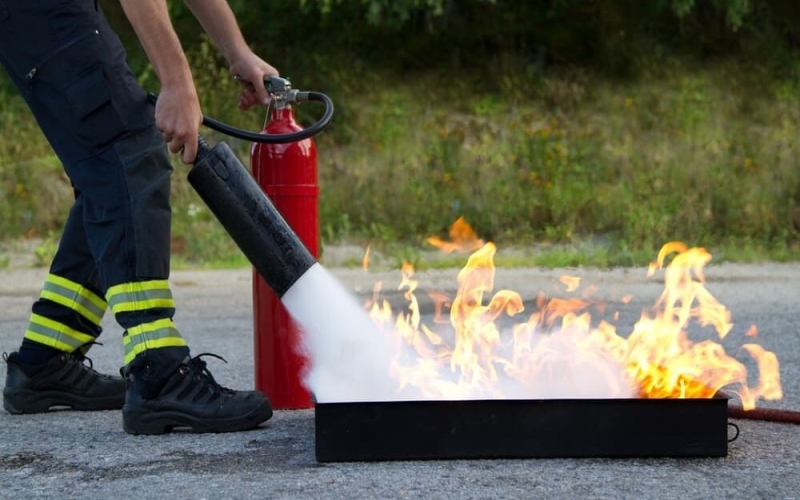
The risk of fire is ever-present, from our homes to workplaces. Knowing how to respond swiftly and effectively safeguards lives and property. One of the first lines of defence against fires is the fire extinguisher. This blog explores fire extinguishers, covering their classes, types and operations and the importance of training.
Understanding Fire Extinguishers
A fire extinguisher is a portable device that discharges a stream of materials to extinguish a fire. It consists of a hand-held cylindrical pressure vessel containing an agent that can be discharged to suppress a fire.
Understanding the fundamental mechanics and proper use of fire extinguishers is essential for effectively controlling small fires and preventing disaster, according to McKenna & Vane, a leading property management Frederick, MD company.
Fire Extinguisher Classes
Fire extinguishers are categorised into different classes based on the type of fire they are designed to extinguish. The categories are typically denoted by letters A, B, C, D and K, each addressing different types of fire:
- Class A extinguishers are meant for ordinary materials like wood, paper and cloth.
- Class B extinguishers are used for flammable liquids like gasoline, oil and grease.
- Class C extinguishers are suitable for electrical fires caused by appliances, tools or other equipment.
- Class D extinguishers are designed for flammable metals such as magnesium, titanium or sodium.
- Class K extinguishers are used specifically for kitchen fires involving cooking oils and fats.
Types of Fire Extinguishers
Fire extinguishers come in various types, each suitable for different fire classes:
Water Extinguishers:
Water extinguishers are primarily used for Class A fires. They are most effective on fires involving organic solid materials such as wood, paper and textiles. By applying water, they reduce the temperature of the burning materials below the ignition point.
Foam Extinguishers:
Suitable for Class A and B fires, foam extinguishers are versatile in tackling fires caused by solid materials and flammable liquids. The foam forms a seal over the surface, preventing oxygen from feeding the fire and vaporising flammable liquids.
Dry Chemical Extinguishers:
These multi-purpose extinguishers apply to Class A, B and C fires, making them a popular choice for many environments. The powder-based agent can break the chemical reaction of fires, effectively halting combustion without conducting electricity.
Carbon Dioxide (CO2) Extinguishers:
Ideal for Class B and C fires, CO2 extinguishers are particularly effective in electrical fire scenarios as they leave no residue. They replace the oxygen surrounding the fire with carbon dioxide and cool the fuel, effectively smothering the fire.
Wet Chemical Extinguishers:
Specifically engineered for Class K fires, typically involving cooking oils and fats, wet chemical extinguishers neutralise the flame by creating a foam layer on the surface of the burning oil, which cools and smothers the fire, preventing re-ignition.
How Do Fire Extinguishers Work?
Fire extinguishers operate based on eliminating at least one element of the fire triangle—heat, fuel or oxygen—to put out the fire. Activation of the extinguisher is initiated by pulling a safety pin and pressing down on a lever, which propels the extinguishing agent from the canister through a nozzle directed at the fire’s base.
Importance of Fire Extinguisher Training
Every second counts in a fire emergency, and having employees trained to handle extinguishers can significantly reduce the risk of injury and property damage.
Fire extinguisher training course gives individuals the knowledge and confidence to act swiftly and efficiently in a fire emergency. It helps them understand different types of fires and extinguishers, proper operation techniques, safety protocols and strategies for conducting fire extinguisher inspections.
Proper training ensures that individuals can quickly assess the situation, find the extinguisher and effectively apply it to suppress the fire before it escalates.
Moreover, fire awareness training complements extinguisher training by teaching workers how to minimise fire risks and follow evacuation procedures during fire emergencies.
Conclusion
Fire extinguishers are vital tools in preventing the spread of fires and minimising damage. Familiarity with the different classes and types of fire extinguishers and proper training can make a significant difference in emergencies. By empowering individuals with this knowledge, communities and workplaces can become safer, more resilient environments.