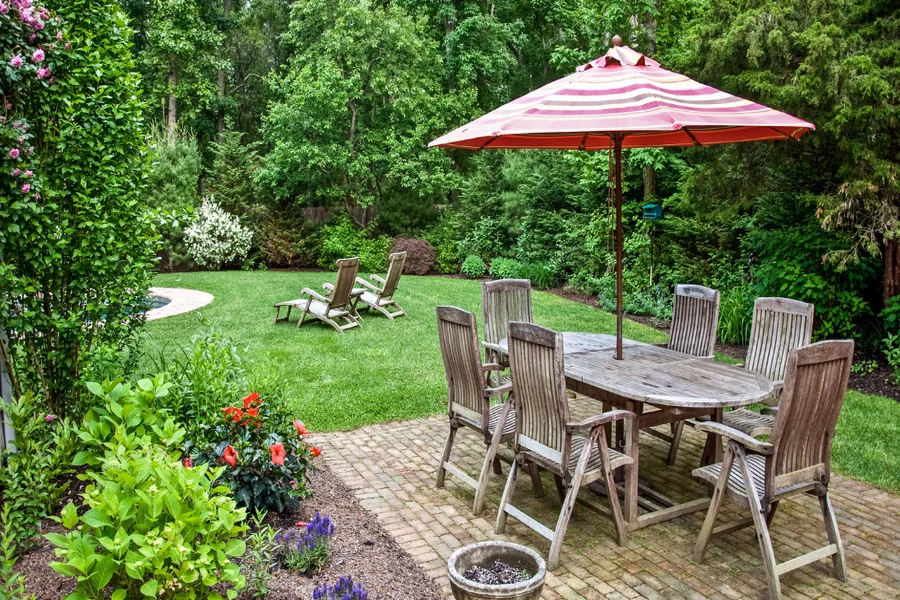
A backyard can look perfectly maintained and still become an inviting place for mosquitoes.
The grass is trimmed, the patio is clean, and the garden beds are neatly arranged. Yet an evening outside can become uncomfortable as mosquitoes gather around seating areas, shaded corners, and walkways.
The problem isn’t always poor maintenance. Sometimes, ordinary landscaping choices and overlooked household items create conditions where mosquitoes can reproduce or find shelter.
A small amount of trapped rainwater, dense vegetation, or a neglected drainage area may contribute to mosquito activity without attracting much attention. Understanding these conditions helps homeowners make more informed decisions about maintaining their outdoor spaces.
Standing water hides in places homeowners rarely check
Most people recognize that mosquitoes reproduce in standing water. What often goes unnoticed is how little water certain species need to complete their early development.
A birdbath, forgotten watering can, or decorative planter may hold enough water to become a breeding site. Even small containers tucked beneath outdoor furniture can collect rainfall and remain undisturbed.
These areas are particularly easy to overlook because they don’t resemble traditional water features.
The Centers for Disease Control and Prevention’s guidance on mosquito prevention recommends regularly emptying, scrubbing, turning over, covering, or removing items that collect water around the home.
The concern isn’t necessarily the size of the container. It’s how long water remains available and whether mosquitoes can access it. Regular inspections can interrupt breeding opportunities before they become persistent problems.
Dense landscaping can create comfortable resting areas
Plants add privacy, texture, and character to outdoor spaces. However, dense vegetation can also provide shaded, humid environments where adult mosquitoes rest during parts of the day.
Overgrown shrubs, thick groundcover, and vegetation surrounding fences can limit airflow and retain moisture. These conditions may be particularly attractive to mosquitoes seeking protection from direct sunlight and drier conditions.
This doesn’t mean homeowners need to remove attractive landscaping or sacrifice their gardens’ character.
Instead, thoughtful pruning and routine maintenance can help reduce excessively sheltered areas. Keeping vegetation from becoming overcrowded around frequently used spaces may also make patios and walkways less hospitable to resting mosquitoes.
If these conditions persist despite regular maintenance, professional mosquito control may be part of a broader strategy to reduce mosquito activity around the property.
The important distinction is that controlling adult mosquitoes and reducing the conditions that attract them are related, but separate responsibilities.
Drainage problems can turn ordinary rainfall into a recurring issue
Rainfall is unavoidable, but the way water moves through a property can influence mosquito breeding opportunities.
Poorly positioned downspouts, clogged gutters, uneven ground, and blocked drainage channels can keep water standing after a storm. When these conditions repeat, homeowners may still deal with mosquito activity even after removing obvious containers.
The challenge is that drainage problems often develop gradually.
Leaves collect in gutters, soil settles around walkways, and landscaping changes runoff direction. What starts as a minor inconvenience can become a recurring source of standing water.
Improving drainage doesn’t always require major construction. Cleaning gutters, redirecting downspouts, and fixing small areas where water collects can help eliminate potential breeding sites.
For larger drainage problems, a professional assessment may be necessary to determine how to manage water without creating new issues elsewhere on the property.
Outdoor storage areas can shelter mosquitoes without attracting attention
A yard doesn’t need standing water everywhere to have a mosquito problem.
Adult mosquitoes may rest in shaded, humid locations, including beneath decks, patio furniture, and outdoor structures. Storage areas filled with unused equipment can create additional sheltered spaces that homeowners rarely inspect.
These conditions often develop unintentionally. A collection of gardening supplies, stacked containers, or neglected outdoor furniture may create sheltered areas that remain undisturbed for weeks.
The U.S. Environmental Protection Agency’s guidance on pest control methods emphasizes prevention, identifying pest conditions, and using appropriate control measures rather than relying exclusively on pesticide applications.
For homeowners, that means treating outdoor organization as part of routine property maintenance. Clearing unnecessary clutter, inspecting shaded spaces, and storing containers properly can reduce potential resting areas while making the backyard easier to maintain.
Mosquito prevention requires more than a single treatment
One of the biggest misconceptions about mosquito management is that a single action can resolve the problem permanently.
Removing standing water can reduce breeding opportunities, but it doesn’t necessarily address adult mosquitoes already present. Similarly, treatments targeting adult mosquitoes cannot prevent new breeding sites from developing after rainfall.
This is why consistency matters.
Homeowners considering a mosquito treatment plan should understand how scheduled treatments fit alongside regular property inspections, drainage maintenance, and efforts to eliminate standing water.
The objective isn’t to create an entirely mosquito-free environment, which may be unrealistic when insects can move between neighboring properties. It’s to reduce mosquito activity by addressing the conditions that allow populations to develop and persist.
A more effective routine considers seasonal changes, rainfall patterns, and the areas where mosquitoes are most frequently observed.
A more comfortable backyard begins with noticing the details
Mosquito prevention isn’t necessarily about making dramatic changes to an outdoor space.
Often, the most useful improvements involve recognizing conditions that have become easy to ignore: a clogged gutter, a shaded storage corner, an overcrowded garden bed, or a container that repeatedly collects rainwater.
These details may seem unrelated, but together they influence how suitable a property becomes for mosquitoes.
Regular inspections, thoughtful landscaping, and appropriate mosquito management can help homeowners address potential problems before they become more persistent.
A well-maintained backyard isn’t simply one that looks attractive. It’s one where the less visible conditions receive just as much attention as the features everyone notices.