The Art and Science of Rug Making: Handcrafted Traditions & High-tech Loom
 Ava Thompson |
July 18, 2025 |
4:06 pm
Ava Thompson |
July 18, 2025 |
4:06 pm
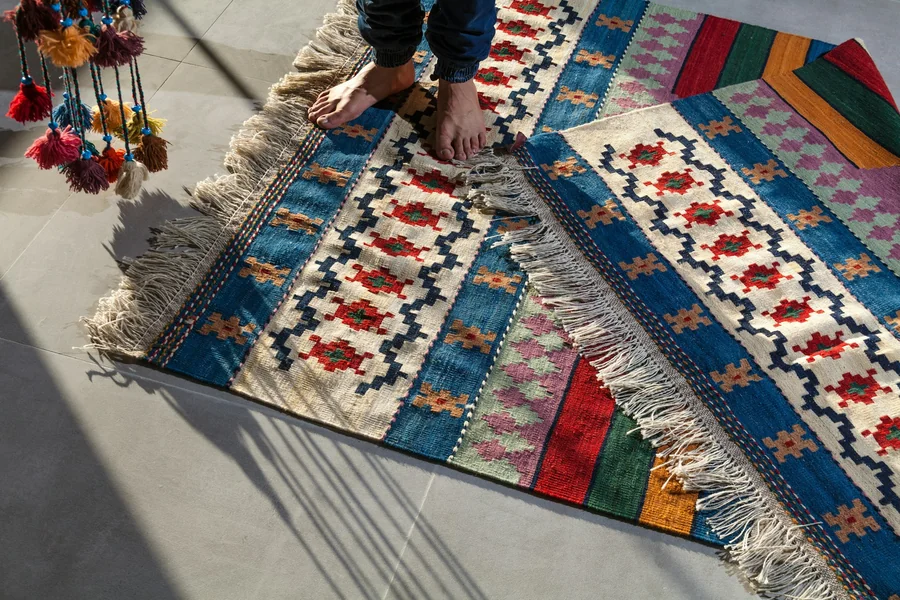
A rug is more than just a floor covering; it’s the result of detailed craftsmanship, material science, and design planning. While some are produced by hand and others by machine, all rugs follow a process that transforms raw fibers into finished, functional decor.
Understanding how rugs are made offers insight into their durability, pricing, and long-term performance. This guide breaks down that process, from fiber selection to finishing.
Raw Materials
Every rug begins with fiber. Natural options like wool, cotton, and jute are prized for their texture, insulation, and eco-friendliness. Wool, in particular, is known for its durability and ability to hold dye well. On the synthetic side, materials like nylon, polyester, and polypropylene are often chosen for affordability and stain resistance.
Once the fiber is selected, it’s cleaned, carded (combed to align strands), and spun into yarn. Some manufacturers may twist the yarn for added strength or blend fibers to achieve a specific texture or performance feature. At this point, the yarn is either dyed or left undyed until later in the process.
Traditional Hand-Knotting
Hand-knotting is one of the oldest and most meticulous methods of rug construction. It starts with a loom, where vertical threads (warp) are stretched tightly. Artisans then tie knots around these warps using short strands of yarn, working row by row to build the pattern.
Each knot is tied by hand, often thousands in a single square foot. Knot styles may vary by region, with Persian and Turkish knots being the most common. After each row is tied, a weft thread is passed through to secure it, then the row is packed down firmly. The result is a dense, long-lasting rug that can take months to complete, depending on its size and complexity.
Hand-Tufting and Hooking
Hand-tufting is a faster alternative to knotting and allows for detailed patterns with less labor. In this method, yarn is pushed into a stretched canvas using a tufting gun, a handheld gun that inserts loops of yarn through the backing material. Hooking is a similar manual process that uses a hook to pull loops through from behind.
Once tufting or hooking is complete, the back of the rug is coated with latex to hold the loops in place, then a secondary fabric is added for stability. The surface is sheared or trimmed to achieve the desired pile height and texture. While these rugs are less time-consuming, they still require skill and allow for creative pattern work.
Machine Weaving and Tufting
Modern rug manufacturing relies heavily on machines, especially for large-scale production. Machine-woven rugs are made using power looms that interlace warp and weft threads at high speed. Popular techniques include Axminster and Wilton weaving, which allow for complex designs and varying textures.
In machine tufting, yarn is punched through a fabric backing using rows of needles. These machines can produce thousands of square feet daily, with computerized control over color and pattern. While machine-made rugs typically have lower price points, they can still offer good quality, especially when made with durable fibers and dense stitching.
Dyeing, Washing, and Finishing
Color can be introduced at different stages of rug production. Some fibers are dyed before being spun into yarn, which allows for even saturation and long-lasting color. In other cases, dyeing occurs after the rug is woven or tufted, which allows for custom patterns and effects.
Once dyed, rugs go through washing to remove excess dye, soften the texture, and set the colors. This is followed by shearing to even out the pile and define the design. Edges are finished (either with binding tape or sewn-on fringe), and a final inspection checks for consistency, color accuracy, and any flaws. At this point, the rug is ready for packaging and shipment.
The Final Product
Several factors impact a finished rug’s look, feel, and longevity. Material type plays a big role. Natural fibers often feel softer and wear differently than synthetics. Construction method matters, too: hand-knotted rugs tend to be the most durable and intricate, while tufted and machine-made options offer affordability and design variety.
The density of knots or tufts, the quality of dye, and the finishing process all contribute to the rug’s performance over time. Understanding these elements can help shoppers make more informed decisions, especially when comparing prices or trying to match a rug to high-traffic areas.
From Fiber to Floor Covering
Making a rug involves multiple steps, each with its own level of craftsmanship, technology, and material choice. Whether handmade or machine-produced, every rug reflects a series of decisions that shape its function and appearance. Knowing how those pieces come together can make it easier to choose a rug that fits both the space and the lifestyle it needs to support.