Scaling Smart Home Appliance Production: What Assembly Line Upgrades Are Needed?
 Ava Thompson |
September 3, 2025 |
4:40 pm
Ava Thompson |
September 3, 2025 |
4:40 pm
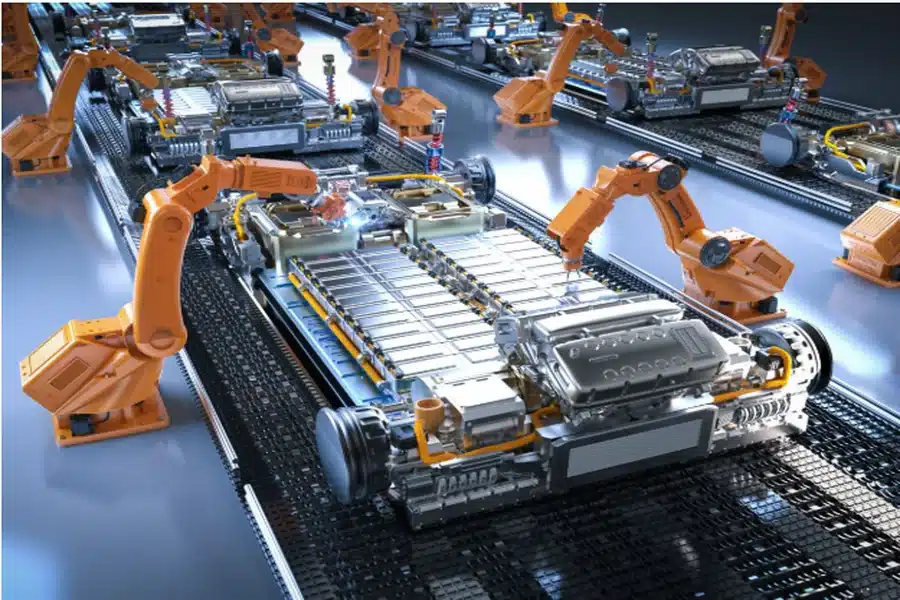
Smart home appliances are no longer a niche market; they are a fast-growing expectation in households around the world. From voice-enabled washing machines to energy-efficient refrigerators, consumer demand is pushing manufacturers to deliver more models, with more features, at a faster pace than ever before. At the same time, product cycles are shrinking, meaning factories must adapt quickly to new designs without sacrificing quality.
SanHok, the leading professional home appliances assembly line manufacturer, understands that scaling production is not just about adding more workers or running longer shifts. The real backbone of meeting demand lies in smarter assembly lines. Upgrades to conveyors, automation, and integrated systems provide the speed, consistency, and flexibility manufacturers need to stay competitive in a crowded market. Without these improvements, keeping up with the surge in smart appliance production becomes nearly impossible.
Where Traditional Assembly Lines Fall Short
Many appliance manufacturers still rely on assembly lines designed for a different era of production. Manual handling remains common, which not only slows down throughput but also increases the risk of errors and inconsistent quality. Workers often spend valuable time on repetitive tasks that could be automated, leaving little room for scaling when demand spikes.
Rigid line layouts create another major obstacle. Traditional conveyor systems are built for one product type, making it difficult to adapt when introducing new models or features. For manufacturers producing a variety of smart appliances, this rigidity leads to downtime, costly reconfigurations, and delayed launches.
Outdated conveyor systems also lack real-time visibility. Without sensors or integrated monitoring, identifying bottlenecks or predicting equipment failures becomes guesswork. These limitations highlight why assembly line upgrades from companies like SanHok are essential for manufacturers aiming to compete in today’s smart appliance market.
Automation at the Line Level: Faster, Safer, Smarter
Upgrading assembly lines with automation is one of the most effective ways to boost productivity. Robotic arms and pick-and-place systems operate with a speed and precision that human labor alone cannot match. When paired with automated conveyors, they keep materials and components moving seamlessly, reducing idle time and eliminating the stop-and-go flow common in older setups. The result is steady output with fewer defects, even as production volumes rise.
Safety is another major benefit. By taking over repetitive or physically demanding tasks, automation reduces strain and injury risks for workers. Employees can shift their focus to quality checks, line management, or problem solving, roles that add more value to the operation while lowering turnover. Automation also minimizes human error, which can otherwise cause costly rework or product recalls.
Most importantly, automation enables factories to scale without a proportional increase in labor costs. Instead of hiring and training large numbers of workers for every production surge, manufacturers can expand capacity by reprogramming or adjusting automated systems. As SanHok has seen with its clients, this balance of speed, safety, and scalability makes automation a cornerstone of modern assembly line upgrades.
Flexible Conveyor Systems for Multi-Model Production
Smart appliance manufacturers rarely focus on just one product. A single facility might produce refrigerators, washing machines, and air conditioners, sometimes even on the same line. Traditional conveyor systems, built for one product type, struggle in this environment. Switching from one model to another often requires lengthy shutdowns, equipment adjustments, and retraining, all of which cut into profitability.
Flexible, modular conveyor systems offer a practical solution. Designed with adaptability in mind, they can be quickly reconfigured to handle different appliance sizes, weights, and assembly requirements. Adjustments that once took hours can now be completed in minutes, allowing manufacturers to respond faster to market shifts or product launches.
By minimizing downtime and supporting multi-model production, modular conveyors provide the agility today’s factories need. SanHok continues to see manufacturers adopt these flexible systems to stay competitive while delivering variety at scale.
Adding Intelligence: Sensors, Data, and Predictive Insights
Modern assembly lines are no longer just about moving products from one station to the next; they are becoming intelligent systems that collect and act on data in real time. IoT-enabled conveyors now come equipped with sensors that track product movement, monitor equipment health, and even detect defects before they reach the final stage. This level of visibility allows managers to make faster, more informed decisions that keep production running smoothly.
For example, sensors can flag when an appliance part is misaligned or when a component does not meet quality standards, triggering immediate corrections instead of waiting for end-of-line inspections. Predictive maintenance is another significant advantage. By monitoring vibration, temperature, and energy use, smart conveyors can signal when a belt, motor, or roller is nearing failure, allowing parts to be replaced before breakdowns cause costly downtime.
Energy efficiency also improves. With detailed data on power consumption, manufacturers can pinpoint where energy is being wasted and adjust operations to lower costs. By combining movement with intelligence, assembly lines evolve from simple transport systems into decision-making tools that improve quality, efficiency, and long-term reliability.
The Payoff: ROI from Smarter Assembly Lines
For business leaders, the key question is always: will these upgrades pay off? Smarter assembly lines deliver a clear return on investment by cutting downtime, increasing output, and reducing waste. Automated conveyors and intelligent monitoring systems keep production moving with fewer stoppages, which means more appliances ready for market in less time. At the same time, fewer defects and less rework translate directly into savings on materials and labor.
The scalability of modern systems is another major advantage. Instead of building entirely new lines for every production increase, manufacturers can expand capacity with modular add-ons or software adjustments. This flexibility reduces both upfront capital costs and long-term operating expenses. By lowering risks tied to breakdowns and production delays, smarter assembly lines help manufacturers protect margins while staying competitive in a fast-paced market. SanHok has worked closely with manufacturers to achieve these measurable gains in both efficiency and profitability.
How to Start Upgrading Without Disrupting Production
Shifting to smarter assembly lines does not have to mean shutting down an entire factory. The most effective approach is to start small, focusing on one production line as a pilot project. This allows teams to test new equipment, gather performance data, and refine processes without putting the whole operation at risk.
Choosing modular systems is another smart step. Modular conveyors and automation tools can be added gradually, which makes scaling easier and keeps upfront costs manageable. Running pilot programs also gives managers time to train staff and integrate new workflows smoothly.
By approaching upgrades in stages, manufacturers reduce disruption while steadily moving toward a fully modernized operation. The result is a scalable path to smarter production, one that supports growth today while laying the foundation for long-term efficiency and flexibility. With guidance from industry leaders like SanHok, manufacturers can take confident steps toward this transformation.