How the Local Map Pack Shapes Attorney Discovery in Chicago
 Johnathan Parker |
August 26, 2026 |
12:02 pm
Johnathan Parker |
August 26, 2026 |
12:02 pm
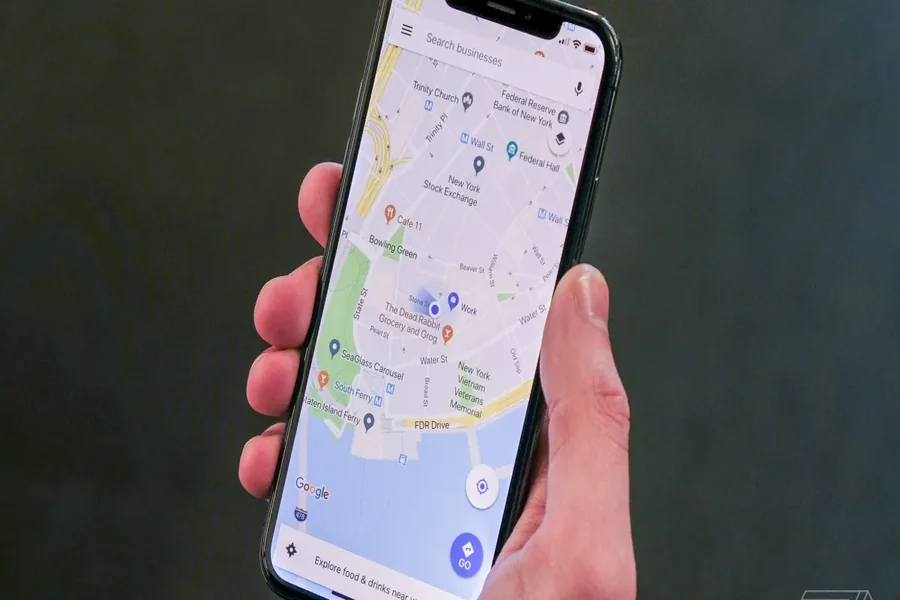
A prospective client looking for an attorney may encounter local business results before deciding which law firm website to visit. Google says local results appear in Search and Maps when people look for nearby businesses or places, and Business Profiles can surface information such as location, hours, website, reviews, and contact details.
For firms working with a Chicago attorney SEO agency, the useful question is not how to “hack” the map results. Google says local results are mainly based on relevance, distance, and prominence, and there is no way to request or pay Google for a better local ranking.
Distance Makes Local Visibility Uneven
Google defines distance as how far a business is from the customer searching. If the customer does not provide a location, Google says it uses what it knows about that person’s location.
That makes one ranking screenshot a weak measure of citywide visibility. A result observed from one part of Chicago does not establish what a person will see from another location. An agency evaluating local performance should document where checks are made and which geographic areas matter to the firm’s business goals.
Distance is also not something an SEO provider can optimize away.
Relevance Starts With Complete Business Information
Google describes relevance as how well a Business Profile matches what someone is searching for. Its guidance says complete and detailed business information helps Google understand a business and match the profile with relevant searches.
For a law firm, that creates a straightforward profile audit. Confirm the real-world business name, address, phone number, hours, website, and other information the firm controls. Google also says businesses with complete and accurate information are more likely to appear in local search results.
This is more useful than stuffing practice-area terms into fields where they do not belong. Google’s Business Profile guidelines require businesses to represent themselves accurately and prohibit adding unnecessary information such as keywords to address lines.
Business Categories Can Affect Local Ranking
Google states that the categories selected for a Business Profile affect local ranking. It recommends choosing a primary category that best describes the business and using only a few additional categories that accurately describe what the business does.
That gives law firms a concrete question: does the selected category describe the real practice, or was it chosen because someone hoped it would capture more searches?
Categories should not substitute for useful service information on the website. They help describe the business at the profile level, while the site still needs clear pages explaining the legal matters the firm handles.
Reviews Contribute to Prominence
Google says prominence reflects how well known a business is and specifically states that more reviews and positive ratings can help local ranking. Review scores and total review counts are also visible in Search and Maps.
A law firm can therefore treat review management as part of local visibility without inventing a required number of reviews. Google does not publish a threshold a firm must reach to enter local results or outrank a competitor.
Google allows businesses to ask customers for genuine reviews, including by sharing a review link or QR code, but prohibits incentives in exchange for reviews. The agency’s review process should be judged against those rules rather than an arbitrary monthly quota.
Legitimate Office Locations Matter
Google’s Business Profile rules require profiles to represent actual real-world locations. Virtual offices are not eligible, and a co-working location generally must have clear signage, receive customers during business hours, and be staffed by the business during those hours.
Opening additional profiles simply to target neighborhoods is not a compliant substitute for operating legitimate locations.
Google also has specific rules for individual practitioners such as lawyers. A lawyer may qualify for a separate profile when the practitioner is public-facing and can be contacted directly at the verified location during stated hours. Multi-attorney firms should review those requirements before creating practitioner listings.
The Website Still Supports Local Discovery
Google says it compiles Business Profile information from several sources, including publicly available web content such as a business’s official website.
Office pages should accurately describe the location they represent. The website link on a profile should lead to a page that makes sense for the business or location, and attorney and practice information should not conflict with what appears elsewhere.
The objective is accurate public information about the same real-world business.
Map Visibility Should Be Measured Beyond Rankings
Google Business Profile performance reporting can show searches, views, calls, website clicks, and direction requests for verified profiles. Those metrics give firms evidence about how people find and interact with a profile in Search and Maps.
They do not prove that every call became a consultation or signed case. That requires the firm’s intake data. But they allow an agency to move beyond a single map-position screenshot and report on observable interactions.
A useful review can compare search terms, website clicks, calls, and other available profile interactions over time, then connect those findings with intake information where the firm has reliable tracking.
Build Local Strategy Around What Google Actually Documents
Local map results can place a law firm in front of someone before that person visits the website, but Google does not provide a shortcut for controlling the outcome. Relevance, distance, and prominence work together, and the searcher’s location means visibility can vary.
For a Chicago law firm, the stronger approach is to keep Business Profile information accurate, choose categories carefully, request reviews within Google’s rules, use only legitimate office and practitioner profiles, maintain accurate website information, and measure profile interactions alongside intake results.
That creates a local search program the firm can audit. Instead of being told that a mysterious map-pack tactic “boosts rankings,” the firm can see which changes were made, which Google rules support them, and what happened afterward.