Catalytic Heaters, a Growing Choice for Industries That Need Precise and Efficient Heat in Production
 Ava Thompson |
March 11, 2026 |
2:11 pm
Ava Thompson |
March 11, 2026 |
2:11 pm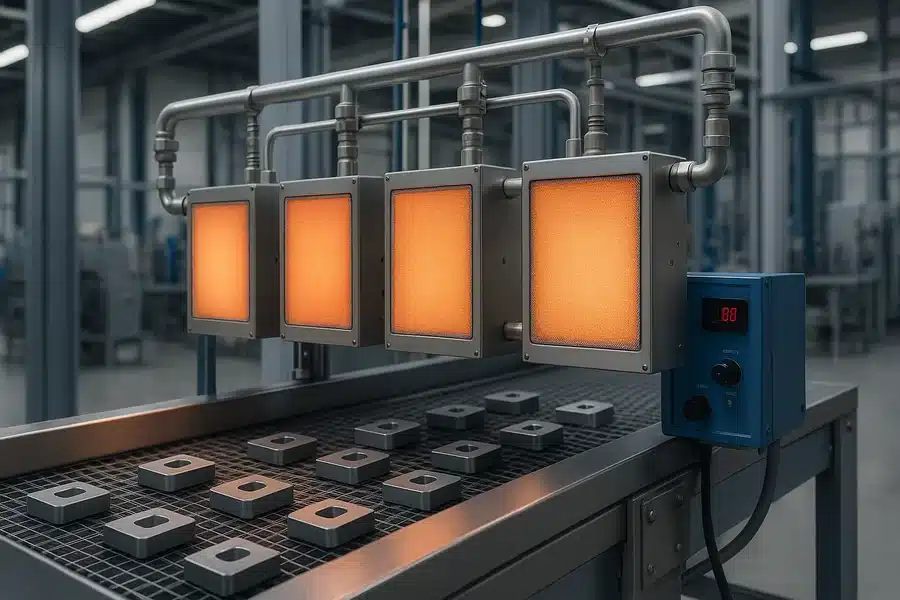
Industrial processes are under growing pressure to deliver higher quality, reduce energy consumption and comply with stricter environmental standards. In this context, thermal technologies are no longer a mere “utility”, but a strategic lever for competitiveness, especially in sectors where heat must be precise, uniform and controllable.
Catalytic gas heaters are emerging as one of the most interesting solutions for manufacturers, plant managers and process engineers who need efficient, safe and finely tunable heat. From coatings and composites to food processing and automotive, these systems are reshaping how industries think about heating, curing and drying.
From traditional burners to catalytic heaters: how industrial heating is changing
For decades, industrial heating has been dominated by conventional gas burners and electric resistances. These technologies are consolidated, relatively simple to manage and widely available. However, they present limitations that become evident in modern production contexts: high energy demand, non-uniform heat distribution, slower start-up times and, in many cases, higher emissions.
The shift towards catalytic combustion responds to several converging drivers. On the one hand, there is the macro-trend of decarbonisation: according to the International Energy Agency, industry accounts for roughly a quarter of global final energy consumption, with process heat being one of the main components. On the other hand, quality and consistency requirements have increased, especially in sectors such as automotive, aerospace, packaging and high-performance coatings, where a few degrees of difference can impact adhesion, curing or dimensional stability.
Catalytic heaters exploit a different principle from open-flame burners. Instead of a visible flame, gas (typically natural gas, LPG or mixtures) reacts on a catalytic surface at lower temperatures, generating infrared radiation and convective heat in a controlled way. The absence of flame, the more homogeneous emission and the possibility to modulate power with precision make this technology particularly suitable for production environments that require repeatability and control.
In recent years, attention has also grown around process electrification. Yet, for many industrial plants, the complete switch to electric systems is not feasible in the short term due to infrastructure, costs or process constraints. In this scenario, catalytic gas heaters represent a pragmatic intermediate step: they retain the advantages of gas (high power, existing distribution networks) while enabling significant gains in efficiency and emissions versus traditional burners.
How catalytic gas heaters work: principles and technical advantages
A catalytic heater consists essentially of a metal or ceramic substrate coated with a catalyst (often based on noble metals such as platinum). Gas is distributed over the surface, where the catalytic reaction promotes oxidation at temperatures lower than those of conventional combustion. The result is the generation of heat with limited or absent visible flame and a high share of infrared radiation.
From a technical standpoint, this configuration offers several advantages. Firstly, the operating temperatures of the catalytic surface generally remain in a range that reduces the formation of nitrogen oxides (NOx), one of the most regulated pollutants in industrial emissions. Secondly, the absence of open flame mitigates risks of fire and hot spots, an aspect particularly relevant in environments with flammable materials, dust or solvents.
Another key aspect is thermal uniformity. The catalytic panel emits in a homogeneous way over its entire surface, facilitating the achievement of consistent temperatures on the product or material being treated. In processes such as drying of inks and coatings, curing of resins or preheating of surfaces before bonding and forming, this uniformity translates into fewer defects, lower scrap rates and reduced need for rework.
Catalytic systems also lend themselves well to modularity and integration in existing lines. Being compact and configurable in panels, they can be positioned close to the product, optimising heat transfer and reducing losses. The ability to modulate power rapidly, often via precise gas flow and, in more advanced systems, via integrated control electronics, makes them suitable for processes with variable cycles or batch production where flexibility is essential.
Market trends and data: why catalytic heaters are gaining ground
The move towards more efficient and “cleaner” heating technologies is part of a broader transformation of industrial energy use. According to analyses published by major international agencies in 2023, energy efficiency measures in industry could account for a substantial portion of the emission reductions required in the next decade, with process heat playing a central role.
In this context, the global industrial heating equipment market is expected to grow steadily. Industry reports estimate a global annual growth rate for advanced industrial heaters in the mid-single digits, with above-average dynamics in segments linked to infrared and catalytic technologies. This growth is driven not only by new installations, but also by retrofits and revamping of existing lines, as companies seek to improve energy performance without completely overhauling their plants.
From a geographical point of view, Europe remains one of the most active markets for advanced heating solutions, due to stringent environmental regulations and high energy costs. European manufacturers report a gradual but clear shift from traditional burners to systems that combine efficiency, lower emissions and better process control. Italy, with its strong manufacturing base in sectors such as automotive components, packaging, textiles and food, is directly involved in this evolution.
In Italy, energy costs for industry are among the most significant items of operating expenditure, particularly for small and medium-sized enterprises. Surveys by national business associations show that, for many SMEs, energy can represent from 5% up to over 20% of total production costs, depending on the sector. Against this backdrop, investments in more efficient heating systems become quickly visible on income statements, sometimes with payback times measured in a few years, especially where lines operate in continuous regimes.
Globally, the push towards quality and traceability of production is also accelerating adoption of technologies that ensure greater repeatability. Catalytic heaters fit into this logic, as they are easily integrable with control systems, energy monitoring and production data analytics. The possibility of precisely correlating thermal profiles with process outcomes (adhesion, curing, drying times) supports quality management and continuous improvement programs such as Lean and Six Sigma.
Applications: where catalytic heaters make the biggest difference
Catalytic gas heaters are not a generic solution applicable in the same way everywhere. Their adoption is particularly effective in a number of industrial contexts where process requirements and physical characteristics of materials align with the strengths of catalytic technology.
A first area is surface treatment and coating. In painting, printing and coating lines for metals, plastics, glass or composites, catalytic heating enables rapid and uniform drying, reducing cycle times and improving finish quality. The prevalence of infrared radiation allows effective heating of the surface layer without excessively stressing the substrate, an important factor for temperature-sensitive materials.
Another field is preheating and forming of plastics and composites. In thermoforming, lamination or bonding processes, the ability to control temperature with narrow tolerances improves dimensional stability and reduces deformations or internal tensions. Catalytic systems, thanks to their modular configuration, can be positioned to selectively heat specific zones of the product, supporting more complex geometries and high-performance composite materials.
In the food industry, catalytic heaters are used in baking, drying and surface treatment applications where precise temperature control and hygienic conditions are crucial. The absence of open flame and the possibility of designing equipment for easy cleaning and maintenance are particularly appreciated in this sector, subject to strict safety and quality standards.
Automotive and aerospace supply chains, characterised by high traceability and strict specifications, employ catalytic heating in bonding, sealing and paint curing processes. The contribution to reducing volatile organic compound emissions, when catalytic systems are integrated with appropriate ventilation and abatement equipment, is another factor of interest for companies that must comply with tight environmental parameters.
Energy efficiency, emissions and costs: the numbers that matter
When assessing the adoption of catalytic gas heaters, plant managers and entrepreneurs rightly ask for concrete numbers: how much can be saved, and with what impact on emissions and operating continuity?
From the standpoint of efficiency, catalytic systems often offer advantages over traditional burners due to several factors: better proximity to the product, reduced heat losses, more uniform distribution and the ability to modulate power more accurately. Industry case studies reported by manufacturers and trade associations suggest potential fuel savings on the order of tens of percent in properly designed retrofits, particularly when replacing obsolete or oversized systems.
On emissions, the reduction in NOx is one of the most documented benefits. Thanks to lower combustion temperatures and the catalytic process, NOx emissions can be significantly lower than those of conventional high-temperature burners. This is particularly relevant in regions where local air quality standards impose strict limits, and where permits for new lines or plant expansions depend on the ability to stay within emissions caps.
CO and unburned hydrocarbons are also typically lower with well-designed catalytic systems, provided that gas quality and operating conditions are kept within specified ranges. Some technologies integrate additional measures to further reduce residual pollutants, supporting companies in meeting integrated environmental authorisation requirements.
On the cost side, it is necessary to consider not only the direct energy bill, but also maintenance, downtime and scrap. Catalytic heaters, having no open flame and often fewer moving parts in the hot zone, can require less frequent heavy maintenance compared to certain types of burners. Moreover, the improvement in process stability reduces rejects and rework, with indirect savings that in many cases outweigh the mere energy benefit.
Investment costs, however, are not negligible and can represent a barrier for small businesses. It is therefore essential to approach the theme with a structured assessment: analysis of current consumption, measurement of process variability, mapping of maintenance interventions and quantification of waste linked to thermal issues. Only by integrating these elements can managers and entrepreneurs estimate a credible payback time and evaluate financing options, including possible incentives linked to energy efficiency.
Risks and critical issues if industries ignore the evolution of thermal technologies
Not adopting more efficient and controllable heating solutions does not simply mean missing a technological opportunity. In many cases, it exposes companies to tangible risks in terms of competitiveness, regulatory compliance and operational resilience.
A first risk concerns production costs. In a scenario of volatile energy prices, relying on inefficient systems increases exposure to price spikes. Companies that do not modernise their thermal infrastructure may find themselves with structurally higher unit costs compared to competitors who have invested in advanced technologies.
Regulatory risk is equally relevant. Environmental standards on emissions and energy efficiency are gradually tightening. Plants equipped with outdated burners may struggle to comply with new limits on NOx, CO or overall energy performance, especially when renewing permits. In extreme cases, non-compliance can lead to production restrictions, fines or the need for hasty and more expensive corrective actions.
There is also a quality and reputation dimension. In supply chains increasingly oriented towards sustainability and traceability, customers – especially large international groups – often assess their suppliers’ energy and environmental performance. Continuing to operate with high-emission technologies and limited control over thermal processes can negatively affect a company’s positioning in selection and qualification processes.
Finally, neglecting thermal innovation can limit the ability to diversify and upgrade the product portfolio. Many advanced materials and surface treatments require fine and repeatable temperature control; remaining tied to rigid or poorly controllable heating systems may preclude access to higher value-added markets.
Opportunities and practical advantages for companies that adopt catalytic heating
For companies that choose to integrate catalytic gas heaters into their plants, the benefits are not only technological, but also organisational and strategic.
On an operational level, greater thermal control translates into more stable processes and easier standardisation. This, in turn, facilitates the implementation of quality management systems and continuous improvement methodologies. When process parameters are more predictable, it is easier to identify the true root causes of variability and to intervene effectively.
Energy savings and emission reductions improve the economic and environmental profile of the plant. Lower fuel consumption reduces exposure to energy cost volatility, while lower emissions help maintain regulatory compliance margins and support corporate sustainability commitments. In some contexts, investments in more efficient thermal technologies can contribute to energy performance certificates or internal carbon reduction targets.
From a safety perspective, the absence of open flame and the more controlled combustion reduce certain fire and explosion risks, particularly in environments with powders, volatile organic compounds or flammable materials. This may have positive reflections on insurance conditions and on relations with regulatory and inspection bodies.
There is also a human capital aspect. Introducing advanced technologies such as catalytic heaters often goes hand-in-hand with higher digitalisation and automation of processes. This requires upgrading the skills of technical and maintenance staff, creating opportunities for professional growth and increasing the company’s attractiveness for specialised profiles.
Finally, the adoption of innovative heating systems can become an element of differentiation in the market. Being able to demonstrate energy-efficient, low-emission and high-control production capabilities supports communication towards customers and stakeholders, provided that the narrative is substantiated by data and objective measurements rather than generic statements.
Regulatory and normative framework: what companies need to know
The regulatory environment for industrial heating touches several areas: emissions, energy efficiency, workplace safety and, depending on the sector, specific rules on product quality and environmental impact. Understanding the main requirements is essential to design or retrofit plants that are compliant over the medium to long term.
On emissions, both European and national regulations set limits for pollutants such as NOx, CO and particulate matter, often differentiated by plant size, fuel type and industrial sector. Authorisation frameworks, such as integrated environmental permits, require facilities to adopt best available techniques, which are periodically updated in reference documents. In this context, technologies that combine high efficiency and low emissions, such as catalytic heaters, can help demonstrate the adoption of advanced solutions.
Energy efficiency obligations are also becoming more structured. Large enterprises are subject to periodic energy audits and, in many countries, even medium-sized companies are increasingly encouraged or required to assess their consumption and identify improvement measures. Interventions on process heat, including the replacement or upgrading of heating systems, are often among the most impactful actions highlighted in these audits.
Safety regulations impose strict criteria for the design, installation and maintenance of gas-fed equipment. Catalytic systems must comply with specific standards regarding burners, pressure equipment and installations in potentially explosive atmospheres if applicable. Choosing certified technologies and working with qualified designers and installers is fundamental to ensure compliance and avoid future disputes.
Sector-specific rules can add further layers. In the food industry, for instance, materials and designs must facilitate hygiene and cleaning; in the automotive and aerospace sectors, process control and traceability requirements are particularly stringent. In all these cases, the ability of catalytic heating systems to integrate with monitoring, data logging and control architectures is an important asset.
Given the dynamic nature of regulations, companies should view thermal innovation not as a one-off response to a norm, but as part of a long-term compliance and sustainability strategy. Introducing flexible and upgradable technologies reduces the risk of finding oneself with obsolete equipment when rules change.
How to approach the transition: strategic and operational considerations
Moving from traditional heating to catalytic systems is not a purely technical decision; it requires a structured approach that combines engineering, economic analysis and organisational planning.
A good starting point is an in-depth mapping of current processes: where and how heat is used, with what consumption profiles, what quality issues are linked to temperature and where bottlenecks or inefficiencies are concentrated. This analysis should be supported by data, not only by perceptions: measurements of temperatures, consumption, cycle times and scrap rates provide a solid basis for evaluating potential improvements.
In parallel, it is useful to classify processes based on their suitability for catalytic heating. Not all applications are ideal candidates; processes that require very high temperatures or where heat must be provided deep inside thick masses may be more complex to convert. On the other hand, surface treatments, drying and moderate-temperature curing are often excellent fields of application.
Once the priority processes have been identified, the next step is to develop technical and economic scenarios: partial versus full replacement, integration of catalytic heaters into existing lines, modular installations that can be expanded later. This phase should include a transparent evaluation of investments, operating costs, expected savings and non-economic benefits (emissions, safety, quality).
The involvement of production, maintenance and safety teams from the outset is crucial. These functions possess practical knowledge of plants and daily constraints, and can help identify both opportunities and potential pitfalls. Training plans for staff who will manage the new systems should be considered early, to avoid friction or improper use that could compromise performance.
Finally, it is advisable to monitor the results of pilot or initial installations with care. Collecting data before and after the introduction of catalytic heaters, both on energy and on process performance, allows the real impact to be demonstrated and helps refine subsequent projects. In this way, technological change becomes a learning path for the whole organisation, not just a one-off investment.
FAQ: common questions about catalytic gas heaters in industry
Are catalytic gas heaters suitable for all industrial processes?
No. They are particularly effective for surface heating, drying, curing and moderate-temperature processes. Applications requiring very high bulk temperatures or deep penetration into thick materials may require alternative or complementary solutions. A preliminary technical assessment is essential to evaluate suitability.
How complex is the maintenance of catalytic heaters compared to traditional burners?
Maintenance is generally manageable and, in some cases, less onerous than for certain traditional burners, as there is no open flame and fewer high-stress components. However, the catalytic surface must be protected from contamination and operated within specified conditions. Regular inspections, cleaning where appropriate and checks on gas quality are important to maintain performance over time.
Can catalytic heaters help meet environmental and energy regulations?
Yes, in many cases they can contribute significantly. Their higher efficiency and lower NOx and CO emissions compared to conventional burners can support compliance with emission limits and energy efficiency goals. Nevertheless, each installation must be evaluated in its specific regulatory context, including gas type, process, ventilation and any additional abatement systems.
Conclusion: making industrial heat a strategic asset
In an industrial landscape where competitiveness depends increasingly on efficiency, quality and environmental performance, process heat can no longer be considered a purely ancillary element. Catalytic gas heaters offer a concrete opportunity to transform heating from a fixed cost into a strategic lever, combining energy savings, better process control, reduced emissions and improved safety.
For companies, the challenge is to approach this transition with method: understanding current processes, identifying where catalytic technology can deliver the greatest benefits, and planning investments that integrate technical, economic and organisational dimensions. Those who succeed in doing so will not only reduce operating risks and costs, but also strengthen their positioning in supply chains that reward innovation, sustainability and reliability.
For plant managers, entrepreneurs and technical directors, the next practical step is to initiate an informed discussion within their organisations, involving production, maintenance and safety teams, and to evaluate with qualified partners the feasibility of introducing catalytic heating solutions on critical lines. Turning industrial heat into an ally rather than a constraint is increasingly a question of strategic vision as much as of technology.