Beyond First Class: How Personalized Air Travel Is Redefining the Modern Journey
 Johnathan Parker |
October 27, 2026 |
10:31 pm
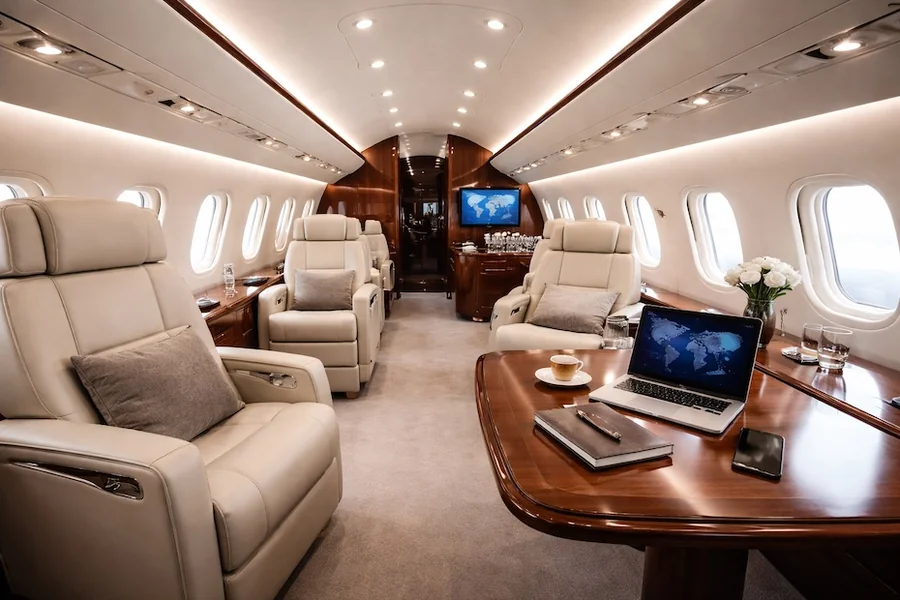
A traveler finishes a meeting two hours late, crosses town, and reaches the airport after the last useful commercial departure has closed its doors. The first-class lounge isn’t much comfort now. The real problem was never the seat; it was a schedule built around hundreds of passengers rather than one person’s workday.
That mismatch explains much of the appeal of personalized air travel. Travelers look beyond wider seats and polished meal service. Basically, they want control over –
- Departure times
- Airport choice
- Privacy
- The trip’s shape.
This shift isn’t limited to celebrities or sprawling corporations. It also attracts project teams and families with complicated itineraries. Moreover, it attracts touring crews and people traveling to places scheduled airlines serve poorly.
The Product Has Shifted From Comfort to Control
First class improves the hours spent aboard an airliner. But it doesn’t rewrite the journey surrounding them. You still work around –
- Fixed departure slots
- Connection windows
- Boarding groups
- Baggage rules
- The possibility that one delayed leg will unravel the next.
Meanwhile, personalized aviation comes with a different problem. For instance, a company may charter a private jet to move six employees from a regional office to a two-day site inspection. This way, they avoid an overnight connection and several separate hotel bills.
The cabin matters, certainly, though the stronger business case often sits in the hours recovered before and after the flight.
That doesn’t mean every private trip saves time. Weather can ground a smaller aircraft, a preferred regional airport may have limited operating hours, and crew-duty limits don’t disappear because a passenger has an urgent meeting. Personalized service gives travelers more choices, not immunity from aviation’s constraints.
A Better Trip Starts With the Mission
What should you examine before comparing aircraft interiors? Start with the trip’s awkward parts.
A straightforward flight between two major hubs may be best booked on a scheduled airline. This works especially for a single traveler booking well ahead.
The calculation changes when four people need to –
- Reach a manufacturing site 90 miles from the nearest large airport
- Carry sensitive equipment
- Return that evening.
| Travel factor | Scheduled first class | Personalized flight |
| Departure time | Fixed timetable | Arranged around the trip |
| Airport access | Mostly major commercial airports | May include smaller regional fields |
| Connections | Sometimes unavoidable | Direct routing may be possible |
| Cabin privacy | Shared cabin | Limited to the traveling party |
| Cost structure | Priced per seat | Commonly priced around the aircraft and trip |
| Disruption options | Airline rebooking system | Depends on aircraft and crew availability |
The table points to the total trip friction rather than ticket price alone. The premium may be hard to defend for a solo leisure traveler. The arithmetic can look quite different if it is split across a working group whose missed day carries a measurable cost.
Personalization Still Requires Due Diligence
People focus on the softer details first. In general, these include –
- Catering
- Ground transfers
- Pets
- A cabin configured for discussion.
Yet operator credentials deserve more scrutiny than the lunch menu.
In the United States, on-demand commercial charter service operates under Federal Aviation Administration Part 135 authority. It covers the following:
- Operational requirements
- Aircraft
- Crew
- Records
- Other aspects of commuter and on-demand flying.
The Transportation Security Administration also sets security requirements for certain private charter operations. But the screening process can vary by operator and aircraft.
What to Do Before Booking?
Before booking, ask for the following:
- Operating carrier’s name
- Certificate details
- The aircraft tail number (when available)
- Cancellation terms
- The plan for mechanical trouble.
Although a broker may arrange the journey, the operator flies it. That distinction sounds technical until a substitution, delay, or refund dispute occurs.
You should also question vague promises.
- Can onboard Wi-Fi support a video call, or only messaging?
- Can the runway handle the proposed aircraft with the expected passenger and baggage load?
- What happens if everyone arrives with hard-sided cases?
Small operational details tend to become big ones at departure.
The Modern Journey Is Measured Door to Door
Personalized air travel is redefining premium flying. Travelers now judge the whole itinerary. They do not want just a few pleasant hours above the clouds. The useful measure includes –
- The drive to the airport
- Waiting time
- Connections
- Privacy needs
- Ground transport
- The cost of arriving late or exhausted.
There’s a fair case for choosing first class on many routes. It’s familiar, easier to price, and often the sensible option.
But sometimes, schedules are brittle, destinations are awkward, or several people must move together. Then, personalization might turn air travel from a fixed product into a working part of the plan.
So the smartest choice might not be the most luxurious. Rather, it’s the arrangement that removes the right constraints without introducing risks you failed to examine.