3PL Warehouse Software vs. Traditional WMS: What’s the Difference?
 Johnathan Parker |
September 8, 2026 |
10:52 am
Johnathan Parker |
September 8, 2026 |
10:52 am
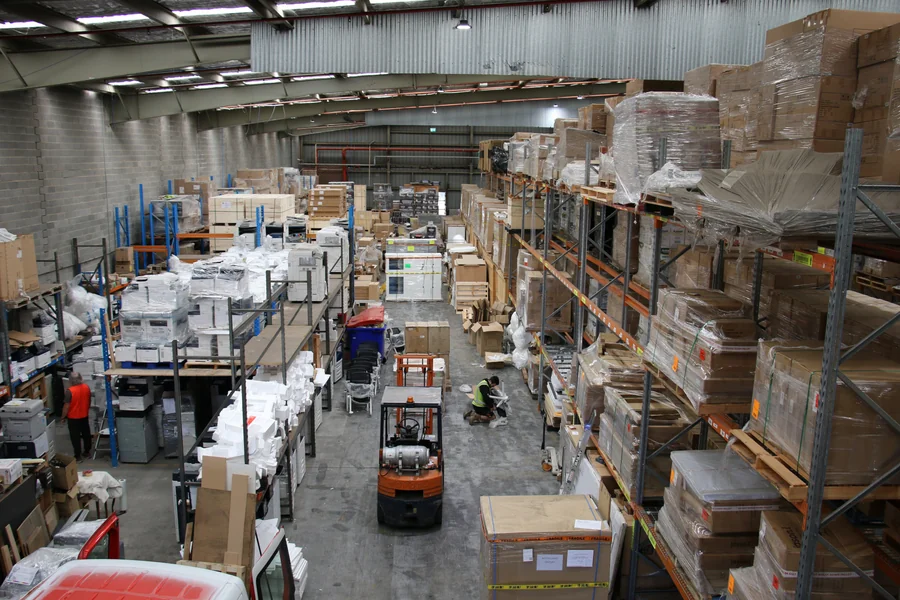
Traditional warehouse management systems are generally designed around a single business managing its own inventory, orders, warehouse processes, and fulfillment rules. For a 3PL provider, however, one warehouse may serve dozens of clients, each with different inventory, workflows, service-level agreements, reporting requirements, and billing models. Managing all of these operations through a system built for a single organization can quickly lead to manual work, fragmented visibility, and costly errors.
This complexity is becoming increasingly important as the 3PL market continues to expand. Armstrong & Associates estimates that the global 3PL market reached $1.3 trillion in 2025 and is projected to grow to $1.49 trillion by 2027, representing a 6.9% CAGR for 2026–2027. As operations scale, 3PL warehouse software designed specifically for multi-client environments can help providers manage inventory, orders, workflows, and billing from a unified platform.
Unlike a conventional WMS, a purpose-built 3PL solution can provide client-level inventory separation, customized workflows, automated billing, and real-time visibility while allowing warehouse teams to manage operations centrally. This helps reduce manual processes, improve operational efficiency, give clients greater transparency, and ultimately protect margins as the 3PL business grows.
What Is the Difference Between 3PL Warehouse Software and a Traditional WMS?
A traditional WMS is primarily designed for a single business that owns and manages its inventory, with one set of operational rules and processes. 3PL warehouse software, by contrast, is built for logistics providers that manage inventory and fulfillment for multiple customers within the same warehouse or platform. This multi-client model requires stronger data separation, flexible workflows, and client-specific configurations.
One of the key differences is multi-client inventory management. A 3PL system keeps each customer’s SKUs, inventory, orders, users, and data logically separated while allowing warehouse teams to manage them through a single platform. This gives 3PLs centralized operational control without mixing client information or limiting each customer’s visibility.
3PL operations also require configurable workflows. Different clients may have unique receiving procedures, picking and packing rules, labeling requirements, SLAs, or returns processes. Purpose-built software allows these rules to be configured per client rather than forcing the entire warehouse to follow one standardized workflow.
Finally, billing is part of the operational workflow, not an external afterthought. A 3PL-specific platform can automatically capture billable activities such as storage, receiving, picking, packing, shipping, returns, and value-added services and apply the appropriate client-specific rates. This reduces spreadsheet-based reconciliation, minimizes missed charges, and makes billing more accurate and auditable.
Which Features Make 3PL Warehouse Software Better Suited to Multi-Client Operations?
Managing several customers from the same warehouse requires more than basic inventory tracking. 3PL warehouse software brings key warehouse processes into one platform while keeping each client’s inventory, orders, workflows, and data separated. This allows warehouse teams to manage multiple accounts without creating additional manual work or operational complexity.
Real-time inventory and order management provide visibility into stock levels, locations, and movements for each client. Integrated receiving, picking, packing, and shipping workflows help employees process orders efficiently, while barcode scanning and warehouse automation can reduce manual data entry and fulfillment errors. Integrations with ERPs, ecommerce platforms, carriers, and other systems also ensure that information flows between the 3PL and its customers without constant manual updates.
Configurable workflows are equally important because every client may have different requirements for receiving, packaging, labeling, shipping, returns, or value-added services. Instead of forcing every account into the same process, 3PL software can apply client-specific rules while maintaining centralized warehouse control.
Client portals and reporting give customers direct access to relevant information such as inventory levels, order status, shipments, and warehouse activity. Role-based permissions ensure that each client can view their own data without exposing information belonging to other customers. This improves transparency while reducing the amount of reporting and support work handled manually by the 3PL team.
COAX Software specializes in custom logistics software development, building warehouse management solutions that can be adapted to complex 3PL workflows, multi-client environments, integrations, and business-specific requirements. This approach allows 3PL providers to build a system around their actual operations and expand its capabilities as the business grows.
How Should a 3PL Choose Between a Traditional WMS and 3PL Warehouse Software?
A standard WMS can be sufficient for a 3PL with a simple operating model, a small number of clients, and relatively consistent warehouse processes. However, as the number of customers, SKUs, orders, and service requirements grows, limitations can become more apparent. A system designed primarily for a single business may lack the multi-client controls, flexible workflows, and billing capabilities needed to manage a complex 3PL operation efficiently.
When evaluating a solution, 3PL providers should consider more than basic warehouse functionality. Important criteria include:
- Multi-client support for separating customer inventory, orders, users, and data
- 3PL billing based on storage, receiving, picking, packing, shipping, and value-added services
- Scalability to support additional clients, warehouses, users, and transaction volumes
- Integrations with ERP, ecommerce, carrier, accounting, and other systems
- Customization for client-specific workflows, rules, and service requirements
- Automation to reduce repetitive manual tasks and operational errors
- Reporting and analytics for both internal management and customer-facing visibility
Most importantly, the software should fit the 3PL’s business model rather than force the business to change its processes to fit the software. A flexible solution allows providers to configure workflows, billing rules, permissions, and integrations around how they actually operate. This makes it easier to onboard new clients, adapt to changing requirements, and scale operations without continually adding manual work.
Choose Software Built for 3PL Complexity
A traditional WMS can effectively handle core warehouse processes, but it may fall short when a 3PL needs to manage multiple customers, each with different inventory, workflows, service requirements, and billing rules. As operations grow, these limitations can lead to more manual work, reduced visibility, and difficulty scaling efficiently.
Purpose-built 3PL warehouse software addresses these challenges by combining multi-client inventory management, configurable workflows, automated billing, integrations, and reporting in one platform. This allows 3PL providers to serve more customers without increasing operational complexity at the same rate, while improving efficiency, transparency, and profitability.
For a 3PL, the right WMS should support the entire business model—from receiving and fulfillment to client management, billing, reporting, and growth. The goal isn’t simply to manage what’s in the warehouse, but to provide the flexibility and visibility needed to run and scale a successful 3PL operation.