Healthcare Lighting Solutions for Modern Surgical Environments
 Johnathan Parker |
August 12, 2026 |
3:25 pm
Johnathan Parker |
August 12, 2026 |
3:25 pm
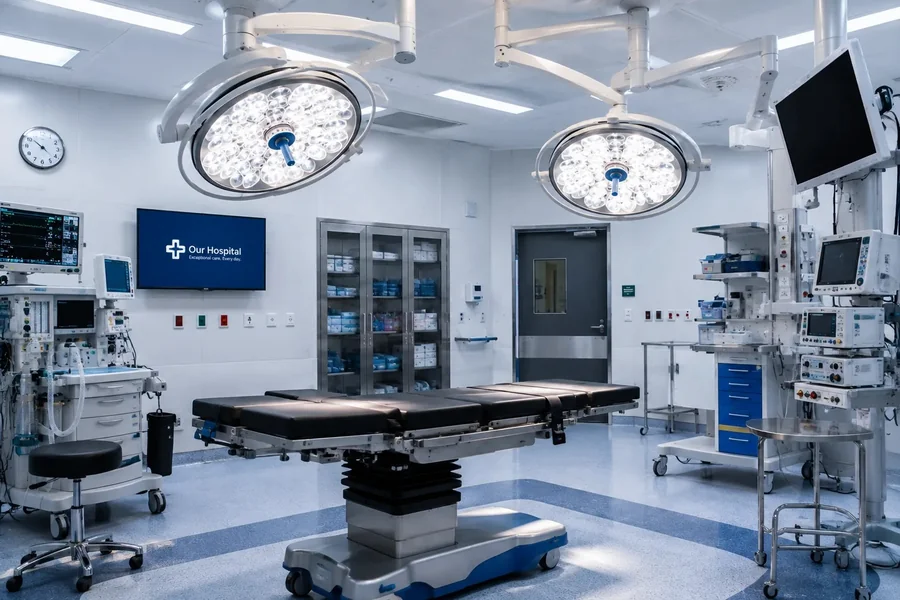
Lighting in a surgical environment is more than a collection of fixtures. It forms part of the clinical infrastructure that supports visibility, staff movement, equipment use, and the safe organization of the operating room.
For healthcare facility managers and clinical teams, evaluating surgical lights therefore requires a broader view than comparing individual technical specifications. The lighting needs to perform within a specific room, support the procedures carried out there, and coexist with other equipment and building systems. Maintenance and long-term operational requirements also need to be considered.
These factors make surgical lighting a multidisciplinary planning decision involving clinical users, facility planners, procurement professionals, and biomedical or clinical engineering teams.
Clinical Illumination Depends on Several Factors
Procedure visibility is one of the central considerations when evaluating medical lighting for surgical areas. Clinicians need a clear view of the surgical field, but effective illumination involves more than producing a high level of light.
Consistency across the illuminated area is important because clinicians may need to view tissue and instruments at different angles and depths. Shadows can also become an issue as staff members move around the table or place their hands and equipment between a light source and the surgical field.
Colour characteristics are another consideration. Lighting should support the clinical team’s ability to distinguish visual details without creating unnecessary distortion. At the same time, the system needs to provide useful illumination throughout procedures that may require frequent changes in position.
The requirements can differ according to the clinical application. A multipurpose operating room may need lighting that accommodates a wide range of procedures, while a specialized room may have more specific demands. Understanding how the room will actually be used provides a practical starting point for evaluating lighting performance.
Positioning Should Support the Surgical Workflow
Operating rooms are active environments where people and equipment continually change position. Surgical lighting needs to accommodate that movement rather than becoming an obstacle to it.
Ceiling-mounted surgical lights typically use articulated arms that allow the light heads to be moved around the operating table. The available range of movement, ease of adjustment, and relationship between multiple light heads can influence how effectively clinicians can direct illumination during a procedure.
Positioning also needs to account for other ceiling-mounted equipment. Equipment booms, displays, imaging technology, ventilation systems, and structural components may all compete for space above or around the surgical field.
These relationships make coordination important during healthcare facility planning. If lighting is considered too late in the process, teams may discover conflicts between mounting locations, movement paths, or other equipment. Reviewing these requirements together can help create a more functional room configuration.
Renovations require similar attention. Existing infrastructure may limit mounting options or make certain configurations difficult to accommodate. A detailed understanding of the current room can help teams determine what is practical before equipment decisions are finalized.
Configuration Should Reflect How the Room Is Used
There is no single lighting configuration that suits every surgical environment. Room size, clinical specialty, equipment layout, ceiling conditions, and procedural requirements can all affect the appropriate arrangement.
Facilities may need to consider the number and positioning of light heads, suspension configuration, control methods, mounting requirements, and relationships with other operating room equipment. The goal is not simply to maximize lighting capacity but to create a configuration that supports the intended clinical work.
Input from surgical staff is particularly useful at this stage. Clinicians can identify common working positions, typical procedure requirements, and situations in which lighting needs to be adjusted. Facility and engineering teams can then evaluate those needs against structural, electrical, and technical constraints.
This collaborative process helps connect clinical expectations with practical implementation. It can also reduce the likelihood of selecting equipment that performs well on paper but creates limitations once installed in the operating room.
Moving From Clinical Requirements to System Evaluation
Once a healthcare organization has identified its clinical and facility requirements, it can evaluate healthcare lighting solutions against those needs. Rather than beginning with a particular model, teams can establish criteria based on procedure types, illumination requirements, room dimensions, equipment coordination, adjustment needs, and technical infrastructure.
Canadian healthcare organizations researching surgical lighting systems can use ValleyMed as one practical reference when reviewing available configurations in relation to their identified requirements.
A structured evaluation can involve several stakeholders. Surgical department representatives can assess clinical usability, while biomedical and clinical engineering teams examine technical requirements and service considerations. Facility professionals can review structural and spatial compatibility, and procurement teams can incorporate the resulting criteria into the purchasing process.
This approach helps keep the evaluation focused on the needs of the surgical environment rather than isolated equipment features.
Long-Term Operation Matters as Much as Initial Selection
Lighting equipment becomes part of the operating room’s working infrastructure for an extended period. Its long-term requirements should therefore be considered alongside initial clinical performance.
Maintenance access is one practical concern. Biomedical teams may need to inspect, troubleshoot, or service components while minimizing disruption to surgical schedules. The location and design of equipment can influence how easily that work can be completed.
Cleaning is another important consideration. Surgical environments follow established infection prevention procedures, so light heads, handles, suspension components, and controls need to fit into routine cleaning practices.
Facilities may also want to consider technical documentation, component availability, service requirements, and how the system will fit within existing maintenance programs. These factors can influence lifecycle planning and the resources needed to keep equipment functioning as intended.
Effective surgical lighting is ultimately the result of several connected decisions. Clinical illumination, positioning, configuration, workflow compatibility, infrastructure, and maintenance all shape how well a system performs in daily use. By considering those factors together, healthcare organizations can plan lighting as an integrated part of the surgical environment rather than as an isolated equipment purchase.